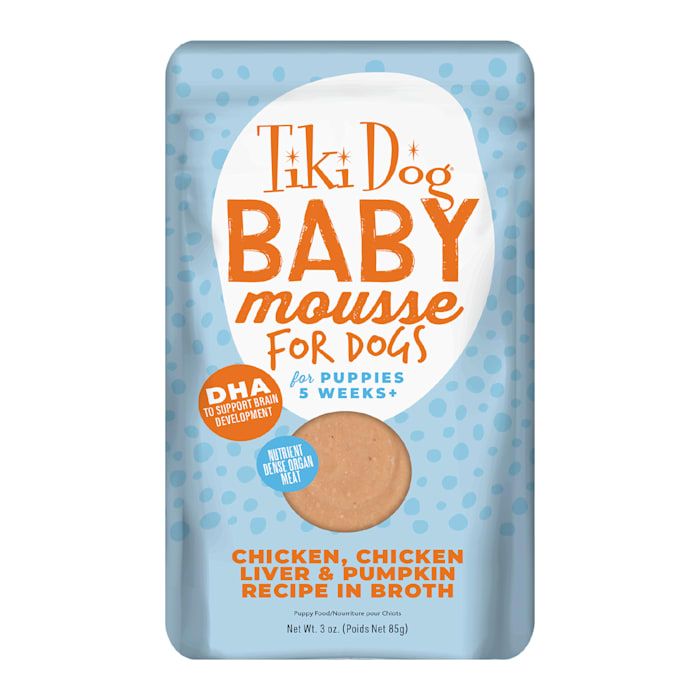
Tiki Dog Baby Mousse Wet Dog Food for Puppies, Chicken, 3 oz.
At a glance
Summary
This dog food contains high-quality ingredients such as chicken, chicken liver, and pumpkin, which provide essential nutrients and are minimally processed. The inclusion of beneficial additives like inulin and tuna oil supports digestive and skin health. However, the presence of xanthan gum and the overall processing level slightly reduce its score, despite the clean ingredient list. Its plastic packaging can shed microplastics into the food and lowers its score.
Key ingredients 33
ChickenVery Good
Chicken is a high-quality source of animal protein, essential for muscle development and repair. It provides a complete amino acid profile necessary for puppies' growth. Sourced from whole meat, it is minimally processed.
Benefits
Rich in protein and essential nutrients, supporting healthy growth and development in puppies.
Chicken liverVery Good
Chicken liver is rich in essential vitamins and minerals, including vitamin A, iron, and zinc. It supports immune function and overall health in puppies. As an organ meat, it is nutrient-dense and minimally processed.
Risks
Excessive consumption may lead to vitamin A toxicity.
Benefits
Provides essential nutrients that support immune function and overall health.
FlaxseedVery Good
Flaxseed is a source of omega-3 fatty acids and fiber, supporting skin, coat, and digestive health. It provides lignans, which have antioxidant properties. As a whole seed, it is minimally processed and nutritious.
Risks
May cause digestive discomfort in some dogs if consumed in large quantities.
Benefits
Supports skin, coat, and digestive health with omega-3 fatty acids and fiber.
Chicken brothGood
Chicken broth adds flavor and moisture to the food, making it more palatable for puppies. It is a natural source of minerals and can aid in hydration. Made from simmering chicken bones and meat, it retains nutrients.
Benefits
Enhances flavor and provides hydration, contributing to overall palatability and nutrient intake.
ChickpeaGood
Chickpeas are a good source of plant-based protein and fiber, supporting digestive health. They provide essential vitamins and minerals such as folate and iron. As a whole food, they are minimally processed.
Risks
May cause digestive discomfort in some dogs if consumed in large quantities.
Benefits
Supports digestive health and provides essential nutrients, contributing to a balanced diet.
PumpkinGood
Pumpkin is a good source of fiber, aiding in digestive health and regularity. It contains vitamins A and C, supporting immune function. As a whole food, it is minimally processed and nutritious.
Benefits
Supports digestive health and provides essential vitamins, contributing to a balanced diet.
KaleGood
Kale is a nutrient-dense leafy green, rich in vitamins A, C, and K, as well as antioxidants. It supports immune health and provides fiber for digestive health. As a whole food, it is minimally processed.
Benefits
Provides essential vitamins and antioxidants, supporting immune and digestive health.
Tuna oilGood
Tuna oil is a source of omega-3 fatty acids, supporting skin and coat health. It provides anti-inflammatory benefits and supports cognitive development in puppies. Extracted from fish, it is a natural source of essential fats.
Risks
Potential for mercury contamination if not sourced properly.
Benefits
Supports skin, coat, and cognitive health with essential omega-3 fatty acids.
InulinGood
Inulin is a prebiotic fiber that supports digestive health by promoting beneficial gut bacteria. It can improve nutrient absorption and overall gut health. Extracted from plants, it is a natural and beneficial additive.
Risks
May cause digestive discomfort in some dogs if consumed in large quantities.
Benefits
Supports digestive health by promoting beneficial gut bacteria and improving nutrient absorption.
TurmericGood
Turmeric is a spice with anti-inflammatory and antioxidant properties, supporting overall health. It contains curcumin, which may benefit joint health. As a natural spice, it is minimally processed and beneficial.
Benefits
Provides anti-inflammatory and antioxidant benefits, supporting joint and overall health.
NiacinGood
Beneficial ingredient — whole-food or functional value in this product class.
Benefits
Supports energy metabolism and skin health by providing essential vitamin B3.
BiotinGood
Beneficial ingredient — whole-food or functional value in this product class.
Benefits
Supports skin, coat, and metabolic health by providing essential biotin.
Pyridoxine hydrochlorideGood
Beneficial ingredient — whole-food or functional value in this product class.
Benefits
Supports protein metabolism and brain health by providing essential vitamin B6.
Dicalcium phosphateNeutral
Dicalcium phosphate is used as a calcium and phosphorus supplement, supporting bone health. It is a common additive in pet foods to ensure nutritional adequacy. It is synthetically produced but considered safe.
Benefits
Supports bone health by providing essential minerals.
Potassium chlorideNeutral
Potassium chloride is used to provide potassium, an essential electrolyte for maintaining fluid balance and nerve function. It is a common additive in pet foods to ensure nutritional adequacy. It is synthetically produced but considered safe.
Benefits
Supports fluid balance and nerve function by providing essential potassium.
Xanthan gumNeutral
Xanthan gum is used as a thickening agent to improve texture and consistency in pet foods. It is a polysaccharide produced through fermentation. It is generally considered safe in small amounts.
Benefits
Improves texture and consistency of the food, enhancing palatability.
SaltNeutral
Salt is used to enhance flavor and provide sodium, an essential electrolyte. It is a common additive in pet foods to ensure nutritional adequacy. It is refined and lacks trace minerals.
Risks
Excessive consumption may lead to high blood pressure and other health issues.
Benefits
Enhances flavor and provides essential sodium for fluid balance.
Choline chlorideNeutral
Choline chloride is used as a source of choline, an essential nutrient for liver function and brain development. It is a common additive in pet foods to ensure nutritional adequacy. It is synthetically produced but considered safe.
Benefits
Supports liver function and brain development by providing essential choline.
Magnesium sulfateNeutral
Magnesium sulfate is used to provide magnesium, an essential mineral for muscle and nerve function. It is a common additive in pet foods to ensure nutritional adequacy. It is synthetically produced but considered safe.
Benefits
Supports muscle and nerve function by providing essential magnesium.
Ferrous sulfateNeutral
Ferrous sulfate is used to provide iron, an essential mineral for oxygen transport and energy production. It is a common additive in pet foods to ensure nutritional adequacy. It is synthetically produced but considered safe.
Benefits
Supports oxygen transport and energy production by providing essential iron.
Thiamine mononitrateNeutral
Thiamine mononitrate is a form of vitamin B1, essential for energy metabolism and nerve function. It is a common additive in pet foods to ensure nutritional adequacy. It is synthetically produced but considered safe.
Benefits
Supports energy metabolism and nerve function by providing essential vitamin B1.
Vitamin E supplementNeutral
Vitamin E supplement is used to provide vitamin E, an antioxidant that supports immune function and skin health. It is a common additive in pet foods to ensure nutritional adequacy. It is synthetically produced but considered safe.
Benefits
Supports immune function and skin health by providing essential vitamin E.
Zinc oxideNeutral
Zinc oxide is used to provide zinc, an essential mineral for immune function and skin health. It is a common additive in pet foods to ensure nutritional adequacy. It is synthetically produced but considered safe.
Benefits
Supports immune function and skin health by providing essential zinc.
Vitamin A supplementNeutral
Vitamin A supplement is used to provide vitamin A, essential for vision and immune function. It is a common additive in pet foods to ensure nutritional adequacy. It is synthetically produced but considered safe.
Risks
Excessive consumption may lead to vitamin A toxicity.
Benefits
Supports vision and immune function by providing essential vitamin A.
Vitamin B12 supplementNeutral
Vitamin B12 supplement is used to provide vitamin B12, essential for nerve function and energy metabolism. It is a common additive in pet foods to ensure nutritional adequacy. It is synthetically produced but considered safe.
Benefits
Supports nerve function and energy metabolism by providing essential vitamin B12.
Copper amino acid chelateNeutral
Copper amino acid chelate is used to provide copper, an essential mineral for immune function and iron metabolism. It is a common additive in pet foods to ensure nutritional adequacy. It is synthetically produced but considered safe.
Benefits
Supports immune function and iron metabolism by providing essential copper.
Manganous oxideNeutral
Manganous oxide is used to provide manganese, an essential mineral for bone health and metabolism. It is a common additive in pet foods to ensure nutritional adequacy. It is synthetically produced but considered safe.
Benefits
Supports bone health and metabolism by providing essential manganese.
Calcium pantothenateNeutral
Calcium pantothenate is a form of vitamin B5, essential for energy metabolism and skin health. It is a common additive in pet foods to ensure nutritional adequacy. It is synthetically produced but considered safe.
Benefits
Supports energy metabolism and skin health by providing essential vitamin B5.
Riboflavin supplementNeutral
Riboflavin supplement is used to provide vitamin B2, essential for energy metabolism and skin health. It is a common additive in pet foods to ensure nutritional adequacy. It is synthetically produced but considered safe.
Benefits
Supports energy metabolism and skin health by providing essential vitamin B2.
Sodium seleniteNeutral
Sodium selenite is used to provide selenium, an essential mineral for antioxidant defense and immune function. It is a common additive in pet foods to ensure nutritional adequacy. It is synthetically produced but considered safe.
Benefits
Supports antioxidant defense and immune function by providing essential selenium.
Folic acidNeutral
Folic acid is a form of vitamin B9, essential for DNA synthesis and cell division. It is a common additive in pet foods to ensure nutritional adequacy. It is synthetically produced but considered safe.
Benefits
Supports DNA synthesis and cell division by providing essential vitamin B9.
Potassium iodideNeutral
Potassium iodide is used to provide iodine, an essential mineral for thyroid function and metabolism. It is a common additive in pet foods to ensure nutritional adequacy. It is synthetically produced but considered safe.
Benefits
Supports thyroid function and metabolism by providing essential iodine.
Vitamin D3 supplementNeutral
Vitamin D3 supplement is used to provide vitamin D, essential for calcium absorption and bone health. It is a common additive in pet foods to ensure nutritional adequacy. It is synthetically produced but considered safe.
Risks
Excessive consumption may lead to vitamin D toxicity.
Benefits
Supports calcium absorption and bone health by providing essential vitamin D.
Processing
Processed Foods
Get the full breakdown in the Scout appTake Scout shopping
Scan any product to see lab results, healthy alternatives, and your personalized analysis.