


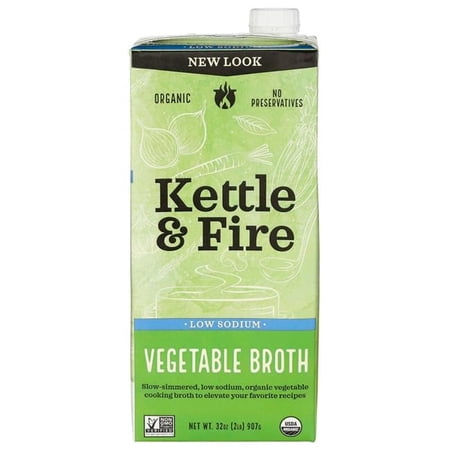
At a glance
Summary
This vegetable broth is ultra-processed, which limits its potential health score. It contains refined sugar in the form of dextrose and uses 'natural flavor', which lacks transparency and may include synthetic compounds. Despite these concerns, the broth does not contain seed oils or artificial dyes, which helps mitigate some of the negative aspects of its processing level.
Key ingredients 9
WaterNeutral
Water is a neutral ingredient that serves as a base for the broth. It does not contribute any significant nutritional value. It is essential for dissolving and distributing other ingredients.
See more about Water →Vegetable Juice ConcentratesNeutral
Vegetable juice concentrates provide flavor and some nutrients from vegetables like carrot, celery, celeriac, onion, and cabbage. The concentration process may reduce some nutrient content. They contribute to the overall vegetable profile of the broth.
Risks
Potential for reduced nutrient content due to processing.
Benefits
Provides flavor and some vitamins and minerals from vegetables.
SaltNeutral
Salt is used for seasoning and preservation. It is a refined ingredient without the trace minerals found in unrefined salts. Excessive consumption can lead to health issues like hypertension.
Risks
High sodium intake can contribute to hypertension and cardiovascular issues.
Benefits
Enhances flavor and acts as a preservative.
VegetablesNeutral
Whole vegetables like carrots, onions, and celery provide natural flavors and nutrients. They are minimally processed compared to other ingredients. They contribute fiber and vitamins to the broth.
Benefits
Provides fiber, vitamins, and minerals.
Potato FlourNeutral
Potato flour is used as a thickening agent in the broth. It is a carbohydrate source but does not provide significant nutritional benefits. It helps improve the texture of the broth.
Benefits
Improves texture and consistency of the broth.
Citric AcidNeutral
Citric acid is used as a preservative and to add acidity to foods. It is naturally found in citrus fruits but is often industrially produced. It helps maintain freshness and flavor stability.
Benefits
Acts as a preservative and enhances flavor stability.
Sugar DextroseBad
Dextrose is a refined sugar that can contribute to increased blood sugar levels. It is often used to enhance flavor but offers no nutritional benefits. Excessive intake can lead to metabolic issues.
Risks
May contribute to obesity, insulin resistance, and other metabolic disorders.
Yeast ExtractBad
Concentrated glutamate source — MSG-adjacent flavor enhancer.
Risks
May cause sensitivity in individuals sensitive to glutamates.
Benefits
Enhances umami flavor in foods.
Natural FlavorBad
Natural flavors are often used to enhance taste but lack transparency in their composition. They can contain a variety of compounds, some of which may be synthetic. The lack of disclosure can be concerning for consumers seeking transparency.
Risks
Potential for undisclosed synthetic compounds and allergens.
Benefits
Enhances flavor profile of the product.
Processing
Ultra-Processed Foods
Get the full breakdown in the Scout appTake Scout shopping
Scan any product to see lab results, healthy alternatives, and your personalized analysis.
Download on theApp Store GET IT ONGoogle Play