
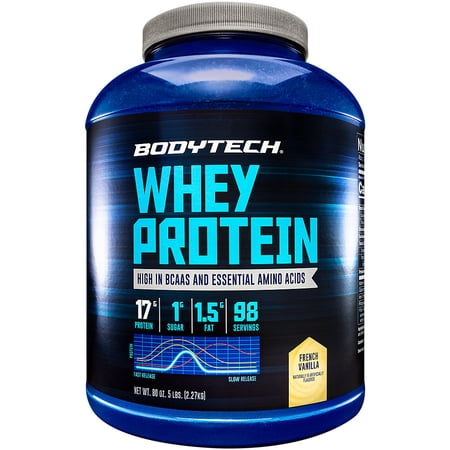


BodyTech Whey Protein Powder - With 17 Grams of Protein per Serving & Amino Acids - Ideal for Post-Workout Muscle Building Contains Milk & Soy - Vanilla (5 Pound)
Analysis updated October 2026 · How Scout scores
At a glance
Summary
This protein powder contains high-quality whey protein isolate and concentrate, which are beneficial for muscle repair and growth. However, the presence of soy lecithin as an emulsifier and the use of a proprietary blend for Aminogen slightly detract from its overall formulation quality. The product is moderately processed, with a few additives like xanthan gum and natural flavor, which are common in flavored protein powders.
Key ingredients 9
Whey Protein IsolateVery Good
Whey protein isolate is a high-quality protein source with a complete amino acid profile, making it ideal for muscle repair and growth. It undergoes processing to remove most fats and lactose, resulting in a highly concentrated protein product. Compared to other protein sources, it is rapidly absorbed and utilized by the body.
Benefits
Rich in essential amino acids, it supports muscle recovery and growth, especially post-exercise.
Whey Protein ConcentrateGood
Whey protein concentrate is a high-quality protein that contains a range of essential amino acids necessary for muscle building. It is less processed than isolate, retaining more beneficial nutrients like immunoglobulins and lactoferrin. It provides a slower release of amino acids compared to isolate, which can be beneficial for prolonged protein synthesis.
Risks
May contain lactose, which can be problematic for individuals with lactose intolerance.
Benefits
Supports muscle growth and recovery with a balanced amino acid profile and additional nutrients.
Xanthan GumNeutral
Xanthan gum is a common food additive used as a thickening and stabilizing agent. It is produced through the fermentation of sugars by the Xanthomonas campestris bacterium. While it is generally recognized as safe, it provides no nutritional benefits.
Risks
Excessive consumption may lead to digestive discomfort in sensitive individuals.
Natural FlavorNeutral
Natural flavors are used to enhance the taste of food products, derived from natural sources but often processed. They are a catch-all term that can include a variety of substances, making it difficult to assess their exact composition. While they are not inherently harmful, the lack of transparency can be a concern for some consumers.
Risks
Lack of transparency in composition may be a concern for individuals with specific dietary restrictions.
Benefits
Enhances the flavor profile of the product, making it more palatable.
Sea SaltNeutral
Sea salt is used to enhance flavor and contains trace minerals. It is minimally processed compared to table salt, retaining some natural minerals. However, it should be consumed in moderation as excessive sodium intake can lead to health issues.
Risks
Excessive sodium intake can contribute to hypertension and cardiovascular issues.
Benefits
Provides trace minerals and enhances flavor without significant processing.
SteviaNeutral
Stevia is a natural, zero-calorie sweetener derived from the leaves of the Stevia rebaudiana plant. It is used as a sugar substitute without the caloric impact of sugar. While it is generally considered safe, some individuals may experience digestive discomfort.
Risks
Some individuals may experience digestive discomfort with excessive consumption.
Benefits
Provides sweetness without adding calories, making it suitable for calorie-conscious consumers.
LactaseNeutral
Lactase is an enzyme added to help break down lactose, making the product more digestible for lactose-intolerant individuals. It is beneficial for improving lactose digestion but does not contribute additional nutritional value. Its inclusion is particularly useful in dairy-based products.
Benefits
Aids in the digestion of lactose, making the product accessible to those with lactose intolerance.
Aminogen ProprietaryNeutral
Aminogen is a proprietary blend of enzymes designed to enhance protein digestion and absorption. While it may improve protein utilization, the proprietary nature means the exact composition is not disclosed. It is generally considered safe and beneficial for protein digestion.
Benefits
May enhance protein digestion and absorption, improving overall protein utilization.
Soy LecithinBad
Soy lecithin is used as an emulsifier to improve texture and mixability in food products. It is derived from soybeans, which may be genetically modified and can contain allergens. While it is a refined product, it is not as harmful as seed oils but still considered less desirable due to potential allergenicity.
Risks
Potential allergen for individuals sensitive to soy and may contain traces of genetically modified organisms.
Benefits
Improves texture and mixability of the product, enhancing consumer experience.
Processing
Ultra-Processed Foods
Get the full breakdown in the Scout appTake Scout shopping
Scan any product to see lab results, healthy alternatives, and your personalized analysis.
Download on theApp Store GET IT ONGoogle PlayAmazon pricing & content
Amazon price as of . Product prices and availability are accurate as of the date/time indicated and are subject to change. Any price and availability information displayed on Amazon.com at the time of purchase will apply to the purchase of this product.
CERTAIN CONTENT THAT APPEARS ON THIS SITE COMES FROM AMAZON. THIS CONTENT IS PROVIDED “AS IS” AND IS SUBJECT TO CHANGE OR REMOVAL AT ANY TIME.