
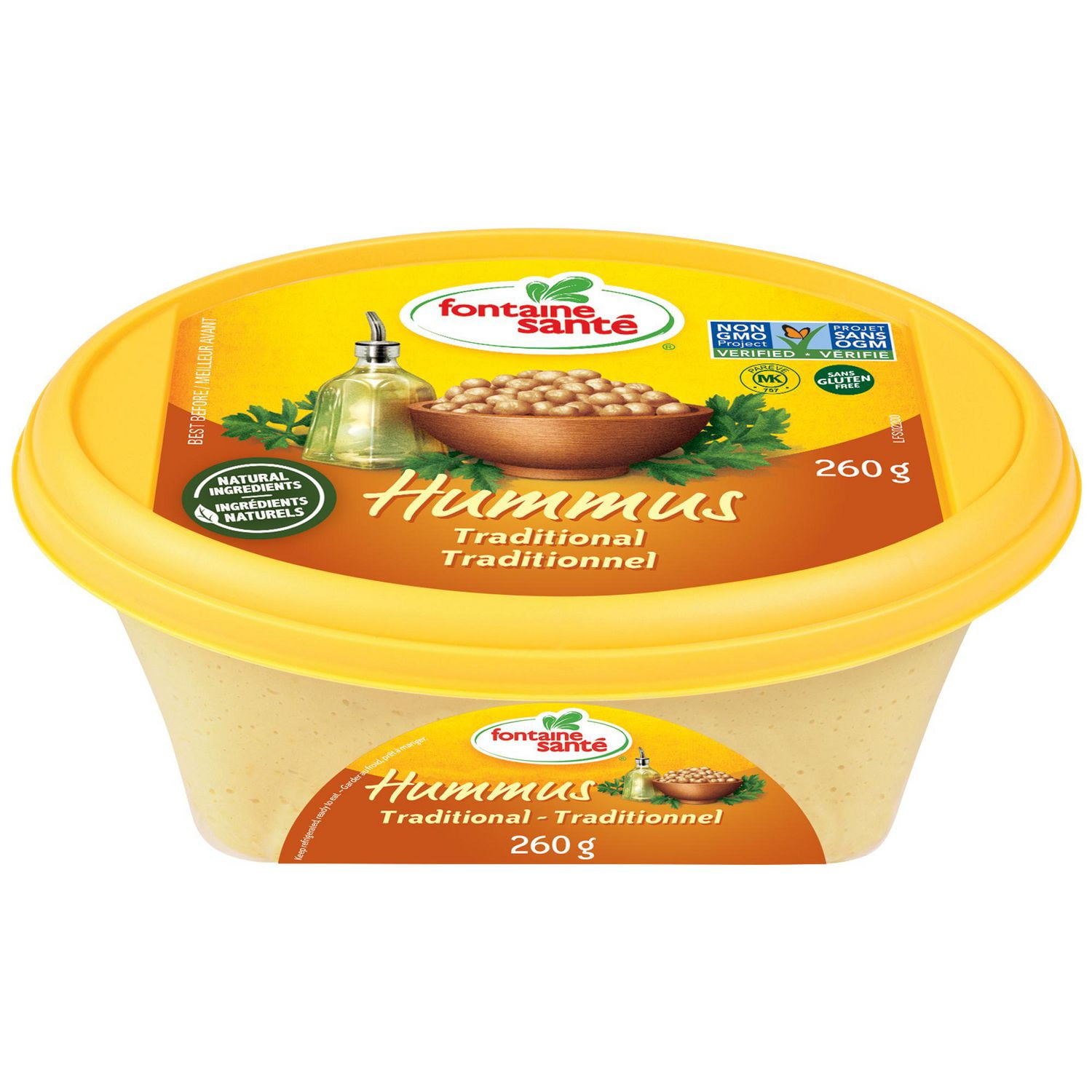


Fontaine Santé Hummus Traditional
Analysis updated July 2026 · How Scout scores
At a glance
Summary
The hummus contains beneficial ingredients such as chickpeas, tahini, and garlic, which provide protein, healthy fats, and antioxidants. However, the inclusion of canola oil, a highly processed seed oil, detracts from the overall healthiness due to its potential inflammatory effects. The product's processing level is moderate, which limits its score despite the presence of nutritious components.
Key ingredients 8
Cooked chickpeasGood
Cooked chickpeas are a natural source of plant-based protein and fiber, supporting overall health and digestion.
See more about Cooked chickpeas →Tahini (sesame butter)Good
Tahini provides healthy fats and essential nutrients, making it a nutritious addition to the hummus.
Concentrated lemon juiceGood
Lemon juice adds natural flavor and vitamin C, enhancing taste without artificial additives.
Sea saltGood
Sea salt provides essential minerals and enhances flavor, used in moderation it can be part of a balanced diet.
See more about Sea salt →VinegarGood
Vinegar adds tangy flavor and may support digestion, making it a common culinary ingredient.
See more about Vinegar →GarlicGood
Garlic is known for its natural flavor and potential health benefits, adding depth to the hummus.
See more about Garlic →WaterNeutral
Water is the base of the formulation — inert.
See more about Water →Canola oilVery Bad
Canola oil is highly processed and contains unhealthy trans fats and omega-6 fatty acids, which may impact health when consumed in excess.
See more about Canola oil →Processing
Processed Culinary Ingredients
Get the full breakdown in the Scout appTake Scout shopping
Scan any product to see lab results, healthy alternatives, and your personalized analysis.
Download on theApp Store GET IT ONGoogle Play