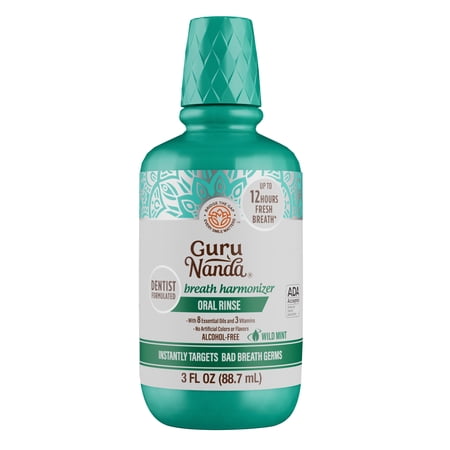
GuruNanda Teeth Whitening Dual Barrel Mouthwash- Alcohol Free & Fluoride Free Wild Mint 20 fl oz
GuruNanda
At a glance
Summary
This mouthwash features a clean formula with beneficial ingredients like sodium bicarbonate, peppermint oil, and tea tree oil, which support oral health and freshen breath. It avoids harmful substances such as alcohol and fluoride, making it a safer choice for daily use. The presence of natural antimicrobial agents further enhances its oral care benefits, contributing to a high score. Its plastic packaging can shed microplastics into the product and lowers its score.
Key ingredients 20
glycerinGood
Beneficial ingredient — whole-food or functional value in this product class.
Risks
There are no significant risks associated with glycerin in oral care products.
Benefits
It helps in maintaining moisture and provides a pleasant mouthfeel.
sea saltGood
Beneficial ingredient — whole-food or functional value in this product class.
Risks
Excessive use may lead to enamel wear, but it is generally safe in controlled amounts.
Benefits
It provides minerals and helps in cleaning teeth.
eucalyptolGood
Eucalyptol is a natural antimicrobial agent that helps in reducing plaque and gingivitis. It provides a refreshing flavor and has been shown to support oral health. It is beneficial for maintaining a healthy oral environment.
Risks
There are no significant risks associated with eucalyptol in oral care products.
Benefits
It helps in reducing plaque and freshening breath.
peppermint oilGood
Peppermint oil is a natural antimicrobial that helps in reducing oral bacteria and freshening breath. It provides a pleasant flavor and supports oral health. It is beneficial for maintaining a fresh and healthy mouth.
Risks
There are no significant risks associated with peppermint oil in oral care products.
Benefits
It helps in reducing bacteria and freshening breath.
thymolGood
Thymol is a natural antimicrobial agent that helps in reducing plaque and gingivitis. It provides a refreshing flavor and supports oral health. It is beneficial for maintaining a healthy oral environment.
Risks
There are no significant risks associated with thymol in oral care products.
Benefits
It helps in reducing plaque and freshening breath.
tea tree oilGood
Tea tree oil is a natural antimicrobial that helps in reducing oral bacteria and inflammation. It supports oral health and provides a fresh flavor. It is beneficial for maintaining a healthy mouth.
Risks
There are no significant risks associated with tea tree oil in oral care products.
Benefits
It helps in reducing bacteria and inflammation.
zinc gluconateGood
Zinc gluconate is used for its antimicrobial properties and ability to reduce plaque. It supports oral health by inhibiting bacterial growth. It is beneficial for maintaining a healthy oral environment.
Risks
There are no significant risks associated with zinc gluconate in oral care products.
Benefits
It helps in reducing plaque and supporting oral health.
clove oilGood
Clove oil is a natural antimicrobial and analgesic that helps in reducing oral bacteria and pain. It supports oral health and provides a soothing effect. It is beneficial for maintaining a healthy mouth.
Risks
There are no significant risks associated with clove oil in oral care products.
Benefits
It helps in reducing bacteria and providing pain relief.
oregano oilGood
Oregano oil is a natural antimicrobial that helps in reducing oral bacteria and inflammation. It supports oral health and provides a fresh flavor. It is beneficial for maintaining a healthy mouth.
Risks
There are no significant risks associated with oregano oil in oral care products.
Benefits
It helps in reducing bacteria and inflammation.
purified waterNeutral
Purified water is used as a solvent and carrier for other ingredients. It is essential for dissolving and distributing active components evenly. It does not have any direct oral health benefits or risks.
Risks
There are no known risks associated with purified water in oral care products.
Benefits
It helps in maintaining the consistency and stability of the mouthwash.
sodium bicarbonateNeutral
Standard formulation ingredient — neither beneficial nor harmful at typical use.
Risks
Excessive use may lead to enamel wear, but it is generally safe in controlled amounts.
Benefits
It helps in reducing plaque and freshening breath.
coco-glucosideNeutral
Coco-glucoside is a mild surfactant derived from coconut oil and glucose. It helps in cleaning by breaking down oils and debris. It is considered safe and non-irritating.
Risks
There are no significant risks associated with coco-glucoside in oral care products.
Benefits
It provides gentle cleansing without harsh effects.
hydrogenated castor oilNeutral
Hydrogenated castor oil is used as an emulsifier and thickening agent. It helps in stabilizing the formulation. It does not have direct oral health benefits or risks.
Risks
There are no significant risks associated with hydrogenated castor oil in oral care products.
Benefits
It contributes to the consistency and stability of the mouthwash.
sodium chlorideNeutral
Sodium chloride, or table salt, is used for its mild abrasive and preservative properties. It helps in cleaning and maintaining the stability of the mouthwash. It does not have significant oral health benefits or risks.
Risks
Excessive use may lead to enamel wear, but it is generally safe in controlled amounts.
Benefits
It helps in cleaning and preserving the mouthwash.
calcium lactateNeutral
Calcium lactate is used for its potential to support remineralization of enamel. It provides calcium ions that can help in maintaining tooth health. It does not have significant risks when used appropriately.
Risks
There are no significant risks associated with calcium lactate in oral care products.
Benefits
It may help in supporting enamel health.
mentholNeutral
Standard formulation ingredient — neither beneficial nor harmful at typical use.
Risks
There are no significant risks associated with menthol in oral care products.
Benefits
It helps in freshening breath and providing a cooling sensation.
methyl salicylateNeutral
Methyl salicylate is used for its flavoring properties and mild analgesic effects. It provides a pleasant taste and can help in soothing oral tissues. It does not have significant oral health benefits or risks.
Risks
There are no significant risks associated with methyl salicylate in oral care products.
Benefits
It provides flavor and mild pain relief.
jasmine oilNeutral
Jasmine oil is used for its fragrance and potential soothing properties. It provides a pleasant aroma and may help in calming oral tissues. It does not have significant oral health benefits or risks.
Risks
There are no significant risks associated with jasmine oil in oral care products.
Benefits
It provides fragrance and may have soothing effects.
citric acidNeutral
Citric acid is used as a preservative and pH adjuster in oral care products. It helps in maintaining the stability and effectiveness of the mouthwash. It does not have significant oral health benefits or risks.
Risks
Excessive use may lead to enamel erosion, but it is generally safe in controlled amounts.
Benefits
It helps in preserving the mouthwash and maintaining pH balance.
sodium lauroyl sarcosinateBad
Processed additive flagged under Scout's ingredient doctrine.
Risks
There are no significant risks associated with sodium lauroyl sarcosinate in oral care products.
Benefits
It helps in cleaning and foaming without causing irritation.
Processing
Processed Foods
Get the full breakdown in the Scout appTake Scout shopping
Scan any product to see lab results, healthy alternatives, and your personalized analysis.
Are you GuruNanda? Fix an error Get the badge Get tested
Amazon pricing & content
Amazon price as of . Product prices and availability are accurate as of the date/time indicated and are subject to change. Any price and availability information displayed on Amazon.com at the time of purchase will apply to the purchase of this product.
CERTAIN CONTENT THAT APPEARS ON THIS SITE COMES FROM AMAZON. THIS CONTENT IS PROVIDED “AS IS” AND IS SUBJECT TO CHANGE OR REMOVAL AT ANY TIME.