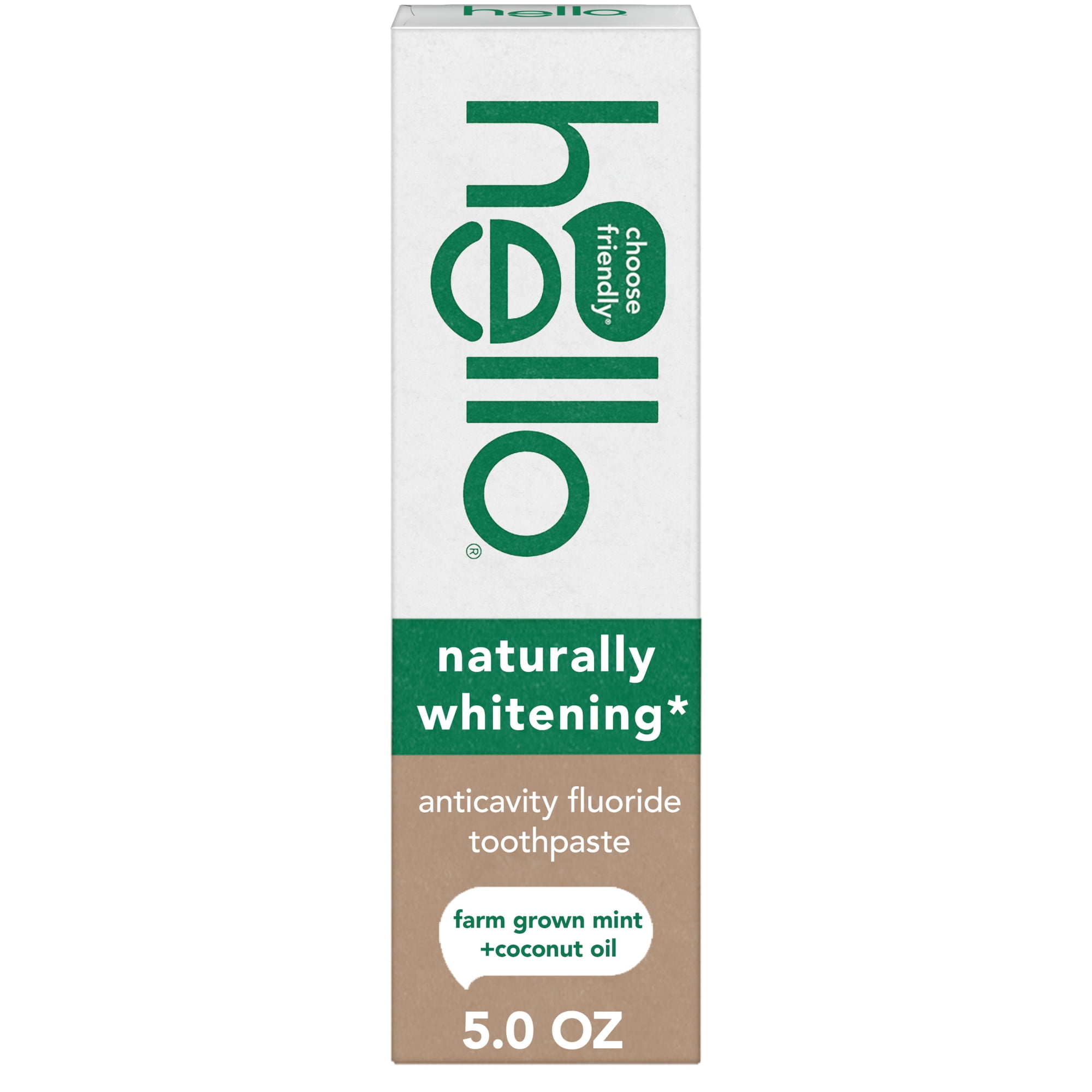
hello Naturally Whitening Anticavity Fluoride Toothpaste Mint 5 Oz
At a glance
Summary
This toothpaste contains beneficial ingredients like xylitol, baking soda, coconut oil, and tea tree oil, which support oral health by reducing cavity-causing bacteria and maintaining oral pH balance. However, the presence of sodium monofluorophosphate, a fluoride compound, raises concerns due to potential toxicity in high amounts. The formula is a mix of good and concerning ingredients, leading to a moderate score.
Key ingredients 17
XylitolVery Good
Xylitol is a natural sweetener that helps reduce cavity-causing bacteria in the mouth. It is highly beneficial for oral health. Regular use can lead to a reduction in dental caries.
Risks
Generally safe, but excessive ingestion can cause digestive issues.
Benefits
Reduces the risk of cavities by inhibiting bacterial growth.
GlycerinGood
Beneficial ingredient — whole-food or functional value in this product class.
Benefits
Helps maintain moisture and consistency of the toothpaste.
Cocos Nucifera (Coconut) OilGood
Coconut oil is known for its natural antibacterial properties, which can benefit oral health. It is a safe and natural ingredient. Regular use can help reduce harmful bacteria in the mouth.
Risks
Generally safe with minimal risks in toothpaste.
Benefits
Provides natural antibacterial action and supports oral hygiene.
Melaleuca Alternifolia (Tea Tree) Leaf OilGood
Tea tree oil is known for its antimicrobial properties, which can help maintain oral health. It is a natural ingredient that is generally safe in toothpaste. Regular use can help reduce oral bacteria.
Risks
Potential irritation if used in high concentrations.
Benefits
Provides natural antimicrobial action to support oral hygiene.
WaterNeutral
Water is used as a solvent and to provide the desired consistency in toothpaste. It is an inert ingredient with no direct health effects. It serves as a base for other ingredients.
Benefits
Acts as a solvent and helps in mixing other ingredients.
Hydrated SilicaNeutral
Hydrated silica is used as an abrasive to help remove plaque and stains. It is generally considered safe in toothpaste formulations. However, excessive abrasiveness can damage enamel over time.
Risks
Potential enamel erosion if overly abrasive.
Benefits
Helps in cleaning teeth by removing plaque and surface stains.
Calcium CarbonateNeutral
Calcium carbonate is used as a mild abrasive and thickening agent in toothpaste. It is generally safe and helps in cleaning teeth. However, it does not provide significant remineralization benefits.
Risks
Minimal risks when used appropriately in toothpaste.
Benefits
Provides mild abrasive action to aid in cleaning teeth.
SorbitolNeutral
Sorbitol is a sugar alcohol used as a sweetener and humectant in toothpaste. It is generally safe and non-cariogenic. However, excessive ingestion can have a laxative effect.
Risks
Excessive ingestion may cause gastrointestinal discomfort.
Benefits
Provides sweetness without promoting tooth decay.
ErythritolNeutral
Erythritol is a sugar alcohol used as a sweetener in toothpaste. It is non-cariogenic and considered safe. However, it does not have significant oral health benefits beyond sweetness.
Risks
Generally safe with minimal risks in toothpaste.
Benefits
Sweetens toothpaste without contributing to tooth decay.
Xanthan GumNeutral
Xanthan gum is used as a thickening agent in toothpaste. It is generally safe and non-toxic. It helps maintain the consistency of the product.
Benefits
Helps stabilize and thicken the toothpaste formulation.
Sodium BicarbonateNeutral
Standard formulation ingredient — neither beneficial nor harmful at typical use.
Risks
Minimal risks when used appropriately in toothpaste.
Benefits
Provides gentle cleaning and helps neutralize oral acids.
Potassium CitrateNeutral
Potassium citrate is used to help reduce tooth sensitivity. It is generally safe and effective for this purpose. However, it does not provide other significant oral health benefits.
Benefits
Helps in reducing tooth sensitivity.
Sodium Cocoyl GlutamateNeutral
Sodium cocoyl glutamate is a mild surfactant used for foaming in toothpaste. It is derived from natural sources and is considered safe. It helps in the even distribution of toothpaste during brushing.
Benefits
Provides mild foaming action to aid in cleaning.
Cocamidopropyl BetaineNeutral
Cocamidopropyl betaine is a surfactant used to create foam and improve texture. It is generally considered safe but can cause irritation in sensitive individuals. It helps in the even distribution of toothpaste.
Risks
Potential skin or mucosal irritation in sensitive individuals.
Benefits
Enhances foaming and texture of the toothpaste.
Rebaudioside ANeutral
Rebaudioside A is a steviol glycoside used as a natural sweetener. It is non-cariogenic and considered safe. However, it does not provide additional oral health benefits.
Benefits
Sweetens toothpaste without contributing to tooth decay.
Sodium MonofluorophosphateBad
Sodium Monofluorophosphate is a fluoride compound used to prevent cavities. However, excessive fluoride can lead to dental fluorosis and other health issues. It is considered toxic in high amounts.
Risks
Excessive use can cause dental fluorosis and other systemic health issues.
Benefits
Helps in preventing dental cavities by strengthening tooth enamel.
FlavorBad
Processed additive flagged under Scout's ingredient doctrine.
Risks
Potential allergen if specific components are undisclosed.
Benefits
Improves the taste and user experience of the toothpaste.
Processing
Processed Foods
Get the full breakdown in the Scout appTake Scout shopping
Scan any product to see lab results, healthy alternatives, and your personalized analysis.
Are you hello? Fix an error Get the badge Get tested
Amazon pricing & content
Amazon price as of . Product prices and availability are accurate as of the date/time indicated and are subject to change. Any price and availability information displayed on Amazon.com at the time of purchase will apply to the purchase of this product.
CERTAIN CONTENT THAT APPEARS ON THIS SITE COMES FROM AMAZON. THIS CONTENT IS PROVIDED “AS IS” AND IS SUBJECT TO CHANGE OR REMOVAL AT ANY TIME.