
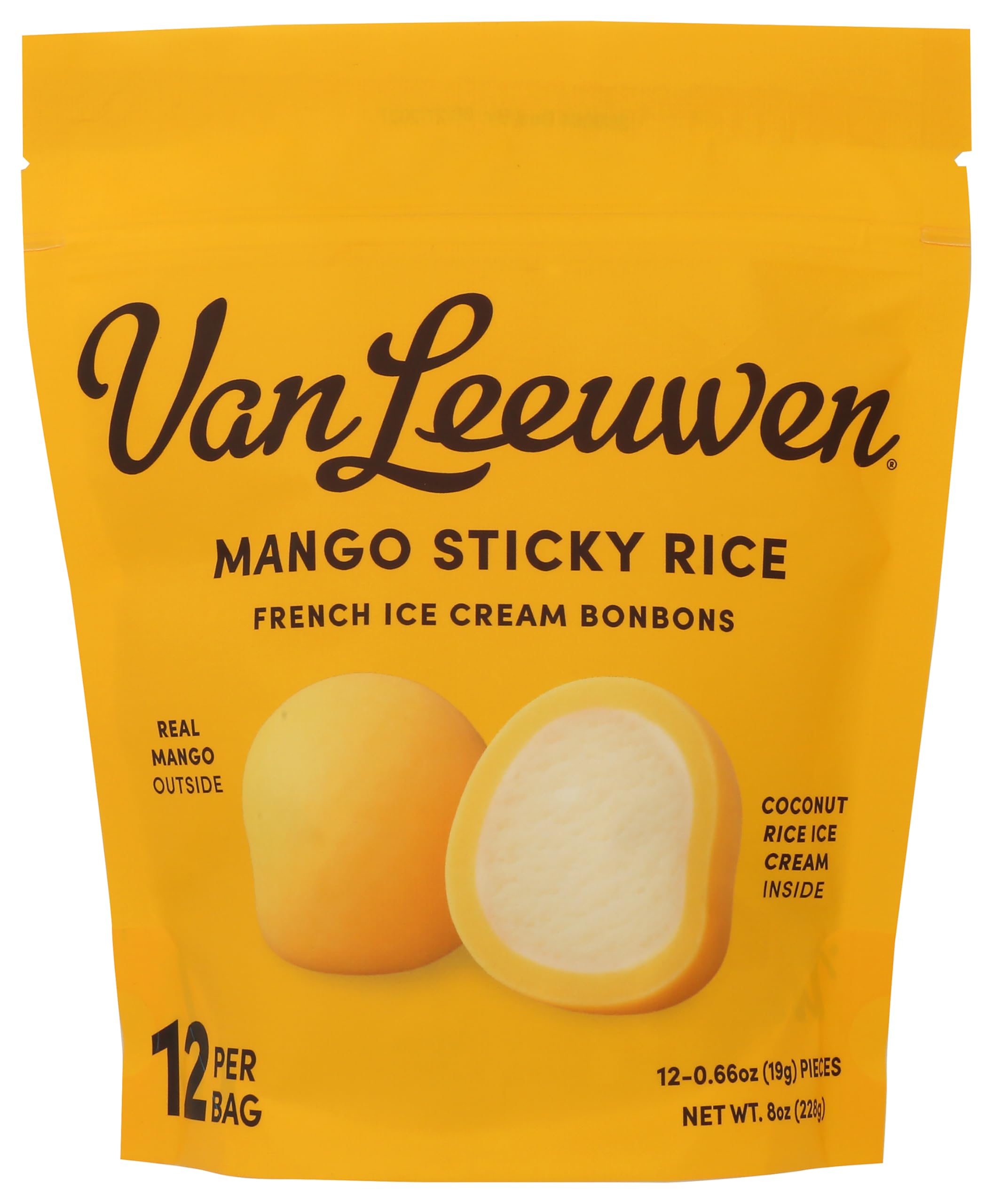



Van Leeuwen MANGO STICKY RICE FRENCH ICE CREAM BONBONS
Van LeeuwenAnalysis updated August 2026 · How Scout scores
At a glance
Summary
This ice cream bonbon features a clean ingredient list with high-quality components like cream, milk, and Alphonso mango puree, which are minimally processed and provide nutritional benefits. The use of natural ingredients such as coconut cream and vanilla extract enhances the product's appeal. However, due to its processed nature and the presence of added sugars, the score is capped to reflect its processing level.
Key ingredients 11
Alphonso mango pureeVery Good
Alphonso mango puree is rich in vitamins A and C, providing antioxidant benefits. It is a natural ingredient with minimal processing. The puree retains the natural sweetness and flavor of mangoes.
Benefits
High in antioxidants and vitamins, supporting immune function and skin health. Adds natural sweetness and flavor to products.
CreamGood
Cream is a source of high-quality saturated fats and fat-soluble vitamins. It is minimally processed and provides a rich texture to foods. Grass-fed cream may contain higher levels of omega-3 fatty acids.
Risks
Excessive consumption may contribute to high cholesterol levels due to saturated fat content.
Benefits
Provides essential fat-soluble vitamins such as A, D, E, and K. Contributes to a creamy texture and rich flavor in culinary applications.
MilkGood
Milk is a good source of calcium, protein, and essential vitamins. It is a minimally processed ingredient that supports bone health. Organic milk may have higher levels of omega-3 fatty acids.
Risks
Lactose intolerance can cause digestive issues in some individuals.
Benefits
Rich in calcium and vitamin D, supporting bone health. Provides high-quality protein and essential nutrients.
Coconut creamGood
Coconut cream is a source of healthy saturated fats and provides a creamy texture. It is minimally processed and can support heart health when consumed in moderation. Contains medium-chain triglycerides (MCTs) that may boost metabolism.
Risks
High in calories and saturated fats, which can contribute to weight gain if consumed excessively.
Benefits
Rich in MCTs that may support energy levels and metabolism. Provides a creamy texture and enhances flavor in culinary applications.
Egg yolksGood
Egg yolks are a rich source of vitamins, minerals, and high-quality protein. They contain essential nutrients like choline and lutein. Pasture-raised eggs may have higher nutrient content.
Risks
High cholesterol content may be a concern for individuals with specific dietary restrictions.
Benefits
Provides essential nutrients such as choline, supporting brain health. Rich in lutein and zeaxanthin, which are beneficial for eye health.
Lemon juiceGood
Lemon juice is a natural source of vitamin C and antioxidants. It is minimally processed and adds a fresh, tangy flavor to foods. Supports immune function and aids in digestion.
Benefits
Rich in vitamin C, supporting immune health. Provides antioxidants that may reduce oxidative stress.
Vanilla extractGood
Vanilla extract is a natural flavoring derived from vanilla beans. It is minimally processed and adds a rich, aromatic flavor to foods. Contains antioxidants that may have health benefits.
Benefits
Enhances flavor and aroma in culinary applications. Contains antioxidants that may provide health benefits.
Rice flourNeutral
Rice flour is a gluten-free alternative to wheat flour. It is a minimally processed ingredient used to provide texture and structure in foods. Suitable for individuals with gluten intolerance.
Benefits
Provides a gluten-free option for baking and cooking. Contributes to the texture and structure of gluten-free products.
Malted barleyNeutral
Malted barley is used as a natural sweetener and flavor enhancer. It is a minimally processed ingredient that adds a malty flavor to foods. Contains some vitamins and minerals.
Risks
Contains gluten, which may be a concern for individuals with celiac disease or gluten sensitivity.
Benefits
Adds a unique malty flavor to foods and beverages. Provides some vitamins and minerals, including B vitamins.
WheatNeutral
Wheat is a staple grain providing carbohydrates and some protein. It is a minimally processed ingredient used in various food products. Whole wheat versions offer more fiber and nutrients.
Risks
Contains gluten, which may be problematic for individuals with celiac disease or gluten sensitivity.
Benefits
Provides energy and some protein. Whole wheat versions are a good source of dietary fiber.
Cane sugarBad
Processed additive flagged under Scout's ingredient doctrine.
Risks
Excessive consumption can lead to weight gain and increased risk of metabolic disorders.
Benefits
Provides energy and enhances the sweetness of foods, making them more palatable.
Processing
Processed Foods
Get the full breakdown in the Scout appTake Scout shopping
Scan any product to see lab results, healthy alternatives, and your personalized analysis.
Download on theApp Store GET IT ONGoogle Play