
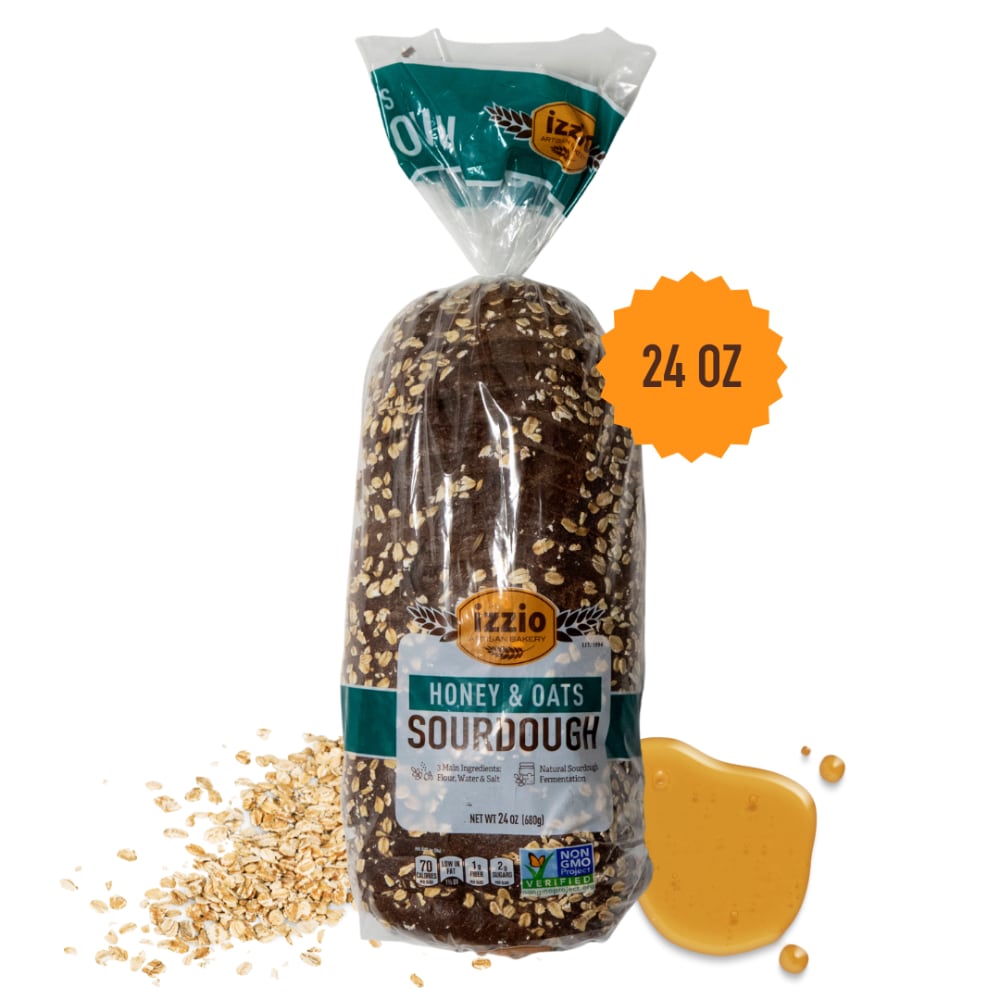


Izzio Artisan Bakery Honey & Oats Sourdough
Analysis updated August 2026 · How Scout scores
At a glance
Summary
This bread features a variety of nutritious seeds and grains, such as flax, sunflower, and pumpkin seeds, which contribute healthy fats and fiber. The use of sourdough culture is beneficial for digestion and nutrient absorption. However, the presence of added sugar and the processed nature of the product limit its overall healthiness, preventing it from reaching the highest scores.
Key ingredients 17
Sourdough CultureGood
Sourdough culture is a natural leavening agent that improves bread digestibility. It contains beneficial bacteria and yeast that can enhance gut health. The fermentation process can reduce gluten content and increase nutrient availability.
Benefits
Promotes gut health and improves nutrient absorption due to natural fermentation.
HoneyGood
Honey is a natural sweetener with antioxidant properties. It provides a unique flavor and can have antimicrobial effects. Unlike refined sugars, it contains trace nutrients and enzymes.
Risks
Excessive consumption can lead to increased calorie intake and blood sugar levels.
Benefits
Natural sweetener with antioxidants and trace nutrients, offering a healthier alternative to refined sugar.
Sea SaltGood
Sea salt is a natural source of sodium and trace minerals. It is less processed than table salt and can enhance flavor. Its mineral content can vary depending on the source.
Risks
Excessive sodium intake can lead to hypertension and cardiovascular issues.
Benefits
Provides essential sodium and trace minerals, enhancing flavor naturally.
Flax SeedsGood
Flax seeds are rich in omega-3 fatty acids and fiber, promoting heart health and digestion. They contain lignans, which have antioxidant properties. Grinding them improves nutrient absorption.
Risks
May cause digestive issues if consumed in large amounts without adequate hydration.
Benefits
Rich in omega-3s and fiber, supporting heart health and digestion.
Sunflower SeedsGood
Sunflower seeds are a good source of healthy fats, protein, and vitamin E. They provide antioxidants and support cardiovascular health. They are nutrient-dense and can be a healthy snack.
Risks
High in calories, which can contribute to weight gain if consumed in excess.
Benefits
Rich in healthy fats and vitamin E, supporting heart health and providing antioxidants.
Millet SeedsGood
Millet seeds are gluten-free and rich in fiber, vitamins, and minerals. They support digestive health and provide a good source of plant-based protein. They are a nutritious alternative to refined grains.
Benefits
Rich in fiber and nutrients, supporting digestion and providing plant-based protein.
Poppy SeedsGood
Poppy seeds are a source of healthy fats, fiber, and minerals like calcium and magnesium. They add a nutty flavor and texture to foods. They are nutrient-dense and can support bone health.
Risks
May cause allergic reactions in sensitive individuals.
Benefits
Rich in healthy fats and minerals, supporting bone health and adding flavor.
Pumpkin SeedsGood
Pumpkin seeds are high in magnesium, zinc, and healthy fats, supporting heart and prostate health. They are a good source of antioxidants and plant-based protein. They are nutrient-dense and versatile.
Risks
High in calories, which can contribute to weight gain if consumed in excess.
Benefits
Rich in magnesium and zinc, supporting heart and prostate health.
Rolled OatsGood
Rolled oats are a whole grain rich in fiber, supporting heart health and digestion. They contain beta-glucans, which can lower cholesterol levels. They are a nutritious and versatile ingredient.
Benefits
Rich in fiber and beta-glucans, supporting heart health and digestion.
Malted Barley FlourNeutral
Malted barley flour is used to enhance flavor and improve dough fermentation. It contains enzymes that help break down starches into sugars. It is generally considered safe and beneficial in small amounts.
Benefits
Enhances flavor and aids in fermentation, contributing to the bread's texture and taste.
WaterNeutral
Water is a basic ingredient necessary for dough formation and hydration. It does not contribute any calories or nutrients. Its quality can affect the final product's texture and taste.
Benefits
Essential for dough formation and hydration, contributing to the bread's texture.
Potato FlourNeutral
Potato flour is used to enhance moisture retention and improve texture. It is gluten-free and can add a slight sweetness to the bread. It is a source of carbohydrates but lacks significant nutrients.
Benefits
Improves moisture retention and texture, adding a slight sweetness to the bread.
Roasted MaltNeutral
Roasted malt is used to add flavor and color to bread. It is made from germinated cereal grains that are dried and roasted. It contributes to the bread's aroma and taste.
Benefits
Enhances flavor and color, contributing to the bread's overall sensory profile.
MolassesNeutral
Molasses is a byproduct of sugar refining, providing a rich flavor and color. It contains some vitamins and minerals, unlike refined sugar. It is used in small amounts to enhance taste.
Risks
High in sugar content, which can contribute to calorie intake.
Benefits
Contains trace vitamins and minerals, offering more nutrients than refined sugar.
EnzymesNeutral
Enzymes are used to improve dough handling and bread texture. They are naturally occurring proteins that catalyze biochemical reactions. They are generally recognized as safe in food processing.
Benefits
Improve dough handling and texture, enhancing the bread-making process.
Wheat FlourBad
Refined grain flour stripped of bran and germ.
Risks
May cause blood sugar spikes and is a common allergen for those with gluten sensitivity.
Benefits
Provides essential carbohydrates for energy but lacks the fiber and nutrients found in whole grains.
SugarBad
Sugar is a refined sweetener that can contribute to weight gain and metabolic issues. It provides empty calories without nutritional benefits. Excessive intake is linked to various health problems.
Risks
High consumption can lead to obesity, diabetes, and other metabolic disorders.
Processing
Processed Foods
Get the full breakdown in the Scout appTake Scout shopping
Scan any product to see lab results, healthy alternatives, and your personalized analysis.
Download on theApp Store GET IT ONGoogle PlayAmazon pricing & content
Amazon price as of . Product prices and availability are accurate as of the date/time indicated and are subject to change. Any price and availability information displayed on Amazon.com at the time of purchase will apply to the purchase of this product.
CERTAIN CONTENT THAT APPEARS ON THIS SITE COMES FROM AMAZON. THIS CONTENT IS PROVIDED “AS IS” AND IS SUBJECT TO CHANGE OR REMOVAL AT ANY TIME.