
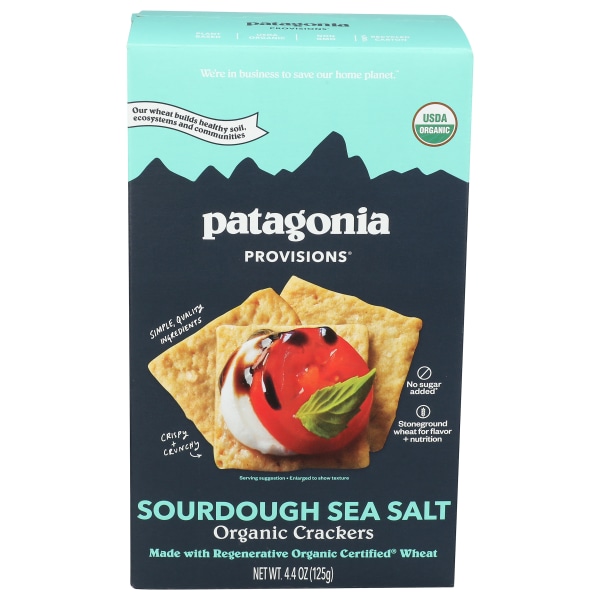


Patagonia Provisions - Organic Crackers 4.4oz | Multiple Flavors
Analysis updated August 2026 · How Scout scores
At a glance
Summary
This product is made with organic ingredients, including stoneground wheat flour and sourdough, which contribute to its nutritional value. However, the use of high oleic sunflower oil, despite being organic, is a processed ingredient that affects the overall healthiness. The product is moderately processed, which limits its score, but the absence of artificial additives and the use of regenerative organic certified ingredients are positive factors.
Key ingredients 8
Sea SaltGood
Beneficial ingredient — whole-food or functional value in this product class.
See more about Sea Salt →Organic SourdoughNeutral
Organic sourdough is a fermented ingredient that can aid digestion and provide beneficial probiotics, making it a neutral but generally positive component.
SaltNeutral
Salt is a common seasoning that enhances flavor; in moderation, it is neutral but necessary for taste.
See more about Salt →Lactic AcidNeutral
Lactic acid is a natural preservative and flavor enhancer derived from fermentation, considered neutral in its impact.
See more about Lactic Acid →Baking SodaNeutral
Baking soda is a common leavening agent that is neutral, used to improve texture and rise in baked goods.
See more about Baking Soda →Organic Yeast ExtractNeutral
Yeast extract is used to enhance flavor and umami, generally considered neutral in its nutritional impact.
See more about Organic Yeast Extract →Organic Stoneground Wheat FlourBad
This ingredient is classified as 'bad' because it is a highly processed wheat product, which may contain refined grains and additives that reduce its nutritional value.
Organic High Oleic Sunflower OilVery Bad
This oil is considered 'very_bad' due to its high omega-6 fatty acid content, which can promote inflammation when consumed in excess.
See more about Organic High Oleic Sunflower Oil →Processing
Processed Foods
Get the full breakdown in the Scout appTake Scout shopping
Scan any product to see lab results, healthy alternatives, and your personalized analysis.
Download on theApp Store GET IT ONGoogle PlayAmazon pricing & content
Amazon price as of . Product prices and availability are accurate as of the date/time indicated and are subject to change. Any price and availability information displayed on Amazon.com at the time of purchase will apply to the purchase of this product.
CERTAIN CONTENT THAT APPEARS ON THIS SITE COMES FROM AMAZON. THIS CONTENT IS PROVIDED “AS IS” AND IS SUBJECT TO CHANGE OR REMOVAL AT ANY TIME.