
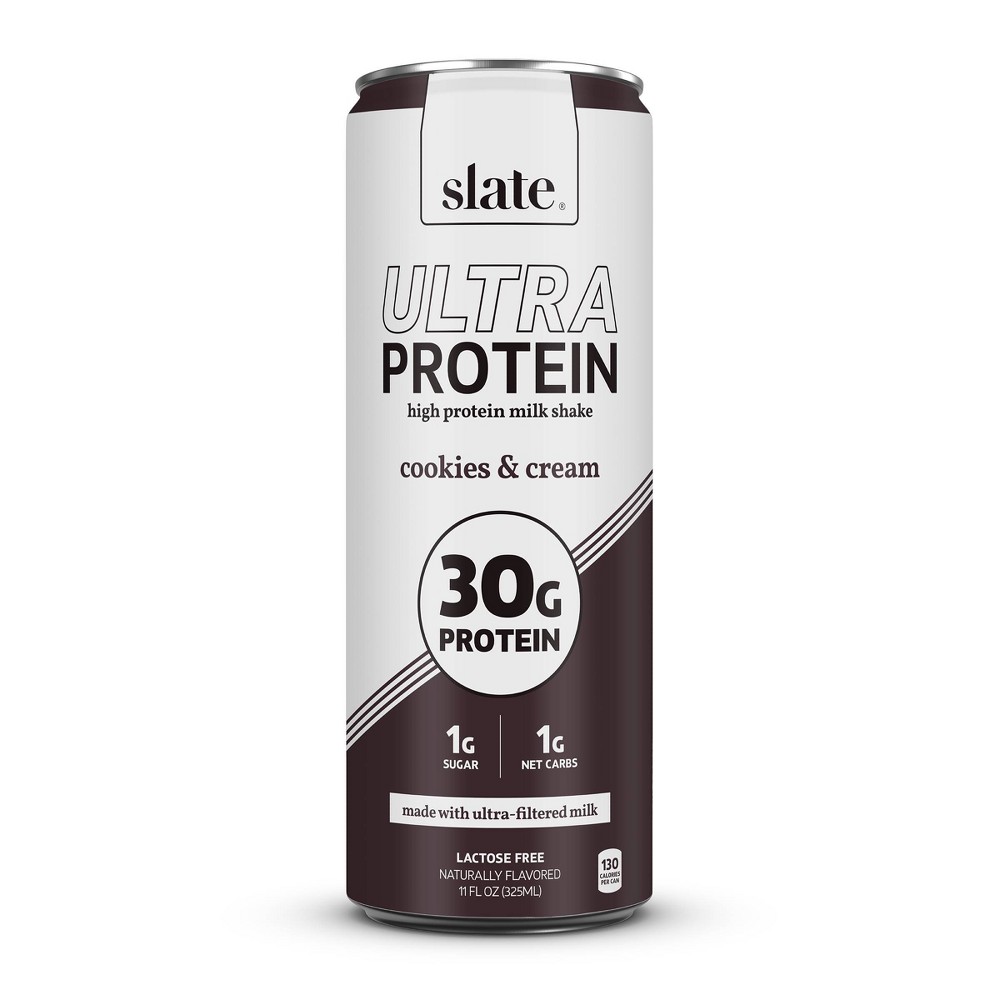



Slate Milk Cookies and Cream Ultra 30g Protein Shake - 11 fl oz Can
Analysis updated August 2026 · How Scout scores
At a glance
Summary
This product contains ultrafiltered skim milk blend, which is a high-quality source of protein and beneficial for those seeking a low-lactose option. However, it includes artificial sweeteners like sucralose and natural flavors, which are highly processed and can raise health concerns. The presence of these ingredients, along with its processed nature, limits its overall health rating.
Key ingredients 13
Ultrafiltered Skim Milk BlendGood
Ultrafiltered skim milk blend provides a high-quality source of protein and calcium. The ultrafiltration process removes some lactose and concentrates the protein content. This makes it a beneficial ingredient for those seeking a high-protein, low-lactose option.
Benefits
Rich in protein and calcium, supporting muscle maintenance and bone health.
Vitamin D3Good
Beneficial ingredient — whole-food or functional value in this product class.
Risks
Excessive intake can lead to hypercalcemia, a condition of elevated calcium levels in the blood.
Benefits
Enhances calcium absorption and supports bone health and immune function.
Cocoa (Processed With Alkali)Neutral
Cocoa processed with alkali, also known as Dutch-processed cocoa, has a milder flavor and darker color. The alkalization process reduces acidity but may also decrease some antioxidant content. It is commonly used in processed foods for its flavor and color.
Benefits
Provides flavor and color to the product, though antioxidant content may be reduced.
Cellulose GelNeutral
Cellulose gel is used as a thickening agent and stabilizer in food products. It is derived from plant fibers and is generally recognized as safe. It provides texture without adding calories or nutrients.
Benefits
Adds texture and stability to the product without contributing calories.
SaltNeutral
Salt is used to enhance flavor and preserve food. It is a common ingredient in many processed foods. While necessary for bodily functions, excessive intake can lead to health issues.
Risks
High sodium intake can contribute to hypertension and cardiovascular disease.
Benefits
Essential for maintaining fluid balance and nerve function.
PectinNeutral
Pectin is a natural polysaccharide used as a gelling agent in food products. It is derived from fruits and is commonly used in jams and jellies. It provides texture and stability to the product.
Benefits
Contributes to the texture and stability of the product.
Tripotassium CitrateNeutral
Tripotassium citrate is used as a buffering agent to control acidity in food products. It is a potassium salt of citric acid and is generally recognized as safe. It helps maintain the desired pH level in the product.
Risks
Excessive intake may lead to hyperkalemia, especially in individuals with kidney issues.
Benefits
Helps maintain product stability by controlling acidity.
Cellulose GumNeutral
Cellulose gum is a thickening agent derived from cellulose, a natural component of plant cell walls. It is used to improve texture and stability in food products. It is calorie-free and does not contribute to the nutritional profile.
Benefits
Enhances texture and stability without adding calories.
Stevia Leaf (Reb M)Neutral
Stevia leaf extract, specifically Reb M, is a natural, zero-calorie sweetener. It is derived from the stevia plant and is used as a sugar substitute. It provides sweetness without affecting blood sugar levels.
Benefits
Offers a natural, calorie-free alternative to sugar, suitable for those managing blood sugar levels.
Lactase EnzymeNeutral
Lactase enzyme is added to break down lactose, making the product suitable for lactose-intolerant individuals. It is a beneficial addition for those who have difficulty digesting lactose. It does not alter the nutritional content of the product.
Benefits
Enables lactose-intolerant individuals to consume dairy without discomfort.
Vitamin A PalmitateNeutral
Vitamin A palmitate is a synthetic form of vitamin A used to fortify foods. It is essential for vision, immune function, and skin health. While beneficial, excessive intake can lead to toxicity.
Risks
Excessive consumption can lead to hypervitaminosis A, a condition of vitamin A toxicity.
Benefits
Supports vision, immune function, and skin health.
Natural FlavorsBad
Natural flavors are a catch-all term for flavoring agents derived from natural sources. They are highly processed and can contain a variety of chemical compounds. The lack of transparency in their composition can be concerning for consumers.
Risks
Potential for undisclosed allergens or sensitivities due to the vague nature of 'natural flavors'.
SucraloseBad
Sucralose is an artificial sweetener that is much sweeter than sugar and used to reduce calorie content. It is chemically altered to be non-caloric, but its long-term health effects are debated. Some studies suggest it may affect gut health.
Risks
Potential impacts on gut microbiota and possible long-term health concerns.
Benefits
Provides sweetness without calories, aiding in calorie reduction.
Processing
Processed Foods
Get the full breakdown in the Scout appTake Scout shopping
Scan any product to see lab results, healthy alternatives, and your personalized analysis.
Download on theApp Store GET IT ONGoogle PlayAmazon pricing & content
Amazon price as of . Product prices and availability are accurate as of the date/time indicated and are subject to change. Any price and availability information displayed on Amazon.com at the time of purchase will apply to the purchase of this product.
CERTAIN CONTENT THAT APPEARS ON THIS SITE COMES FROM AMAZON. THIS CONTENT IS PROVIDED “AS IS” AND IS SUBJECT TO CHANGE OR REMOVAL AT ANY TIME.