
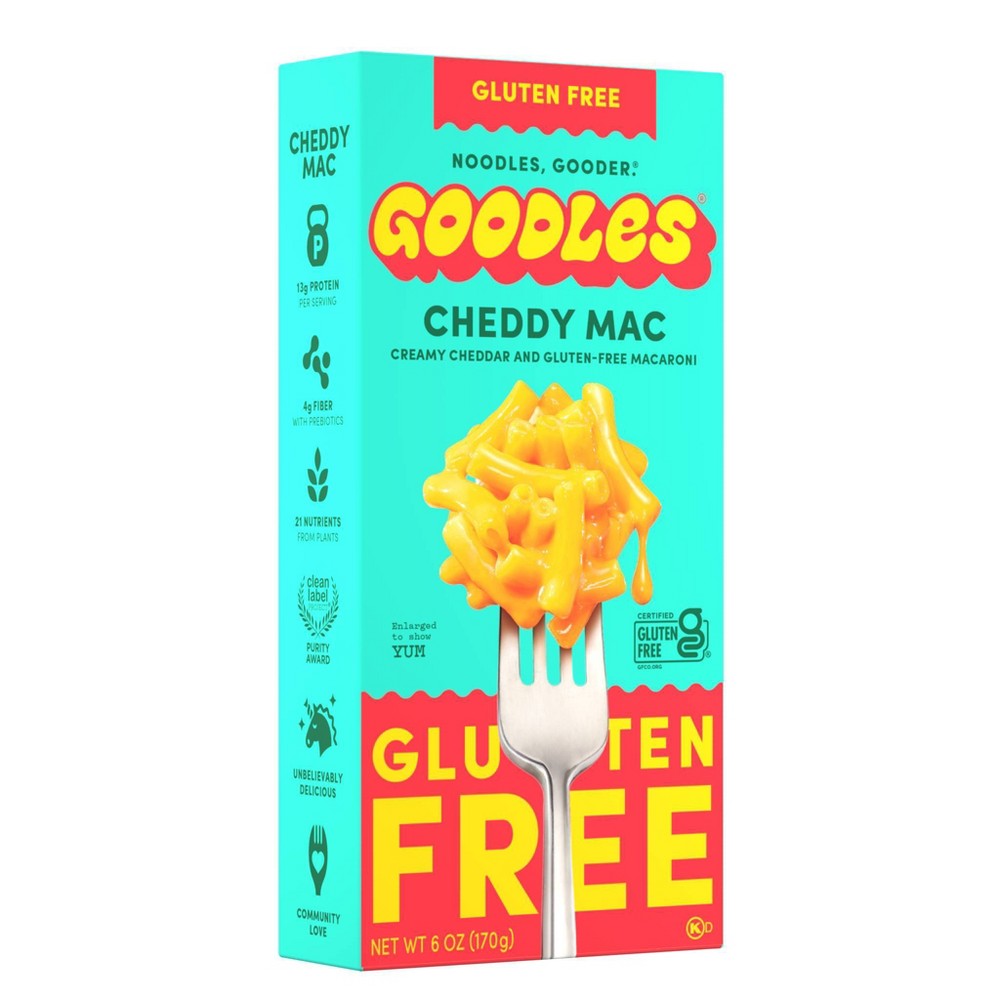
Goodles Gluten Free Cheddy Mac Creamy Cheddar Protein Macaroni Noodles & Cheese - 6oz; Brand: GOODLES; Food Condition: Unprepared

GOODLES
63 Fair
1 pack · 6 oz
View on Amazon
Verified Amazon match

Summary

This product contains a variety of beneficial ingredients such as chickpeas, yellow peas, and leafy greens, which contribute to its nutritional profile. However, it is classified as ultra-processed due to the presence of additives like disodium phosphate and xanthan gum, which are used for texture and preservation. The processing level and the inclusion of synthetic additives limit its overall healthiness despite the presence of whole food ingredients.

At a glance

Beneficial ingredients 16
Harmful ingredients 1
Owned by Gooder Foods, Inc.
Category Pasta

Key ingredients 29

Corn
Neutral

Corn is a common base for gluten-free pasta, providing carbohydrates and some fiber. It is often used in processed forms, which may reduce its nutritional value. Corn is generally well-tolerated but lacks the nutrient density of whole grains.

Risks

Corn can be high in carbohydrates and may contribute to blood sugar spikes.

Benefits

Provides a gluten-free alternative to wheat and can be a source of energy.

See more about Corn →
Brown rice
Good

Brown rice is a whole grain that retains its bran and germ, providing more fiber and nutrients than white rice. It is minimally processed, preserving its nutritional benefits. Brown rice is a good source of magnesium, phosphorus, and B vitamins.

Risks

May contain trace amounts of arsenic, which can accumulate over time if consumed in large quantities.

Benefits

Rich in fiber and essential nutrients, supporting digestive health and providing sustained energy.

See more about Brown rice →
Chickpeas
Very Good

Chickpeas are a nutrient-dense legume high in protein and fiber, supporting satiety and digestive health. They are minimally processed and provide essential vitamins and minerals. Chickpeas are a versatile ingredient that can enhance the nutritional profile of foods.

Benefits

High in protein and fiber, promoting satiety and digestive health. Contains essential nutrients like folate and iron.

See more about Chickpeas →
Yellow peas
Very Good

Yellow peas are a rich source of plant-based protein and fiber, supporting muscle maintenance and digestive health. They are minimally processed and provide essential amino acids. Yellow peas are a sustainable crop with a low environmental impact.

Benefits

Provides high-quality plant protein and fiber, supporting muscle health and digestion.

Chickpea protein
Good

Chickpea protein is a concentrated source of plant-based protein, offering a complete amino acid profile. It is derived from chickpeas through minimal processing, retaining its nutritional benefits. This protein is a suitable alternative for those avoiding animal products.

Benefits

Offers a complete amino acid profile and supports muscle maintenance and repair.

Xanthan gum
Neutral

Xanthan gum is a common food additive used as a thickening and stabilizing agent. It is produced through fermentation and is generally recognized as safe. While it has no nutritional value, it improves the texture of gluten-free products.

Risks

Excessive consumption may cause digestive discomfort in sensitive individuals.

Benefits

Improves texture and stability in gluten-free products without significant health risks.

See more about Xanthan gum →
Broccoli
Very Good

Broccoli is a nutrient-rich vegetable high in vitamins C and K, fiber, and antioxidants. It is minimally processed and retains its health benefits when included in foods. Broccoli supports immune function and may reduce inflammation.

Benefits

Rich in vitamins and antioxidants, supporting immune health and reducing inflammation.

See more about Broccoli →
Spinach
Very Good

Spinach is a leafy green vegetable rich in iron, calcium, and vitamins A and C. It is minimally processed and retains its nutritional benefits in foods. Spinach supports bone health and provides antioxidants that may reduce oxidative stress.

Benefits

High in essential nutrients and antioxidants, supporting bone health and reducing oxidative stress.

See more about Spinach →
Kale
Very Good

Kale is a nutrient-dense leafy green high in vitamins A, C, and K, as well as antioxidants. It is minimally processed and retains its health benefits in foods. Kale supports immune function and may reduce inflammation.

Benefits

Rich in vitamins and antioxidants, supporting immune health and reducing inflammation.

See more about Kale →
Pumpkin
Good

Pumpkin is a low-calorie vegetable rich in beta-carotene, fiber, and vitamins A and C. It is minimally processed and retains its nutritional benefits in foods. Pumpkin supports eye health and provides antioxidants that may reduce inflammation.

Benefits

High in beta-carotene and fiber, supporting eye health and reducing inflammation.

See more about Pumpkin →
Sweet potato
Good

Sweet potato is a nutrient-rich root vegetable high in fiber, vitamins A and C, and antioxidants. It is minimally processed and retains its health benefits in foods. Sweet potato supports digestive health and provides sustained energy.

Benefits

Rich in fiber and antioxidants, supporting digestive health and providing sustained energy.

See more about Sweet potato →
Sunflower seed
Neutral

Sunflower seeds are a source of healthy fats, protein, and vitamin E. They are minimally processed and provide some nutritional benefits. However, they are not as nutrient-dense as other seeds like chia or flax.

Risks

May contribute to high omega-6 intake if consumed in excess.

Benefits

Provides healthy fats and vitamin E, supporting heart health and skin health.

Cranberry
Good

Cranberries are a fruit high in antioxidants and vitamin C, supporting immune health. They are minimally processed and retain their nutritional benefits in foods. Cranberries may help prevent urinary tract infections.

Benefits

Rich in antioxidants and vitamin C, supporting immune health and potentially preventing urinary tract infections.

See more about Cranberry →
Chlorella
Good

Chlorella is a nutrient-dense algae high in protein, vitamins, and minerals. It is minimally processed and provides a range of health benefits. Chlorella supports detoxification and may enhance immune function.

Benefits

High in nutrients and supports detoxification and immune health.

Maitake mushroom
Good

Maitake mushrooms are rich in antioxidants and beta-glucans, supporting immune health. They are minimally processed and retain their nutritional benefits in foods. Maitake mushrooms may help regulate blood sugar levels.

Benefits

Rich in antioxidants and beta-glucans, supporting immune health and potentially regulating blood sugar.

Shiitake mushroom
Good

Shiitake mushrooms are high in B vitamins and polysaccharides, supporting immune health. They are minimally processed and retain their nutritional benefits in foods. Shiitake mushrooms may have anti-inflammatory properties.

Benefits

Rich in B vitamins and polysaccharides, supporting immune health and potentially reducing inflammation.

Cheddar cheese
Neutral

Cheddar cheese is a dairy product providing calcium and protein. It is processed through aging, which enhances its flavor but may increase sodium content. While it offers nutritional benefits, it should be consumed in moderation due to its saturated fat content.

Risks

High in saturated fat and sodium, which may impact heart health if consumed in excess.

Benefits

Provides calcium and protein, supporting bone health and muscle maintenance.

See more about Cheddar cheese →
Whey
Good

Whey is a high-quality protein derived from milk, offering a complete amino acid profile. It is minimally processed and supports muscle growth and repair. Whey protein is easily digestible and absorbed by the body.

Benefits

Provides a complete amino acid profile, supporting muscle growth and repair.

See more about Whey →
Buttermilk
Neutral

Buttermilk is a fermented dairy product providing probiotics and calcium. It is minimally processed and can support digestive health. However, it is not as nutrient-dense as other dairy products like yogurt.

Risks

Contains lactose, which may cause digestive issues in lactose-intolerant individuals.

Benefits

Provides probiotics and calcium, supporting digestive and bone health.

Salt
Neutral

Salt is used to enhance flavor and preserve food. It is a natural mineral but should be consumed in moderation to avoid health issues. Excessive salt intake can lead to high blood pressure.

Risks

High sodium intake can increase the risk of hypertension and cardiovascular disease.

Benefits

Enhances flavor and acts as a preservative in foods.

See more about Salt →
Disodium phosphate
Bad

Disodium phosphate is a synthetic additive used as an emulsifier and stabilizer. It is highly processed and can contribute to an imbalance in phosphate levels in the body. Excessive consumption may lead to health issues related to kidney function and bone health.

Risks

May contribute to kidney stress and bone mineral disruption when consumed in large amounts.

Annatto
Neutral

Annatto is a natural coloring agent derived from the seeds of the achiote tree. It is minimally processed and used to impart a yellow-orange color to foods. Annatto is generally considered safe and has no significant nutritional impact.

Benefits

Provides natural color without artificial additives.

See more about Annatto →
Paprika
Good

Paprika is a spice made from ground peppers, providing flavor and color to foods. It is minimally processed and contains antioxidants like vitamin A. Paprika can enhance the flavor profile of dishes while offering some nutritional benefits.

Benefits

Rich in antioxidants and vitamin A, supporting immune health and adding flavor.

See more about Paprika →
Turmeric
Very Good

Turmeric is a spice known for its anti-inflammatory and antioxidant properties, primarily due to curcumin. It is minimally processed and used in small amounts to enhance flavor and color. Turmeric may support joint health and reduce inflammation.

Benefits

Contains curcumin, which has anti-inflammatory and antioxidant properties, supporting joint health.

See more about Turmeric →
Lactic acid
Neutral

Lactic acid is a naturally occurring organic acid used as a preservative and flavoring agent. It is produced through fermentation and is generally recognized as safe. Lactic acid can enhance the tangy flavor of foods without significant health impacts.

Benefits

Enhances flavor and acts as a preservative in foods.

See more about Lactic acid →
Enzymes
Neutral

Enzymes are proteins that catalyze biochemical reactions, often used in food processing to improve texture and flavor. They are naturally occurring and generally recognized as safe. Enzymes can enhance the digestibility of certain foods.

Benefits

Improves texture and flavor in foods, enhancing digestibility.

See more about Enzymes →
Butter
Neutral

Butter is a dairy product high in saturated fat, providing flavor and richness to foods. It is minimally processed but should be consumed in moderation due to its fat content. Butter offers some vitamins like A and D but is calorie-dense.

Risks

High in saturated fat, which may impact heart health if consumed in excess.

Benefits

Provides flavor and richness, along with vitamins A and D.

See more about Butter →
Dried maple syrup
Neutral

Dried maple syrup is a natural sweetener derived from the sap of maple trees. It is minimally processed and provides a unique flavor profile. While it contains some minerals, it is primarily a source of sugar and should be consumed in moderation.

Risks

High in sugar, which can contribute to blood sugar spikes and dental issues if consumed in excess.

Benefits

Provides a natural sweetening option with a unique flavor profile.

Tapioca flour
Neutral

Tapioca flour is a starch extracted from the cassava root, used as a thickening agent in foods. It is minimally processed and gluten-free, making it suitable for those with gluten sensitivities. Tapioca flour is primarily a source of carbohydrates with limited nutritional value.

Benefits

Provides a gluten-free thickening option for foods.

See more about Tapioca flour →

Processing

Group 4 · Ultra-processed

Ultra-Processed Foods

Get the full breakdown in the Scout app

Scan any product to see lab results, healthy alternatives, and your personalized analysis.

Download on theApp Store