
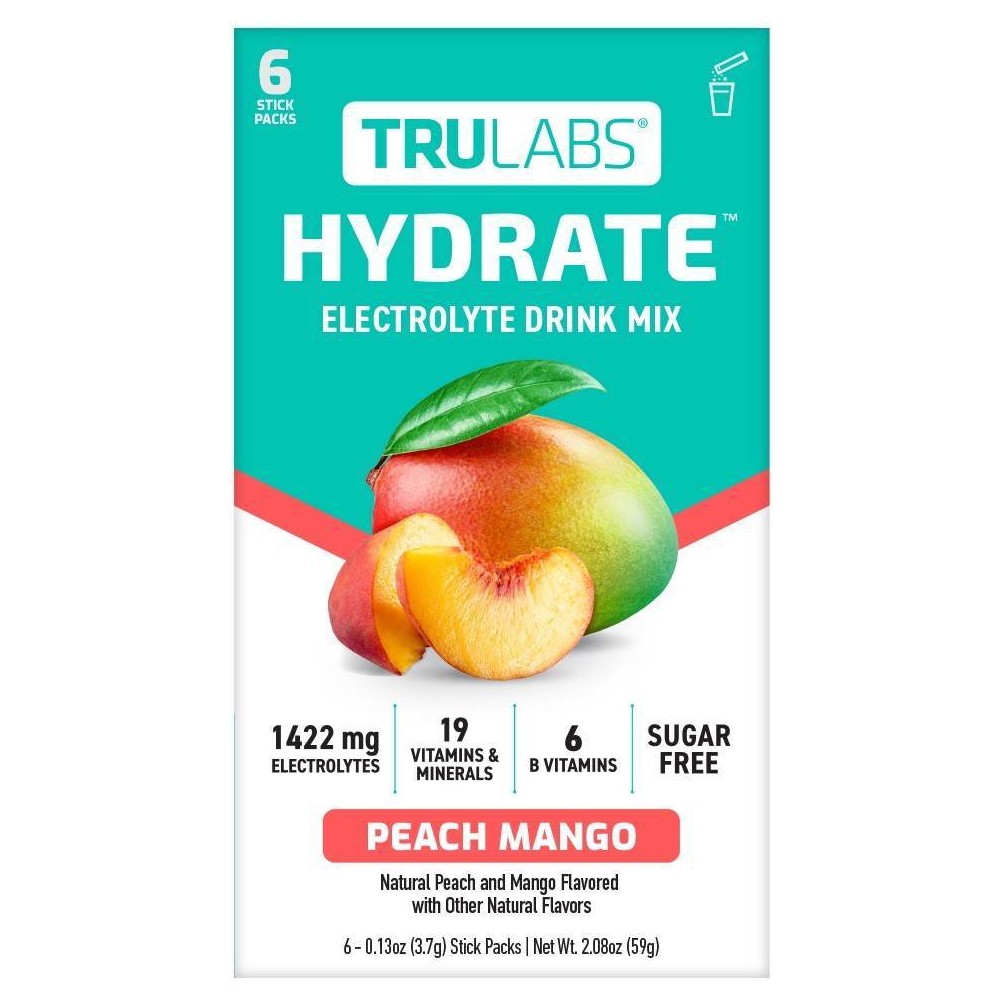

TruLabs Hydrate Sports Drink - Peach Mango - 0.78oz/6ct
Analysis updated July 2026 · How Scout scores
At a glance
Summary
This sports drink contains beneficial electrolytes and vitamins, such as magnesium glycinate and vitamin C, which support hydration and immune function. However, it is considered ultra-processed due to the presence of natural flavors and multiple additives, which limits its score. Despite the inclusion of natural coloring agents like turmeric, the processing level and use of natural flavors prevent a higher rating.
Key ingredients 15
Potassium CitrateGood
Potassium citrate is used to regulate acidity and provide potassium, an essential electrolyte. It helps in maintaining proper muscle and nerve function. It can also help prevent kidney stones.
Risks
Excessive intake may lead to hyperkalemia, affecting heart function.
Benefits
Supports cardiovascular health and helps prevent kidney stones.
Calcium CitrateGood
Calcium citrate is a form of calcium that is easily absorbed by the body. It is used to support bone health and prevent osteoporosis. It is more easily absorbed than calcium carbonate, especially in individuals with low stomach acid.
Risks
Excessive intake can lead to hypercalcemia, affecting kidney function.
Benefits
Supports bone health and is easily absorbed by the body.
Magnesium GlycinateGood
Magnesium glycinate is a highly absorbable form of magnesium, used to support muscle and nerve function. It is less likely to cause digestive upset compared to other forms of magnesium. It also supports relaxation and sleep quality.
Risks
Excessive intake may cause diarrhea and abdominal cramping.
Benefits
Supports muscle function and promotes relaxation and sleep.
Ascorbic AcidGood
Ascorbic acid, or Vitamin C, is a powerful antioxidant that supports immune function. It is essential for collagen synthesis and skin health. It also enhances iron absorption from plant-based foods.
Risks
High doses may cause gastrointestinal discomfort.
Benefits
Boosts immune function and enhances iron absorption.
TurmericGood
Turmeric is a natural spice used for its color and potential health benefits. It contains curcumin, which has anti-inflammatory and antioxidant properties. It is used as a natural coloring agent in foods.
Risks
High doses may cause digestive issues and interact with certain medications.
Benefits
Offers anti-inflammatory and antioxidant benefits.
CholecalciferolGood
Cholecalciferol, or Vitamin D3, is essential for calcium absorption and bone health. It supports immune function and may improve mood. It is more effective at raising blood vitamin D levels than Vitamin D2.
Risks
Excessive intake can lead to hypercalcemia and kidney damage.
Benefits
Supports bone health and immune function.
NiacinGood
Niacin, or Vitamin B3, is important for energy metabolism and skin health. It helps convert food into energy and supports nervous system function. It may also improve cholesterol levels.
Risks
High doses can cause flushing and liver damage.
Benefits
Supports energy metabolism and may improve cholesterol levels.
Zinc Amino Acid ChelateGood
Zinc amino acid chelate is a highly absorbable form of zinc, important for immune function. It supports wound healing and DNA synthesis. Chelated forms are better absorbed and tolerated.
Risks
Excessive intake can lead to copper deficiency and immune dysfunction.
Benefits
Supports immune function and wound healing.
SaltNeutral
Salt is a common electrolyte used to replenish sodium lost through sweat. It is essential for maintaining fluid balance and nerve function. However, excessive intake can lead to high blood pressure.
Risks
High sodium intake can increase the risk of hypertension and cardiovascular diseases.
Benefits
Helps in maintaining electrolyte balance and proper muscle function.
Pink Himalayan SaltNeutral
Pink Himalayan salt is a type of rock salt that contains trace minerals. It is often marketed as a healthier alternative to regular salt. However, the health benefits over regular salt are minimal.
Risks
Similar to regular salt, excessive consumption can lead to high blood pressure.
Benefits
Contains trace minerals that may provide additional nutritional benefits.
Malic AcidNeutral
Malic acid is a naturally occurring acid found in fruits, used to enhance flavor. It is generally recognized as safe when consumed in typical amounts. It can enhance the tartness and flavor profile of beverages.
Benefits
May improve energy production and reduce muscle fatigue.
Citric AcidNeutral
Citric acid is a natural preservative and flavor enhancer found in citrus fruits. It is commonly used to add a sour taste to foods and beverages. It also acts as an antioxidant.
Risks
Excessive consumption may cause tooth enamel erosion.
Benefits
Acts as an antioxidant and can enhance mineral absorption.
Sugarcane Reb MNeutral
Sugarcane Reb M is a steviol glycoside derived from sugarcane, used as a zero-calorie sweetener. It provides sweetness without the calories of sugar. It is considered safe and does not affect blood sugar levels.
Benefits
Provides sweetness without calories, suitable for weight management.
Vegetable JuiceNeutral
Vegetable juice is used as a natural coloring agent in foods and beverages. It provides color without artificial dyes. However, it does not contribute significant nutritional value in small amounts.
Benefits
Provides natural color without artificial additives.
Natural FlavorBad
Natural flavors are used to enhance taste but can be derived from complex chemical processes. The term 'natural' does not guarantee health benefits or transparency in sourcing. They can mask the presence of less desirable ingredients.
Risks
Lack of transparency in sourcing and potential for allergic reactions.
Processing
Ultra-Processed Foods
Get the full breakdown in the Scout appTake Scout shopping
Scan any product to see lab results, healthy alternatives, and your personalized analysis.
Download on theApp Store GET IT ONGoogle PlayAmazon pricing & content
Amazon price as of . Product prices and availability are accurate as of the date/time indicated and are subject to change. Any price and availability information displayed on Amazon.com at the time of purchase will apply to the purchase of this product.
CERTAIN CONTENT THAT APPEARS ON THIS SITE COMES FROM AMAZON. THIS CONTENT IS PROVIDED “AS IS” AND IS SUBJECT TO CHANGE OR REMOVAL AT ANY TIME.