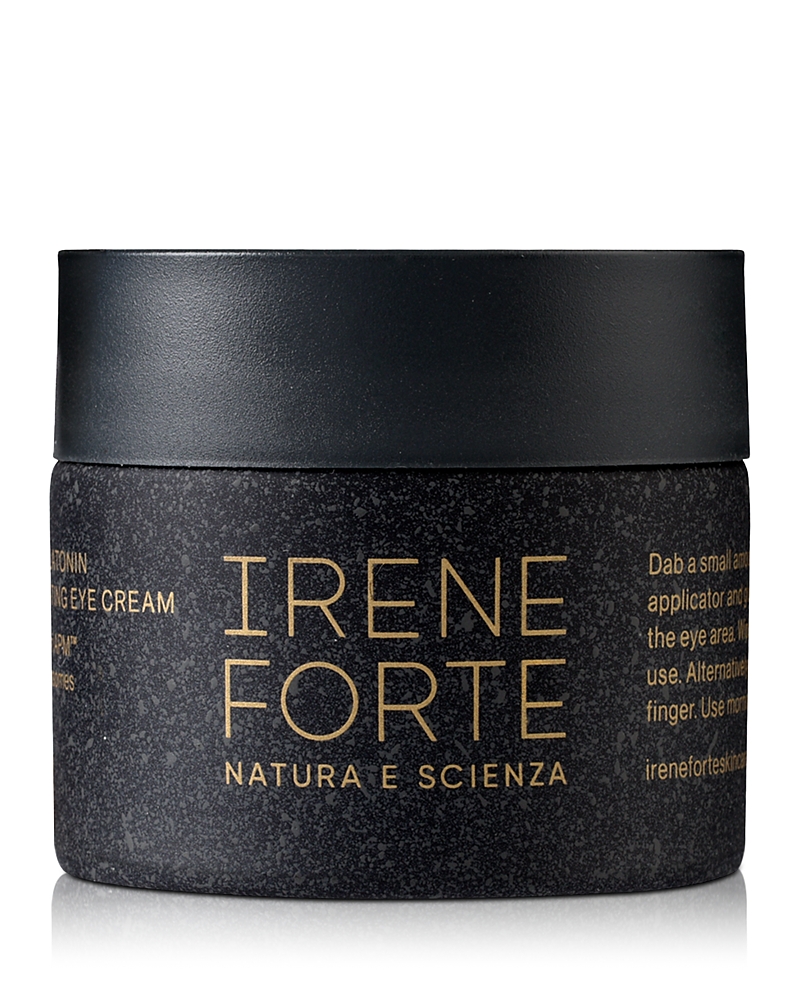
Irene Forte Phytomelatonin Rejuvenating Eye Cream 0.5 oz.
At a glance
Summary
This eye cream features a rich blend of beneficial ingredients such as shea butter, squalane, and Centella asiatica extract, which are known for their moisturizing and anti-inflammatory properties. The formulation is largely composed of natural and skin-friendly components, with only a minor concern regarding the presence of benzyl alcohol, which can be irritating for sensitive skin. Overall, the product is minimally processed with a clean label, contributing to its high rating.
Key ingredients 48
Butyrospermum Parkii (Shea) ButterVery Good
Shea butter is a natural fat extracted from the nuts of the shea tree. It is rich in vitamins and fatty acids, making it an excellent moisturizer. It is known for its anti-inflammatory and healing properties.
Risks
There is a low risk of allergic reactions, especially for those with nut allergies.
Benefits
Shea butter deeply moisturizes the skin and helps in reducing inflammation and irritation.
SqualaneVery Good
Squalane is a highly effective emollient and natural antioxidant. It mimics the skin's natural oils, making it an excellent moisturizer. It is non-comedogenic and suitable for all skin types.
Risks
There are no significant risks associated with squalane.
Benefits
Squalane hydrates the skin, reduces the appearance of fine lines, and improves skin elasticity.
Centella Asiatica ExtractVery Good
Centella asiatica extract is known for its wound healing and anti-inflammatory properties. It is rich in antioxidants and helps improve skin hydration. It is widely used in skincare for its soothing effects.
Risks
There is a low risk of allergic reactions.
Benefits
Centella asiatica extract helps soothe irritated skin and promotes collagen production.
Ceramide ApVery Good
Ceramide AP is a lipid that helps maintain the skin's barrier function. It is essential for keeping the skin hydrated and protected from environmental stressors. It is used in skincare for its barrier-repairing properties.
Risks
There are no significant risks associated with ceramide AP.
Benefits
Ceramide AP helps improve the skin's barrier function and enhances hydration.
Ceramide EopVery Good
Ceramide EOP is a lipid that helps restore the skin's natural barrier. It is crucial for maintaining skin hydration and preventing moisture loss. It is used in skincare for its barrier-repairing properties.
Risks
There are no significant risks associated with ceramide EOP.
Benefits
Ceramide EOP helps strengthen the skin's barrier and improve hydration.
Avena Sativa (Oat) Kernel ExtractVery Good
Oat kernel extract is known for its soothing and anti-inflammatory properties. It helps calm irritated skin and provides moisture. It is widely used in skincare for its calming and hydrating effects.
Risks
There is a low risk of allergic reactions.
Benefits
Oat kernel extract helps soothe and hydrate the skin, reducing irritation.
TocopherolVery Good
Tocopherol, also known as vitamin E, is a powerful antioxidant used in cosmetics. It helps protect the skin from environmental damage and improve skin health. It is widely used for its moisturizing and healing properties.
Risks
There is a low risk of skin irritation.
Benefits
Tocopherol provides antioxidant protection and helps moisturize the skin.
Caprylic/Capric TriglycerideGood
This ingredient is derived from coconut oil and glycerin. It is used as an emollient and helps in the delivery of active ingredients. It is lightweight and non-greasy, making it suitable for all skin types.
Risks
There are minimal risks associated with this ingredient.
Benefits
Caprylic/Capric Triglyceride helps moisturize the skin and enhances the absorption of other beneficial ingredients.
Vitis Vinifera (Grape) Leaf ExtractGood
Grape leaf extract is rich in antioxidants and polyphenols, which help protect the skin from environmental damage. It has anti-inflammatory properties and can improve skin tone.
Risks
There is a low risk of allergic reactions.
Benefits
Grape leaf extract helps in reducing inflammation and provides antioxidant protection to the skin.
GlycerinGood
Glycerin is a humectant that attracts moisture to the skin. It is a common ingredient in skincare products due to its moisturizing properties. It helps maintain the skin's water balance on an intercellular level.
Risks
There are no significant risks associated with glycerin.
Benefits
Glycerin helps keep the skin hydrated and soft, improving its overall appearance.
Astragalus Membranaceus Root ExtractGood
Astragalus root extract is known for its antioxidant and anti-inflammatory properties. It helps protect the skin from environmental stressors and improves skin health. It is used in traditional medicine for its rejuvenating effects.
Risks
There is a low risk of skin irritation.
Benefits
Astragalus root extract helps in reducing inflammation and provides antioxidant protection.
Tocopheryl AcetateGood
Tocopheryl acetate is a form of vitamin E used as an antioxidant in cosmetics. It helps protect the skin from environmental damage and improves skin health. It is widely used for its moisturizing and healing properties.
Risks
There is a low risk of skin irritation.
Benefits
Tocopheryl acetate provides antioxidant protection and helps moisturize the skin.
Pisum Sativum (Pea) ExtractGood
Pea extract is rich in proteins and antioxidants, which help protect the skin from environmental damage. It has anti-aging properties and can improve skin elasticity. It is used in skincare for its rejuvenating effects.
Risks
There is a low risk of allergic reactions.
Benefits
Pea extract helps in reducing signs of aging and provides antioxidant protection.
PhytosphingosineGood
Phytosphingosine is a lipid that helps maintain the skin's barrier function. It has anti-inflammatory and antimicrobial properties, making it beneficial for acne-prone skin. It is used in skincare for its soothing effects.
Risks
There is a low risk of skin irritation.
Benefits
Phytosphingosine helps soothe irritated skin and supports the skin's natural barrier.
Sodium HyaluronateGood
Sodium hyaluronate is a form of hyaluronic acid that helps retain moisture in the skin. It is a powerful humectant that can hold up to 1000 times its weight in water. It is widely used in skincare for its hydrating properties.
Risks
There are no significant risks associated with sodium hyaluronate.
Benefits
Sodium hyaluronate helps keep the skin hydrated and plump, reducing the appearance of fine lines.
Ceramide NpGood
Ceramide NP is a lipid that helps restore the skin's barrier function. It is essential for maintaining skin hydration and preventing moisture loss. It is widely used in skincare for its barrier-repairing properties.
Risks
There are no significant risks associated with ceramide NP.
Benefits
Ceramide NP helps strengthen the skin's barrier and improve hydration.
Glycyrrhiza Glabra (Licorice) Root ExtractGood
Licorice root extract is known for its skin-brightening and anti-inflammatory properties. It helps reduce hyperpigmentation and soothe irritated skin. It is widely used in skincare for its calming effects.
Risks
There is a low risk of allergic reactions.
Benefits
Licorice root extract helps brighten the skin and reduce inflammation.
Achillea Millefolium (Yarrow) Flower ExtractGood
Yarrow flower extract is known for its anti-inflammatory and astringent properties. It helps soothe irritated skin and improve skin tone. It is used in skincare for its calming and toning effects.
Risks
There is a low risk of skin irritation.
Benefits
Yarrow flower extract helps calm the skin and improve its overall appearance.
Salvia Officinalis (Sage) Leaf ExtractGood
Sage leaf extract is known for its antioxidant and antimicrobial properties. It helps protect the skin from environmental damage and improve skin health. It is used in skincare for its rejuvenating effects.
Risks
There is a low risk of skin irritation.
Benefits
Sage leaf extract provides antioxidant protection and helps improve skin health.
Centaurea Cyanus (Cornflower) Flower ExtractGood
Cornflower flower extract is known for its soothing and anti-inflammatory properties. It helps calm irritated skin and reduce puffiness. It is used in skincare for its calming effects.
Risks
There is a low risk of allergic reactions.
Benefits
Cornflower flower extract helps soothe and calm the skin, reducing puffiness.
Althaea Officinalis (Marshmallow) Root ExtractGood
Marshmallow root extract is known for its soothing and hydrating properties. It helps calm irritated skin and provide moisture. It is used in skincare for its calming and hydrating effects.
Risks
There is a low risk of allergic reactions.
Benefits
Marshmallow root extract helps soothe and hydrate the skin, reducing irritation.
Arctium Lappa (Burdock) Root ExtractGood
Burdock root extract is known for its antioxidant and anti-inflammatory properties. It helps protect the skin from environmental damage and improve skin health. It is used in skincare for its rejuvenating effects.
Risks
There is a low risk of skin irritation.
Benefits
Burdock root extract provides antioxidant protection and helps improve skin health.
Ascorbyl PalmitateGood
Ascorbyl palmitate is a stable form of vitamin C used as an antioxidant in cosmetics. It helps protect the skin from environmental damage and improve skin health. It is used in skincare for its brightening and anti-aging effects.
Risks
There is a low risk of skin irritation.
Benefits
Ascorbyl palmitate provides antioxidant protection and helps brighten the skin.
Aqua (Water)Neutral
Water is a universal solvent used as a base in many cosmetic formulations. It helps dissolve other ingredients and provides hydration. It is generally considered safe and non-irritating.
Risks
There are no significant risks associated with water in cosmetics.
Benefits
Water helps in hydrating the skin and acts as a carrier for other beneficial ingredients.
PropanediolNeutral
Propanediol is a glycol used as a solvent and skin-conditioning agent. It is derived from corn sugar and is considered a safer alternative to propylene glycol. It is generally well-tolerated by the skin.
Risks
In rare cases, it may cause skin irritation or allergic reactions.
Benefits
Propanediol helps improve the texture of the product and enhances the absorption of other ingredients.
Cetearyl AlcoholNeutral
Cetearyl alcohol is a fatty alcohol used as an emollient and thickener in cosmetics. It is derived from natural oils and is not drying like other alcohols. It helps stabilize and thicken formulations.
Risks
It is generally safe, but in rare cases, it may cause mild irritation.
Benefits
Cetearyl alcohol helps soften the skin and improve the texture of the product.
Stearic AcidNeutral
Stearic acid is a fatty acid used as an emulsifier and thickener in cosmetics. It helps stabilize formulations and improve texture. It is generally considered safe for use in skincare products.
Risks
In rare cases, it may cause skin irritation.
Benefits
Stearic acid helps maintain the consistency of the product and provides a smooth application.
Triethyl CitrateNeutral
Triethyl citrate is used as a stabilizer and fragrance ingredient in cosmetics. It is derived from citric acid and is considered safe for use in skincare products. It helps improve the shelf life of formulations.
Risks
There is a low risk of skin irritation.
Benefits
Triethyl citrate helps stabilize the product and can provide a mild fragrance.
Cetearyl GlucosideNeutral
Cetearyl glucoside is an emulsifier derived from coconut oil and sugar. It helps blend oil and water-based ingredients in formulations. It is considered safe and non-irritating.
Risks
There are minimal risks associated with this ingredient.
Benefits
Cetearyl glucoside helps improve the texture and stability of the product.
Behenyl AlcoholNeutral
Behenyl alcohol is a fatty alcohol used as an emollient and thickener in cosmetics. It is derived from natural oils and is not drying like other alcohols. It helps improve the texture and stability of formulations.
Risks
It is generally safe, but in rare cases, it may cause mild irritation.
Benefits
Behenyl alcohol helps soften the skin and improve the texture of the product.
HydroxyacetophenoneNeutral
Hydroxyacetophenone is an antioxidant and preservative used in cosmetics. It helps protect the product from degradation and enhances its shelf life. It is considered safe for use in skincare products.
Risks
There is a low risk of skin irritation.
Benefits
Hydroxyacetophenone provides antioxidant protection and helps stabilize the product.
Modified Potato StarchNeutral
Modified potato starch is used as a thickener and texture enhancer in cosmetics. It helps improve the consistency of formulations and provides a smooth application. It is considered safe for use in skincare products.
Risks
There are minimal risks associated with this ingredient.
Benefits
Modified potato starch helps improve the texture and feel of the product.
Sclerotium GumNeutral
Sclerotium gum is a natural polysaccharide used as a thickener and stabilizer in cosmetics. It helps improve the texture and consistency of formulations. It is derived from fermentation and is considered safe for use.
Risks
There are minimal risks associated with this ingredient.
Benefits
Sclerotium gum helps stabilize the product and provides a smooth application.
Sodium Stearoyl GlutamateNeutral
Sodium stearoyl glutamate is an emulsifier derived from natural sources. It helps blend oil and water-based ingredients in formulations. It is considered safe and non-irritating.
Risks
There are minimal risks associated with this ingredient.
Benefits
Sodium stearoyl glutamate helps improve the texture and stability of the product.
Caprylyl GlycolNeutral
Caprylyl glycol is a humectant and skin-conditioning agent used in cosmetics. It helps retain moisture and improve the texture of formulations. It is considered safe for use in skincare products.
Risks
There is a low risk of skin irritation.
Benefits
Caprylyl glycol helps keep the skin hydrated and enhances the product's texture.
IsododecaneNeutral
Isododecane is a hydrocarbon used as an emollient and solvent in cosmetics. It helps improve the spreadability of formulations and provides a lightweight feel. It is considered safe for use in skincare products.
Risks
There are minimal risks associated with this ingredient.
Benefits
Isododecane helps improve the texture and application of the product.
Disteardimonium HectoriteNeutral
Disteardimonium hectorite is a clay-derived thickener used in cosmetics. It helps stabilize formulations and improve texture. It is considered safe for use in skincare products.
Risks
There are minimal risks associated with this ingredient.
Benefits
Disteardimonium hectorite helps stabilize the product and provides a smooth application.
Propylene CarbonateNeutral
Propylene carbonate is a solvent used in cosmetics to dissolve other ingredients. It helps improve the texture and consistency of formulations. It is considered safe for use in skincare products.
Risks
There is a low risk of skin irritation.
Benefits
Propylene carbonate helps improve the texture and stability of the product.
PullulanNeutral
Pullulan is a polysaccharide used as a film-forming agent in cosmetics. It helps improve the texture and feel of formulations. It is considered safe for use in skincare products.
Risks
There are minimal risks associated with this ingredient.
Benefits
Pullulan helps improve the texture and provides a smooth application.
Sodium Lauroyl LactylateNeutral
Sodium lauroyl lactylate is an emulsifier and surfactant used in cosmetics. It helps blend oil and water-based ingredients and improve texture. It is considered safe for use in skincare products.
Risks
There are minimal risks associated with this ingredient.
Benefits
Sodium lauroyl lactylate helps improve the texture and stability of the product.
MaltodextrinNeutral
Maltodextrin is a polysaccharide used as a stabilizer and texture enhancer in cosmetics. It helps improve the consistency of formulations and provides a smooth application. It is considered safe for use in skincare products.
Risks
There are minimal risks associated with this ingredient.
Benefits
Maltodextrin helps improve the texture and feel of the product.
Sodium CitrateNeutral
Sodium citrate is used as a buffering agent in cosmetics. It helps maintain the pH balance of formulations and improve stability. It is considered safe for use in skincare products.
Risks
There are minimal risks associated with this ingredient.
Benefits
Sodium citrate helps stabilize the product and maintain its pH balance.
CholesterolNeutral
Cholesterol is a lipid used as an emollient and skin-conditioning agent in cosmetics. It helps maintain the skin's barrier function and improve hydration. It is considered safe for use in skincare products.
Risks
There are minimal risks associated with this ingredient.
Benefits
Cholesterol helps improve the skin's barrier function and enhance hydration.
Xanthan GumNeutral
Xanthan gum is a natural polysaccharide used as a thickener and stabilizer in cosmetics. It helps improve the texture and consistency of formulations. It is considered safe for use in skincare products.
Risks
There are minimal risks associated with this ingredient.
Benefits
Xanthan gum helps stabilize the product and provides a smooth application.
Citric AcidNeutral
Citric acid is used as a pH adjuster and exfoliant in cosmetics. It helps maintain the pH balance of formulations and improve skin texture. It is considered safe for use in skincare products.
Risks
In high concentrations, it may cause skin irritation.
Benefits
Citric acid helps exfoliate the skin and maintain the product's pH balance.
CarbomerNeutral
Carbomer is a synthetic polymer used as a thickener and stabilizer in cosmetics. It helps improve the texture and consistency of formulations. It is considered safe for use in skincare products.
Risks
There are minimal risks associated with this ingredient.
Benefits
Carbomer helps stabilize the product and provides a smooth application.
LecithinBad
Processed additive flagged under Scout's ingredient doctrine.
Risks
There are minimal risks associated with this ingredient.
Benefits
Lecithin helps improve the texture and stability of the product.
Benzyl AlcoholBad
Benzyl alcohol is used as a preservative and solvent in cosmetics. It can cause skin irritation and allergic reactions in some individuals. It is considered safe in low concentrations but can be problematic for sensitive skin.
Risks
Benzyl alcohol can cause skin irritation and allergic reactions, especially in sensitive individuals.
Benefits
In small amounts, it helps preserve the product and prevent microbial growth.
Get the full breakdown in the Scout appTake Scout shopping
Scan any product to see lab results, healthy alternatives, and your personalized analysis.
Are you Irene Forte? Fix an error Get the badge Get tested