
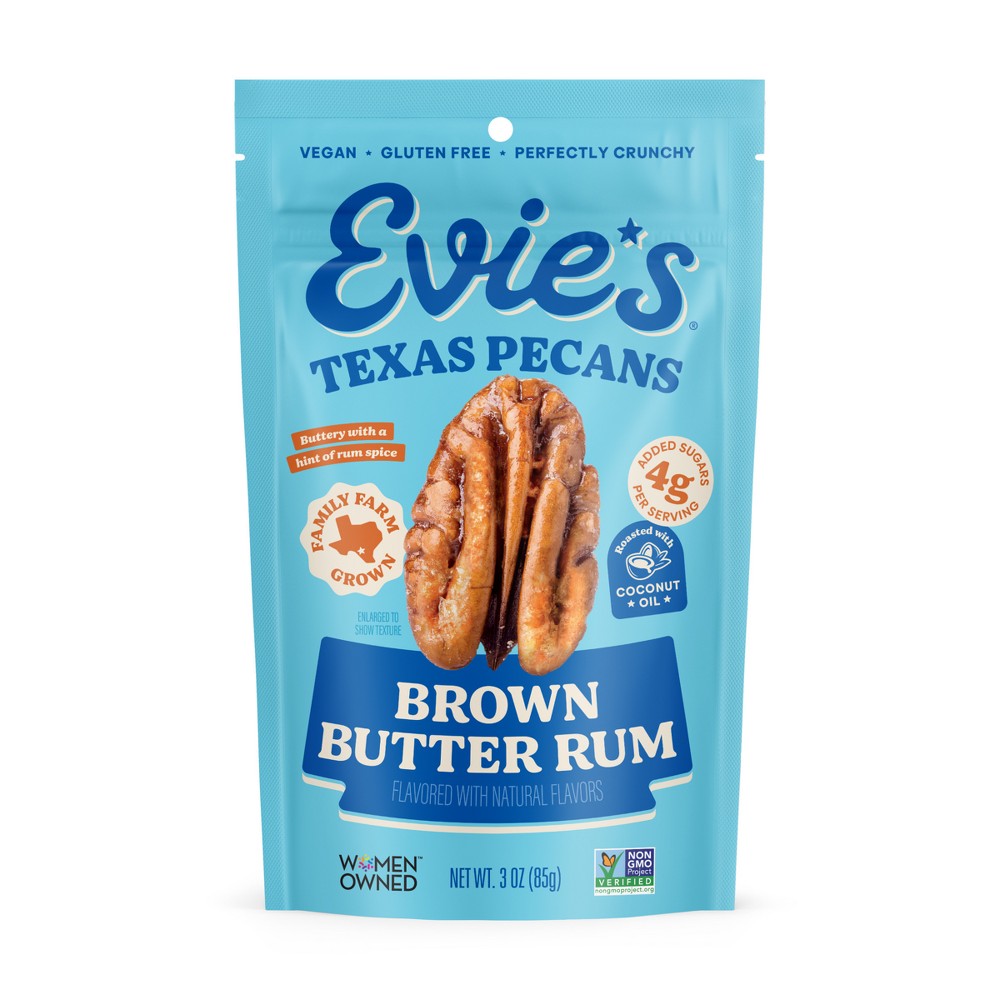

Evie's Snacks Roasted Texas Pecans Brown Butter Rum Nuts - 3oz
Analysis updated August 2026 · How Scout scores
At a glance
Summary
This product features beneficial ingredients like pecans, coconut oil, and cinnamon, which provide healthy fats and antioxidants. However, the inclusion of cane sugar and natural flavors introduces refined sugars and processed additives that detract from its nutritional profile. The processing level of the product further limits its score potential, despite the presence of some high-quality ingredients.
Key ingredients 8
PecansGood
Pecans are a rich source of healthy monounsaturated fats and antioxidants. They provide essential nutrients like vitamin E and magnesium. Their natural oils and fiber content support heart health and digestion.
Benefits
Rich in healthy fats and antioxidants, pecans support heart health and provide essential nutrients.
Coconut oilGood
Coconut oil is a source of medium-chain triglycerides (MCTs) which are easily metabolized for energy. It has antimicrobial properties and may support weight management. Its saturated fat content is a point of debate but is generally considered stable for cooking.
Risks
Excessive consumption of saturated fats may contribute to heart disease, though coconut oil's impact is debated.
Benefits
Contains MCTs that are quickly metabolized for energy and may support weight management.
CinnamonGood
Cinnamon is a spice known for its antioxidant properties and potential to regulate blood sugar levels. It adds flavor without calories and may have anti-inflammatory effects. Its use in moderation is generally considered beneficial.
Benefits
Contains antioxidants and may help regulate blood sugar levels.
SaltNeutral
Salt is a common seasoning that enhances flavor but can contribute to high sodium intake. It is essential for bodily functions but should be consumed in moderation. Excessive intake is linked to hypertension.
Risks
High sodium intake can lead to hypertension and cardiovascular issues.
Benefits
Essential for bodily functions but should be consumed in moderation.
Cane sugarBad
Cane sugar is a refined sugar that can contribute to increased blood sugar levels and caloric intake. Excessive consumption is linked to obesity and metabolic disorders. It lacks nutritional benefits beyond energy provision.
Risks
High intake of refined sugars can lead to obesity, diabetes, and other metabolic disorders.
Tapioca syrupBad
Processed additive flagged under Scout's ingredient doctrine.
Risks
May contribute to increased sugar intake and related health issues if consumed in excess.
Benefits
Provides a natural source of energy but lacks significant nutritional benefits.
Natural flavorsBad
Natural flavors are a catch-all term for flavoring agents that can include a wide range of substances. They are often highly processed and lack transparency. Their inclusion can mask the quality of the underlying ingredients.
Risks
Potential for undisclosed allergens and lack of transparency in ingredient sourcing.
Sunflower lecithinBad
Sunflower lecithin is an emulsifier that helps blend ingredients but is highly processed. It is derived from sunflower seeds and lacks significant nutritional benefits. Its use is primarily functional in processed foods.
See more about Sunflower lecithin →Processing
Processed Foods
Get the full breakdown in the Scout appTake Scout shopping
Scan any product to see lab results, healthy alternatives, and your personalized analysis.
Download on theApp Store GET IT ONGoogle Play