
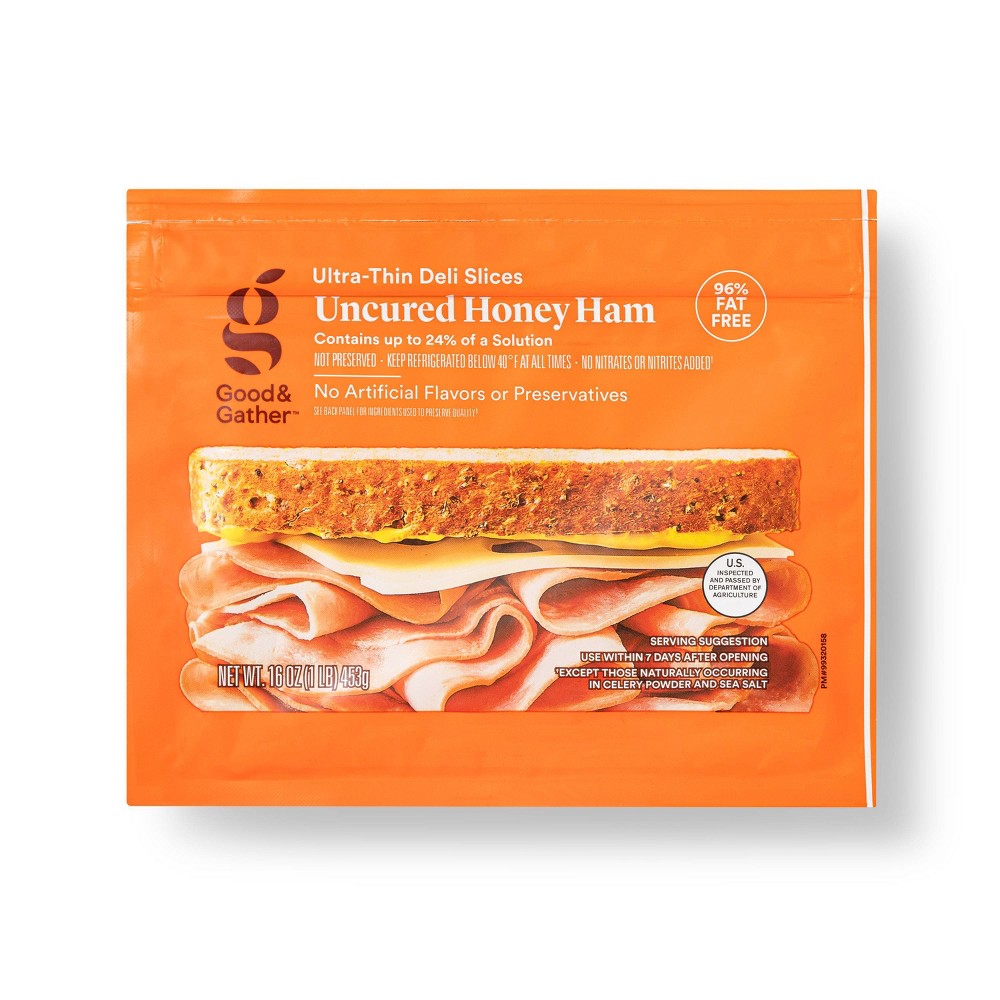

At a glance
Summary
This uncured honey ham contains beneficial ingredients like ham and sea salt, which provide high-quality protein and trace minerals. However, it also includes added sugar and natural flavoring, which are less desirable due to their potential health impacts and contribution to processing. The product is moderately processed, which limits its score despite the use of natural curing agents.
Key ingredients 10
HamGood
Ham is a source of high-quality animal protein, providing essential amino acids. It is typically processed with curing agents, but uncured versions like this use natural alternatives. The protein content supports muscle maintenance and repair.
Risks
Processed meats can be high in sodium and may contain nitrates, which have been linked to health concerns when consumed in excess.
Benefits
Provides a rich source of protein and essential nutrients like iron and B vitamins, which are important for energy metabolism and red blood cell production.
HoneyGood
Traditional whole-food sweetener with trace enzymes and antioxidants.
Risks
Excessive consumption of honey can contribute to increased calorie intake and potential blood sugar spikes.
Benefits
Contains antioxidants and has a lower glycemic index than refined sugar, which may be beneficial for blood sugar management.
Sea saltGood
Sea salt is a minimally processed salt that contains trace minerals. It is often preferred for its natural origin and mineral content. Unlike refined table salt, it provides additional nutrients.
Risks
Excessive consumption can lead to high sodium intake, which is associated with hypertension.
Benefits
Provides essential minerals and is less processed than regular table salt.
WaterNeutral
Water is used as a solvent and to maintain moisture in the product. It is a neutral ingredient with no direct nutritional impact. Its presence helps in the distribution of other ingredients.
See more about Water →VinegarNeutral
Vinegar is used as a preservative and flavor enhancer. It is a natural product derived from fermentation. Its acidity can help preserve food and add tangy flavor.
Benefits
May aid in digestion and has antimicrobial properties that can help preserve food.
SaltNeutral
Salt is used for flavoring and preservation. It is a common culinary ingredient that enhances taste. However, excessive intake can lead to health issues like hypertension.
Risks
High sodium intake is associated with increased risk of hypertension and cardiovascular diseases.
Benefits
Essential for maintaining fluid balance and nerve function in the body.
Sodium phosphatesNeutral
Sodium phosphates are used as emulsifiers and to retain moisture in processed meats. They are common food additives that help improve texture and shelf life. While generally recognized as safe, they should be consumed in moderation.
Risks
Excessive intake of phosphates can disrupt calcium balance and affect bone health.
Benefits
Helps maintain moisture and improve the texture of processed foods.
Natural flavoringNeutral
Natural flavoring is used to enhance the taste of food products. It is derived from natural sources but can be a catch-all term for various compounds. Its impact on health is generally neutral, but transparency about specific components is limited.
Risks
Lack of transparency about specific components may be a concern for those with allergies or sensitivities.
Benefits
Enhances flavor without adding significant calories or nutrients.
Celery powderNeutral
Celery powder is used as a natural preservative due to its nitrate content. It is derived from celery and can serve as a natural alternative to synthetic nitrates. While it provides preservation benefits, it does not significantly contribute to nutrition.
Risks
Contains naturally occurring nitrates, which can form nitrosamines under certain conditions, potentially posing health risks.
Benefits
Acts as a natural preservative and can enhance flavor.
SugarBad
Sugar is a refined carbohydrate that provides quick energy but lacks essential nutrients. It is often added to enhance flavor but can contribute to health issues if consumed in excess. Its consumption is linked to obesity and metabolic disorders.
Risks
Excessive sugar intake is associated with increased risk of obesity, type 2 diabetes, and dental cavities.
Benefits
Provides a quick source of energy but should be consumed in moderation.
Processing
Processed Foods
Get the full breakdown in the Scout appTake Scout shopping
Scan any product to see lab results, healthy alternatives, and your personalized analysis.
Download on theApp Store GET IT ONGoogle Play