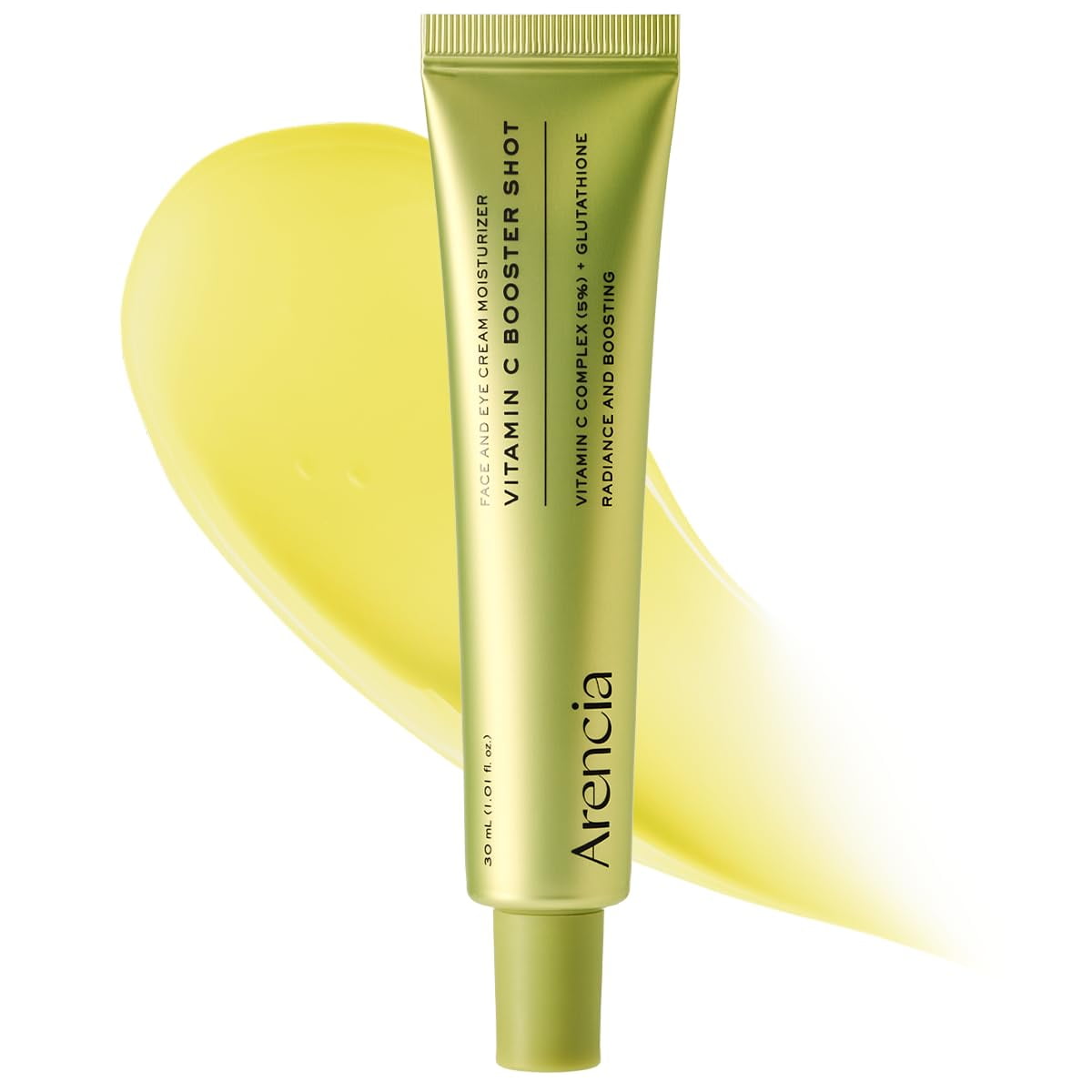
Serum Arencia Vitamin C Booster W/ Glutathione 30ml For Skin
At a glance
Summary
This serum contains beneficial ingredients like glycerin, niacinamide, and 3-O-ethyl ascorbic acid, which are known for their moisturizing, brightening, and anti-aging properties. The presence of natural emulsifiers derived from olive oil, such as cetearyl olivate and sorbitan olivate, contributes to a more natural formulation. However, the inclusion of acrylates and sodium polyacrylate, which are synthetic polymers, slightly lowers the score due to their higher processing level compared to natural alternatives. Its plastic packaging can shed microplastics into the product and lowers its score.
Key ingredients 29
3-O-Ethyl Ascorbic AcidVery Good
3-O-Ethyl Ascorbic Acid is a stable form of Vitamin C used in skincare for its antioxidant properties. It helps brighten the skin and reduce signs of aging. It is effective in improving skin tone and texture.
Risks
High concentrations may cause irritation in sensitive skin.
Benefits
It provides antioxidant protection and helps in collagen synthesis, improving skin appearance.
AdenosineVery Good
Adenosine is known for its anti-aging and skin-soothing properties. It helps to improve the appearance of fine lines and wrinkles. It is considered safe and beneficial for most skin types.
Risks
There are minimal risks associated with adenosine.
Benefits
It enhances skin smoothness and reduces signs of aging.
AllantoinVery Good
Allantoin is used for its soothing and skin-conditioning properties. It helps to calm irritated skin and promote healing. It is well-tolerated and beneficial for sensitive skin.
Risks
There are minimal risks associated with allantoin.
Benefits
It soothes and protects the skin, enhancing its overall appearance.
GlutathioneVery Good
Glutathione is a powerful antioxidant that helps to brighten the skin and reduce pigmentation. It protects the skin from oxidative stress and environmental damage. It is considered safe and beneficial for most skin types.
Risks
There are minimal risks associated with glutathione.
Benefits
It enhances skin brightness and provides antioxidant protection.
PanthenolVery Good
Panthenol, also known as Provitamin B5, is used for its moisturizing and skin-soothing properties. It helps to improve skin hydration and reduce irritation. It is well-tolerated and beneficial for all skin types.
Risks
There are minimal risks associated with panthenol.
Benefits
It enhances skin moisture retention and soothes irritation.
TocopherolVery Good
Tocopherol, a form of Vitamin E, is known for its antioxidant and moisturizing properties. It helps to protect the skin from free radical damage and improve hydration. It is effective in enhancing skin smoothness and reducing signs of aging.
Risks
There are minimal risks associated with tocopherol.
Benefits
It provides antioxidant protection and improves skin moisture.
Ascorbyl GlucosideVery Good
Ascorbyl Glucoside is a stable form of Vitamin C used for its brightening and antioxidant properties. It helps to improve skin tone and reduce signs of aging. It is considered safe and effective for most skin types.
Risks
High concentrations may cause irritation in sensitive skin.
Benefits
It enhances skin radiance and provides antioxidant protection.
Sodium Ascorbyl PhosphateVery Good
Sodium Ascorbyl Phosphate is a stable form of Vitamin C known for its antioxidant and brightening properties. It helps to protect the skin from oxidative stress and improve skin tone. It is effective in reducing signs of aging and enhancing skin radiance.
Risks
High concentrations may cause irritation in sensitive skin.
Benefits
It boosts collagen production and provides antioxidant protection.
GlycerinGood
Glycerin is a humectant that attracts moisture to the skin, helping to keep it hydrated. It is widely used in skincare products for its moisturizing properties. It is considered safe and beneficial for most skin types.
Risks
There are minimal risks associated with glycerin, though it may cause irritation in very sensitive skin.
Benefits
Glycerin helps maintain skin hydration and improves skin barrier function.
Caprylic/Capric TriglycerideGood
Caprylic/Capric Triglyceride is derived from coconut oil and glycerin, used as an emollient and skin-replenishing ingredient. It helps to smooth and soften the skin. It is well-tolerated by most skin types.
Risks
Rarely, it may cause breakouts in acne-prone skin.
Benefits
It provides a lightweight, non-greasy moisturizing effect.
NiacinamideGood
Niacinamide is a form of Vitamin B3 known for its anti-inflammatory and skin-brightening properties. It helps improve skin elasticity, enhance barrier function, and even out skin tone. It is suitable for all skin types and is well-tolerated.
Risks
In rare cases, it may cause mild irritation or redness.
Benefits
It reduces the appearance of enlarged pores, fine lines, and dullness.
Cetearyl OlivateGood
Cetearyl Olivate is derived from olive oil and used as an emulsifier and conditioning agent. It helps to blend oil and water components in formulations. It is well-tolerated and provides moisturizing benefits.
Risks
There are minimal risks associated with this ingredient.
Benefits
It enhances skin hydration and improves product stability.
Sorbitan OlivateGood
Sorbitan Olivate is derived from olive oil and used as an emulsifier and skin-conditioning agent. It helps to blend oil and water components in formulations. It is well-tolerated and provides moisturizing benefits.
Risks
There are minimal risks associated with this ingredient.
Benefits
It enhances skin hydration and improves product stability.
ArginineGood
Arginine is an amino acid that helps to improve skin hydration and elasticity. It is used in skincare for its conditioning properties. It is generally considered safe and beneficial for the skin.
Risks
There are minimal risks associated with arginine.
Benefits
It supports skin repair and improves moisture retention.
Gardenia Florida Fruit ExtractGood
Gardenia Florida Fruit Extract is used for its antioxidant and skin-soothing properties. It helps to protect the skin from environmental stressors. It is considered safe and beneficial for most skin types.
Risks
May cause mild irritation in very sensitive skin.
Benefits
It provides antioxidant protection and soothes the skin.
Ascorbic AcidGood
Ascorbic Acid, a form of Vitamin C, is known for its antioxidant and brightening properties. It helps to protect the skin from free radical damage and improve skin tone. It is effective in reducing signs of aging and enhancing skin radiance.
Risks
High concentrations may cause irritation in sensitive skin.
Benefits
It boosts collagen production and provides antioxidant protection.
Water (Aqua)Neutral
Water is a common solvent used in cosmetic formulations. It helps dissolve other ingredients and provides a base for the serum. It is generally considered safe and non-irritating.
Risks
There are no significant risks associated with water in cosmetics.
Benefits
Water helps in the application and absorption of the serum.
MethylpropanediolNeutral
Methylpropanediol is used as a solvent and penetration enhancer in cosmetics. It helps other ingredients to be absorbed more effectively into the skin. It is generally considered safe for use in cosmetics.
Risks
In rare cases, it may cause skin irritation or allergic reactions.
Benefits
It enhances the absorption of active ingredients, improving the efficacy of the product.
Butylene GlycolNeutral
Butylene Glycol is a common solvent and conditioning agent in cosmetics. It helps improve the texture and spreadability of products. It is generally considered safe for use in skincare.
Risks
May cause irritation in sensitive skin or if used in high concentrations.
Benefits
It helps maintain moisture levels in the skin and enhances product application.
1, 2-HexanediolNeutral
1, 2-Hexanediol is used as a preservative and moisture-binding agent in cosmetics. It helps to stabilize formulations and enhance product longevity. It is considered safe for use in skincare products.
Risks
May cause mild irritation in sensitive skin.
Benefits
It helps maintain product stability and enhances skin hydration.
Cetyl EthylhexanoateNeutral
Cetyl Ethylhexanoate is an emollient that provides a silky feel to the skin. It helps improve the texture and spreadability of cosmetic products. It is generally considered safe for use in skincare.
Risks
May cause mild irritation in sensitive skin.
Benefits
It enhances the sensory experience of the product, making it feel smooth and luxurious.
Polyglyceryl-3 Methylglucose DistearateNeutral
Polyglyceryl-3 Methylglucose Distearate is an emulsifier used to stabilize cosmetic formulations. It helps to blend oil and water components effectively. It is considered safe for use in skincare products.
Risks
May cause mild irritation in sensitive skin.
Benefits
It improves the texture and consistency of the product.
Diisostearyl MalateNeutral
Diisostearyl Malate is used as an emollient and texture enhancer in cosmetics. It provides a smooth, silky feel to the skin. It is generally considered safe for use in skincare products.
Risks
May cause mild irritation in sensitive skin.
Benefits
It enhances the sensory experience and application of the product.
Sodium PolyacrylateNeutral
Sodium Polyacrylate is used as a thickening agent and film-former in cosmetics. It helps to improve the texture and stability of formulations. It is considered safe for use in skincare products.
Risks
May cause mild irritation in sensitive skin.
Benefits
It enhances the viscosity and spreadability of the product.
Xanthan GumNeutral
Xanthan Gum is used as a thickening and stabilizing agent in cosmetics. It helps to improve the texture and consistency of formulations. It is generally considered safe for use in skincare products.
Risks
May cause mild irritation in sensitive skin.
Benefits
It enhances the viscosity and spreadability of the product.
EthylhexylglycerinNeutral
Ethylhexylglycerin is used as a preservative and skin-conditioning agent in cosmetics. It helps to enhance the efficacy of other preservatives. It is considered safe for use in skincare products.
Risks
May cause mild irritation in sensitive skin.
Benefits
It improves product preservation and skin feel.
DextrinNeutral
Dextrin is used as a binding and thickening agent in cosmetics. It helps to improve the texture and stability of formulations. It is generally considered safe for use in skincare products.
Risks
May cause mild irritation in sensitive skin.
Benefits
It enhances the texture and consistency of the product.
PyridoxineNeutral
Pyridoxine, a form of Vitamin B6, is used for its skin-conditioning properties. It helps to improve skin texture and appearance. It is generally considered safe for use in skincare products.
Risks
May cause mild irritation in sensitive skin.
Benefits
It supports skin health and improves overall appearance.
Acrylates/C10-30 Alkyl Acrylate CrosspolymerBad
Processed additive flagged under Scout's ingredient doctrine.
Risks
May cause mild irritation in sensitive skin.
Benefits
It improves the texture and consistency of the product.
Processing
Processed Foods
Get the full breakdown in the Scout appTake Scout shopping
Scan any product to see lab results, healthy alternatives, and your personalized analysis.
Are you Arencia? Fix an error Get the badge Get tested
Amazon pricing & content
Amazon price as of . Product prices and availability are accurate as of the date/time indicated and are subject to change. Any price and availability information displayed on Amazon.com at the time of purchase will apply to the purchase of this product.
CERTAIN CONTENT THAT APPEARS ON THIS SITE COMES FROM AMAZON. THIS CONTENT IS PROVIDED “AS IS” AND IS SUBJECT TO CHANGE OR REMOVAL AT ANY TIME.