
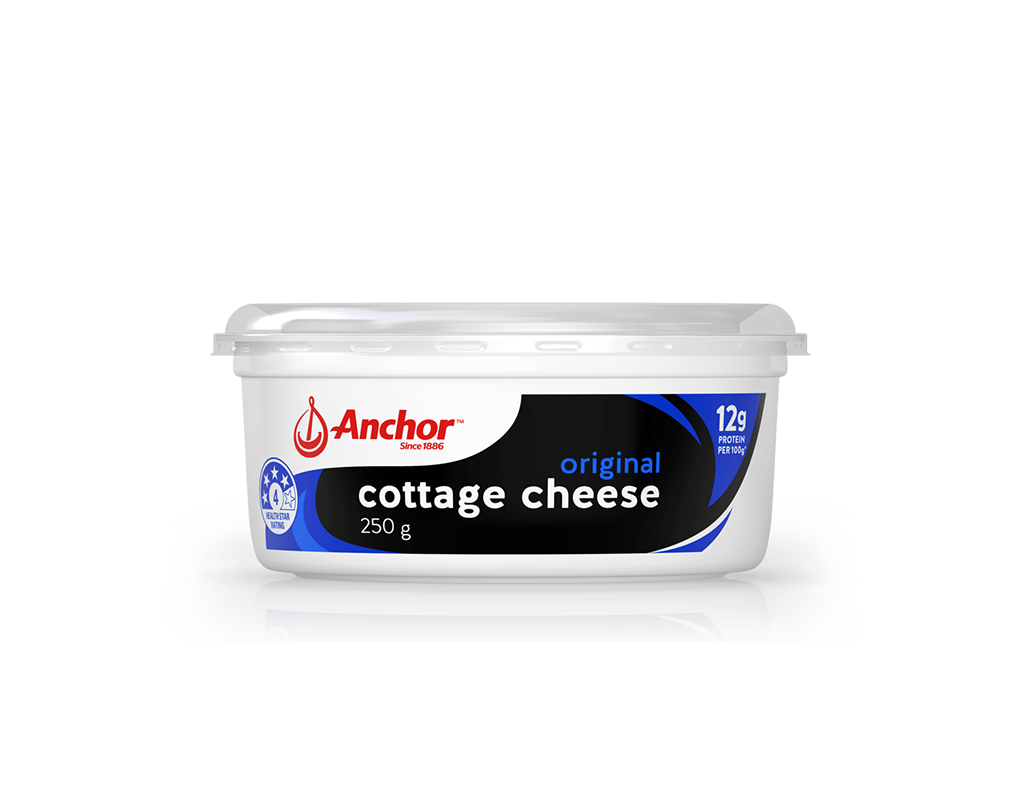


At a glance
Summary
This cottage cheese contains beneficial ingredients like skim milk and cream, which provide essential nutrients and healthy fats. However, it is classified as ultra-processed due to the presence of additives such as thickener, preservative, and stabilizer, which are used to enhance texture and shelf life but may raise health concerns. The processing level and use of these additives limit its score despite the presence of nutritious components.
Key ingredients 10
CreamGood
Cream is a dairy product that adds richness and flavor, providing a source of healthy fats. It is less processed than many other fat sources and contains fat-soluble vitamins. Its inclusion in moderation can enhance the texture and taste of dairy products.
Risks
High in saturated fats, which may contribute to heart disease if consumed in excess.
Benefits
Provides fat-soluble vitamins and enhances flavor and texture in foods.
Skim milkNeutral
Standard formulation ingredient — neither beneficial nor harmful at typical use.
Benefits
Rich in calcium and protein, supporting bone health and muscle maintenance.
SaltNeutral
Salt is used as a seasoning and preservative in foods. It is essential for maintaining fluid balance and nerve function. However, excessive consumption can lead to health issues such as hypertension.
Risks
Excessive intake may lead to high blood pressure and related cardiovascular issues.
Benefits
Essential for maintaining fluid balance and nerve function.
Mineral (calcium)Neutral
Calcium is an essential mineral important for bone health and various bodily functions. It is often added to foods to enhance nutritional value. While beneficial, its presence as an additive does not significantly alter the product's overall health impact.
Risks
Excessive calcium intake can lead to kidney stones and impaired absorption of other minerals.
Benefits
Supports bone health and is crucial for muscle function and nerve signaling.
CultureNeutral
Cultures are used in cheese production to ferment milk, contributing to flavor and texture. They are essential for the cheesemaking process but do not provide additional nutritional benefits. Their role is primarily functional in developing the product's characteristics.
Benefits
Essential for developing the flavor and texture of cheese.
FlavourNeutral
Flavour additives are used to enhance the taste of food products. They can be natural or artificial, but their specific composition is often not disclosed. While they improve taste, they do not contribute to nutritional value.
Risks
Potential for allergic reactions or sensitivities depending on the source of the flavor.
Benefits
Enhances the taste of the product without contributing to nutritional value.
Enzyme (rennet)Neutral
Rennet is an enzyme used in cheese production to coagulate milk, forming curds. It is a natural component of traditional cheesemaking and is necessary for texture development. While essential for production, it does not add nutritional value.
Benefits
Essential for the coagulation process in cheesemaking, contributing to texture.
Thickener (1422)Bad
Thickener 1422, also known as acetylated distarch adipate, is a modified starch used to improve texture. It is a processed ingredient that may not provide nutritional benefits. Its use in ultra-processed foods can be a concern for those seeking whole food options.
Risks
May cause digestive issues in sensitive individuals and contributes to the ultra-processed nature of the product.
Preservative (202)Bad
Preservative 202, or potassium sorbate, is used to extend shelf life by inhibiting mold and yeast growth. It is a synthetic additive that may cause allergic reactions in sensitive individuals. Its presence in food contributes to the product's ultra-processed classification.
Risks
May cause allergic reactions or skin irritations in sensitive individuals.
Stabiliser (407)Bad
Stabiliser 407, known as carrageenan, is used to improve texture and stability in dairy products. It is a processed additive that has been linked to digestive issues in some studies. Its use in food products is controversial due to potential health concerns.
Risks
May cause digestive issues and inflammation in sensitive individuals.
Processing
Ultra-Processed Foods
Get the full breakdown in the Scout appTake Scout shopping
Scan any product to see lab results, healthy alternatives, and your personalized analysis.
Download on theApp Store GET IT ONGoogle Play