
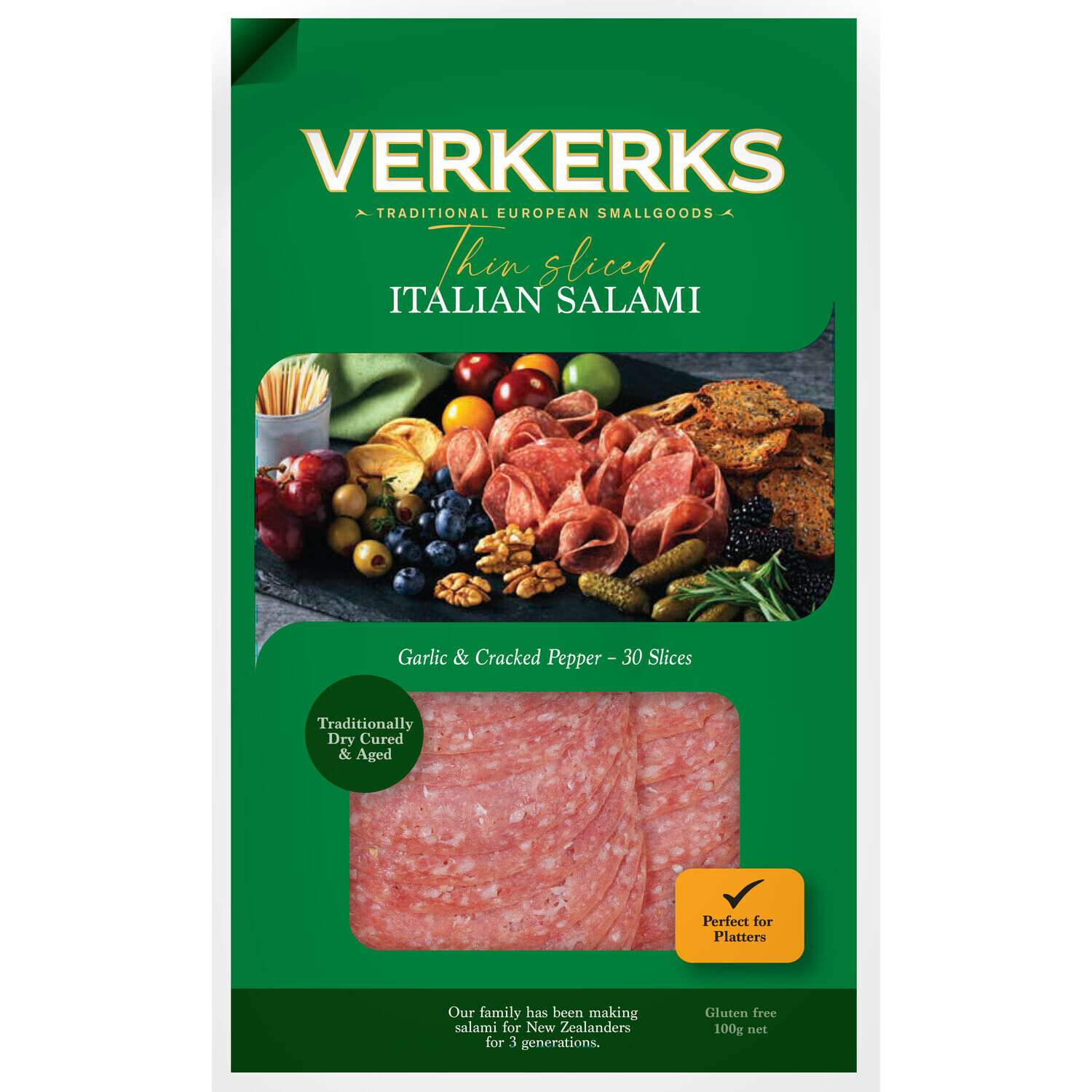


Verkerks Thin Sliced Italian Salami
Analysis updated September 2026 · How Scout scores
At a glance
Summary
This thin sliced Italian salami is ultra-processed, which limits its health score despite containing high-quality pork. The presence of dextrose as a sweetener and sodium nitrite as a preservative raises health concerns, as these additives can contribute to increased blood sugar levels and potential cancer risks. While the product benefits from natural wood smoke and live cultures, the overall processing level and use of additives impact its rating.
Key ingredients 9
PorkGood
Pork is a high-quality source of protein and essential nutrients. It provides a rich amino acid profile necessary for muscle maintenance and repair. The quality of pork can vary based on farming practices, but it is generally considered a beneficial ingredient in moderation.
Risks
Excessive consumption of processed pork products can lead to increased intake of saturated fats and sodium.
Benefits
Rich in protein and essential vitamins and minerals such as B vitamins and zinc.
SpicesGood
Whole-food seasonings, antioxidant-bearing.
Benefits
May provide antioxidants and other beneficial compounds depending on the specific spices used.
SaltNeutral
Salt is used as a preservative and flavor enhancer in many processed foods. It is essential for maintaining fluid balance and nerve function. However, excessive intake can lead to health issues such as hypertension.
Risks
High sodium intake is associated with increased risk of hypertension and cardiovascular diseases.
Benefits
Essential for maintaining fluid balance and proper nerve and muscle function.
Mineral SaltsNeutral
Mineral salts such as 450, 451, and 452 are used as stabilizers and emulsifiers in processed foods. They help maintain texture and moisture in products. These additives are generally recognized as safe but offer no nutritional benefits.
Benefits
Help maintain product texture and stability.
AntioxidantNeutral
Antioxidant 316, also known as sodium erythorbate, is used to preserve color and prevent oxidation in processed meats. It is considered safe for consumption but does not provide significant health benefits. Its primary role is to maintain product quality rather than nutritional value.
Benefits
Helps preserve color and prevent oxidation in processed meats.
Live CultureNeutral
Live cultures are used in fermentation processes to enhance flavor and preservation. They can contribute to gut health by promoting beneficial bacteria. However, the specific health benefits depend on the type and viability of the cultures used.
Benefits
May support gut health by promoting beneficial bacteria.
Natural Wood SmokeNeutral
Natural wood smoke is used to impart flavor and aid in preservation. It is a traditional method of food processing that can enhance taste. However, excessive consumption of smoked foods may pose health risks due to potential carcinogens.
Risks
Excessive consumption of smoked foods may increase exposure to potential carcinogens.
Benefits
Enhances flavor and aids in preservation through traditional smoking methods.
DextroseBad
Dextrose is a form of glucose used as a sweetener and preservative. It can contribute to increased blood sugar levels and is often used in processed foods. Regular consumption of added sugars like dextrose can lead to health issues such as obesity and insulin resistance.
Risks
May contribute to obesity, insulin resistance, and other metabolic disorders when consumed in excess.
Benefits
Provides quick energy but lacks significant nutritional benefits.
PreservativeBad
Preservative 250, or sodium nitrite, is used to prevent bacterial growth and preserve color in processed meats. It has been linked to potential health risks, including an increased risk of certain cancers. While effective in preservation, its health implications warrant caution.
Risks
Linked to potential health risks such as an increased risk of certain cancers when consumed in large amounts.
Benefits
Prevents bacterial growth and helps preserve the color of processed meats.
Processing
Ultra-Processed Foods
Get the full breakdown in the Scout appTake Scout shopping
Scan any product to see lab results, healthy alternatives, and your personalized analysis.
Download on theApp Store GET IT ONGoogle Play