
Ka'Chava Superblend Matcha Shake
At a glance
Summary
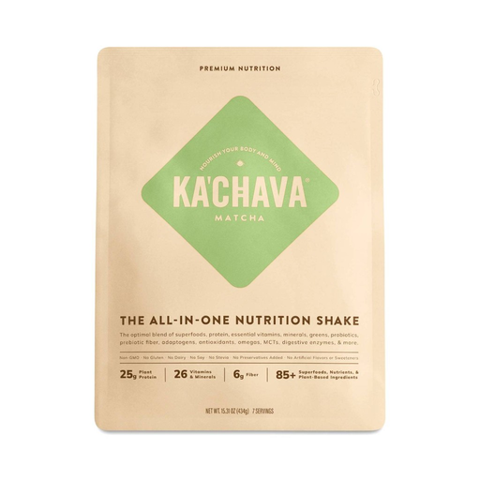
Ka'Chava Superblend Matcha Shake scores 37/100. Lead Safe Mama 3rd-party lab testing (April 2025) detected the HIGHEST arsenic level of any matcha in the chart — 86 ppb, flagged by the lab — plus 74 ppb cadmium (second-highest cadmium reading). Lead at 23 ppb is the chart's lowest, but the combined As + Cd load is severe. On top of the metals, this is an ultra-processed meal shake (NOVA 4) built on organic coconut nectar (added sugar), soluble corn fiber, acacia gum, natural flavor, and chicory root. Real wins include plant proteins, organic matcha, superfoods/mushrooms, and probiotics.
Contaminants 4
Source: Lead Safe Mama
Arsenic 86 ppb Low
A low level of arsenic — present but modest; a sourcing-quality note rather than a safety concern at typical intake.
Lead Safe Mama 3rd-party lab testing (April 2025) detected 86 ppb arsenic — the HIGHEST arsenic level in the April 2025 matcha testing chart.
Cadmium 74 ppb Low
A low level of cadmium — present but modest; a sourcing-quality note rather than a safety concern at typical intake.
Lead Safe Mama testing detected 74 ppb cadmium — the second-highest cadmium level in the matcha chart.
Lead 23 ppb Moderate
Detected at a moderate level — a meaningful fraction of health-based exposure limits. Worth factoring in if this product is used regularly. All relevant federal agencies agree there is NO safe level of lead exposure for humans.
Lead Safe Mama testing detected 23 ppb lead — the lowest lead reading in the chart.
Mercury <5 ppb Not detected
Not detected — below the laboratory's detection limit. This is the strictest possible result: no measurable amount was found.
Lead Safe Mama 3rd-party lab testing (April 2025) reported mercury below the 5 ppb lab detection threshold. The lab explicitly notes there is NO safe level of mercury consumption — even a non-detect on a 5 ppb floor still represents possible trace exposure.
Key ingredients 26
Organic Coconut NectarBad
Added sugar. Despite the organic branding, coconut nectar is ~70–80% sucrose/fructose and is the shake's primary sweetener.
See more about Organic Coconut Nectar →Natural FlavorBad
Undisclosed proprietary flavor compound. Can legally hide dozens of chemical constituents including solvents and preservatives.
See more about Natural Flavor →Chicory RootBad
Source of inulin, an isolated prebiotic fiber commonly used to pad the fiber count on supplement facts. Frequently causes bloating, gas, and GI distress even at moderate doses.
See more about Chicory Root →Yellow Pea ProteinNeutral
Part of Plant Proteins & Plant Milks Blend. Complete amino acid coverage from complementary plant proteins (pea + rice). No dairy or soy isolates.
See more about Yellow Pea Protein →Soluble Corn FiberNeutral
Standard formulation ingredient — neither beneficial nor harmful at typical use.
See more about Soluble Corn Fiber →Organic Acacia GumNeutral
Prebiotic fiber and emulsifier. Generally tolerated, but the emulsifier class has emerging concerns in gut-microbiome research.
See more about Organic Acacia Gum →Brown Rice ProteinGood
Part of Plant Proteins & Plant Milks Blend. Complete amino acid coverage from complementary plant proteins (pea + rice). No dairy or soy isolates.
See more about Brown Rice Protein →Coconut MilkGood
Part of Plant Proteins & Plant Milks Blend. Complete amino acid coverage from complementary plant proteins (pea + rice). No dairy or soy isolates.
See more about Coconut Milk →Oat MilkGood
Part of Plant Proteins & Plant Milks Blend. Complete amino acid coverage from complementary plant proteins (pea + rice). No dairy or soy isolates.
See more about Oat Milk →Lion's ManeGood
Part of Superfoods & Mushroom Blend. Adaptogenic mushrooms, sea vegetables, and polyphenol-rich superfoods contribute beta-glucans, antioxidants, and micronutrients.
See more about Lion's Mane →ReishiGood
Part of Superfoods & Mushroom Blend. Adaptogenic mushrooms, sea vegetables, and polyphenol-rich superfoods contribute beta-glucans, antioxidants, and micronutrients.
See more about Reishi →MaitakeGood
Part of Superfoods & Mushroom Blend. Adaptogenic mushrooms, sea vegetables, and polyphenol-rich superfoods contribute beta-glucans, antioxidants, and micronutrients.
See more about Maitake →ShiitakeGood
Part of Superfoods & Mushroom Blend. Adaptogenic mushrooms, sea vegetables, and polyphenol-rich superfoods contribute beta-glucans, antioxidants, and micronutrients.
See more about Shiitake →ChlorellaGood
Part of Superfoods & Mushroom Blend. Adaptogenic mushrooms, sea vegetables, and polyphenol-rich superfoods contribute beta-glucans, antioxidants, and micronutrients.
See more about Chlorella →SpirulinaGood
Part of Superfoods & Mushroom Blend. Adaptogenic mushrooms, sea vegetables, and polyphenol-rich superfoods contribute beta-glucans, antioxidants, and micronutrients.
See more about Spirulina →MacaGood
Part of Superfoods & Mushroom Blend. Adaptogenic mushrooms, sea vegetables, and polyphenol-rich superfoods contribute beta-glucans, antioxidants, and micronutrients.
See more about Maca →Sacha InchiGood
Part of Superfoods & Mushroom Blend. Adaptogenic mushrooms, sea vegetables, and polyphenol-rich superfoods contribute beta-glucans, antioxidants, and micronutrients.
See more about Sacha Inchi →AcaiGood
Part of Superfoods & Mushroom Blend. Adaptogenic mushrooms, sea vegetables, and polyphenol-rich superfoods contribute beta-glucans, antioxidants, and micronutrients.
See more about Acai →BeetGood
Part of Superfoods & Mushroom Blend. Adaptogenic mushrooms, sea vegetables, and polyphenol-rich superfoods contribute beta-glucans, antioxidants, and micronutrients.
See more about Beet →CarrotGood
Part of Superfoods & Mushroom Blend. Adaptogenic mushrooms, sea vegetables, and polyphenol-rich superfoods contribute beta-glucans, antioxidants, and micronutrients.
See more about Carrot →MoringaGood
Part of Superfoods & Mushroom Blend. Adaptogenic mushrooms, sea vegetables, and polyphenol-rich superfoods contribute beta-glucans, antioxidants, and micronutrients.
See more about Moringa →KaleGood
Part of Superfoods & Mushroom Blend. Adaptogenic mushrooms, sea vegetables, and polyphenol-rich superfoods contribute beta-glucans, antioxidants, and micronutrients.
See more about Kale →GojiGood
Part of Superfoods & Mushroom Blend. Adaptogenic mushrooms, sea vegetables, and polyphenol-rich superfoods contribute beta-glucans, antioxidants, and micronutrients.
See more about Goji →BaobabGood
Part of Superfoods & Mushroom Blend. Adaptogenic mushrooms, sea vegetables, and polyphenol-rich superfoods contribute beta-glucans, antioxidants, and micronutrients.
See more about Baobab →Probiotics & Digestive EnzymesGood
Multi-strain probiotics (L. rhamnosus, L. acidophilus, B. longum) plus amylase/protease/lipase/lactase/cellulase support gut function and nutrient absorption.
See more about Probiotics & Digestive Enzymes →Organic Matcha Green TeaVery Good
Shade-grown Japanese green tea powder rich in L-theanine, EGCG catechins, and chlorophyll. Included in the Greens & Superfoods Blend.
See more about Organic Matcha Green Tea →Processing
Ultra-Processed Foods
Get the full breakdown in the Scout appTake Scout shopping
Scan any product to see lab results, healthy alternatives, and your personalized analysis.
Download on theApp Store GET IT ONGoogle PlayAmazon pricing & content
Amazon price as of . Product prices and availability are accurate as of the date/time indicated and are subject to change. Any price and availability information displayed on Amazon.com at the time of purchase will apply to the purchase of this product.
CERTAIN CONTENT THAT APPEARS ON THIS SITE COMES FROM AMAZON. THIS CONTENT IS PROVIDED “AS IS” AND IS SUBJECT TO CHANGE OR REMOVAL AT ANY TIME.