
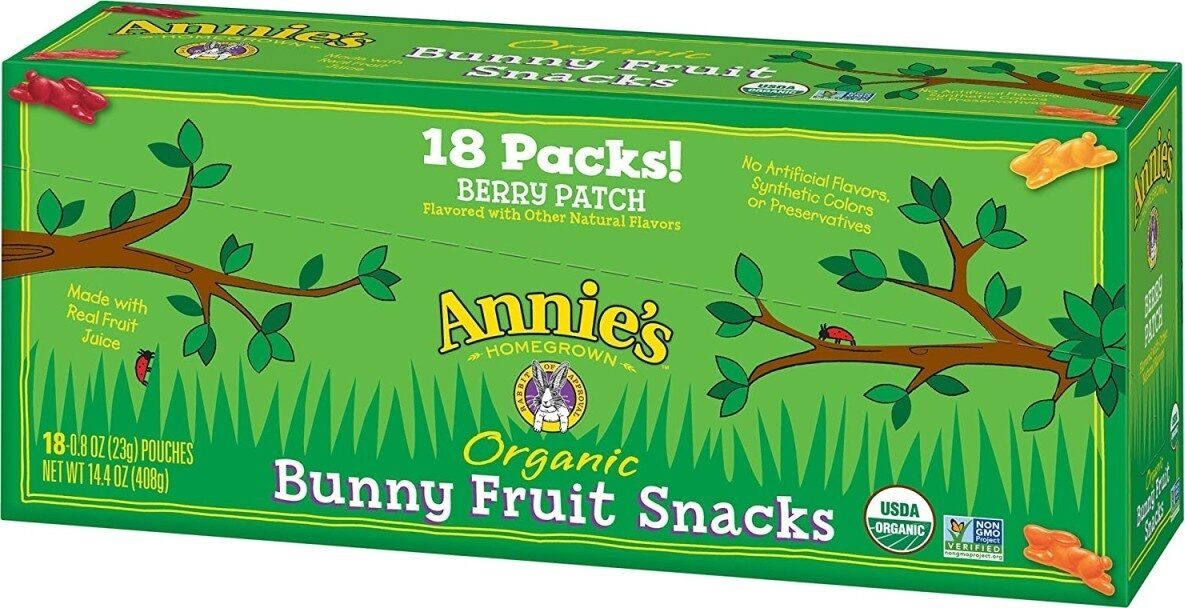

Annie's Organic Berry Patch Bunny Fruit Snacks
Analysis updated April 2026 · How Scout scores
At a glance
Summary
Annie's Organic Berry Patch Bunny Fruit Snacks contain several organic ingredients, but they are heavily processed and include high levels of added sugars from organic tapioca syrup and cane sugar. The presence of organic sunflower oil, a seed oil, and natural flavors further detracts from the product's healthiness. Despite some beneficial ingredients like pectin and vitamin C, the overall processing level and sugar content significantly impact the score.
Key ingredients 14
Ascorbic Acid (Vitamin C)Good
Ascorbic acid, also known as vitamin C, is an essential nutrient and antioxidant. It helps preserve the product and can support immune function. It is a beneficial addition due to its nutritional value.
Benefits
Supports immune health and acts as an antioxidant.
Organic Black CarrotGood
Part of Organic Color. Organic color from black carrot and blackcurrant extracts provides natural coloring without synthetic dyes. These extracts are rich in antioxidants and are minimally processed. They offer a clean label alternative to artificial colors.
Benefits
Provides natural color and antioxidants, enhancing the nutritional profile.
Organic Blackcurrant ExtractsGood
Part of Organic Color. Organic color from black carrot and blackcurrant extracts provides natural coloring without synthetic dyes. These extracts are rich in antioxidants and are minimally processed. They offer a clean label alternative to artificial colors.
Benefits
Provides natural color and antioxidants, enhancing the nutritional profile.
Organic Pear Juice ConcentrateNeutral
Organic pear juice concentrate is used as a natural sweetener and flavor enhancer. It is less processed than refined sugars but still contributes to the sugar content. Being organic, it avoids synthetic pesticides and fertilizers.
Risks
High in natural sugars, which can contribute to caloric intake and potential weight gain.
Benefits
Provides some vitamins and minerals from the fruit, though in limited amounts due to concentration.
WaterNeutral
Water is used as a solvent and to adjust the consistency of the product. It is a neutral ingredient with no direct nutritional impact. It helps in blending and processing other ingredients.
See more about Water →PectinNeutral
Standard formulation ingredient — neither beneficial nor harmful at typical use.
Benefits
May support digestive health by providing soluble fiber.
Citric AcidNeutral
Citric acid is a natural preservative and flavor enhancer found in citrus fruits. It is used to add tartness and preserve freshness. It is generally recognized as safe when used in food products.
Risks
Excessive consumption may cause tooth enamel erosion.
Benefits
Helps preserve the product and enhance flavor without synthetic additives.
Sodium CitrateNeutral
Sodium citrate is a salt of citric acid used as an acidity regulator and preservative. It helps maintain the stability and flavor of the product. It is generally recognized as safe in food applications.
Benefits
Helps maintain product stability and flavor.
Organic Carnauba WaxNeutral
Organic carnauba wax is used as a glazing agent to provide a shiny appearance. It is derived from the leaves of the carnauba palm and is minimally processed. It is considered safe for consumption in small amounts.
Organic Tapioca SyrupBad
Organic tapioca syrup is a sweetener derived from the cassava root. It is highly processed and contributes to the product's high sugar content. While organic, it lacks significant nutritional benefits compared to whole food sweeteners.
Risks
High sugar content can contribute to obesity and metabolic issues if consumed in excess.
Benefits
Being organic, it avoids pesticide residues found in non-organic alternatives.
Organic Cane SugarBad
Organic cane sugar is a refined sweetener that contributes to the product's high sugar content. Despite being organic, it is still a refined sugar with minimal nutritional value. It is preferable to non-organic sugar due to the absence of pesticide residues.
Risks
Excessive consumption can lead to health issues such as obesity, diabetes, and dental cavities.
Organic Tapioca Syrup SolidsBad
Organic tapioca syrup solids are a dehydrated form of tapioca syrup used as a sweetener. They are highly processed and contribute to the overall sugar content of the product. Despite being organic, they offer little nutritional value.
Risks
High sugar content can lead to weight gain and increased risk of metabolic diseases.
Natural FlavorBad
Natural flavor is a catch-all term for flavoring agents derived from natural sources. It is highly processed and lacks transparency regarding its specific components. It is often used to enhance flavor without providing nutritional benefits.
Risks
Potential for undisclosed allergens or sensitivities due to lack of transparency.
Organic Sunflower OilVery Bad
Organic sunflower oil is a seed oil high in omega-6 fatty acids, which can promote inflammation if consumed in excess. Despite being organic, it is still a processed oil with potential health concerns. It is less desirable compared to oils with a better fatty acid profile like olive oil.
Risks
High omega-6 content may promote inflammation when consumed in excess.
Processing
Ultra-Processed Foods
Get the full breakdown in the Scout appTake Scout shopping
Scan any product to see lab results, healthy alternatives, and your personalized analysis.
Download on theApp Store GET IT ONGoogle PlayAmazon pricing & content
Amazon price as of . Product prices and availability are accurate as of the date/time indicated and are subject to change. Any price and availability information displayed on Amazon.com at the time of purchase will apply to the purchase of this product.
CERTAIN CONTENT THAT APPEARS ON THIS SITE COMES FROM AMAZON. THIS CONTENT IS PROVIDED “AS IS” AND IS SUBJECT TO CHANGE OR REMOVAL AT ANY TIME.