

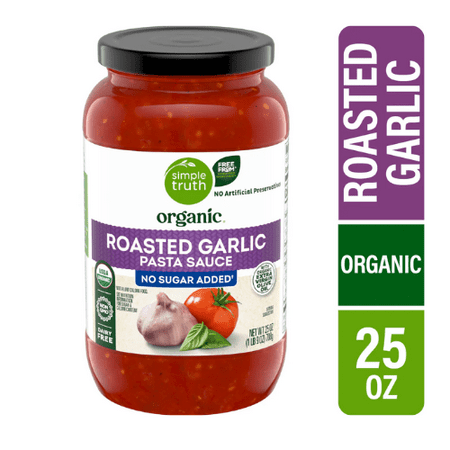

Simple Truth Organic MARINARA PASTA SAUCE
Analysis updated August 2026 · How Scout scores
At a glance
Summary
This marinara pasta sauce contains several organic tomato-based ingredients that are minimally processed and rich in nutrients, contributing positively to its health profile. However, the inclusion of organic soybean oil, a seed oil high in omega-6 fatty acids, detracts from its overall healthiness due to its potential to promote inflammation. Additionally, the sauce is processed, which limits its score despite the organic certification of its ingredients.
Key ingredients 8
Organic Tomato PureeGood
Organic Tomato Puree provides a rich source of natural tomato flavor and nutrients, contributing to the sauce's overall quality.
See more about Organic Tomato Puree →Organic Tomato PasteGood
Organic Tomato Paste enhances the sauce's thickness and concentrated tomato flavor, enriching its taste and nutritional profile.
See more about Organic Tomato Paste →Organic Diced TomatoesGood
Organic Diced Tomatoes add texture and natural tomato goodness, boosting the sauce's nutritional value.
Organic Tomato JuiceGood
Organic Tomato Juice provides additional tomato nutrients and flavor, complementing the other tomato ingredients.
WaterNeutral
Water acts as a base to adjust the sauce's consistency without adding any flavor or nutrients.
See more about Water →SaltNeutral
Standard formulation ingredient — neither beneficial nor harmful at typical use.
See more about Salt →Organic Cane SugarBad
Organic Cane Sugar is added for sweetness, but excess sugar can contribute to less healthy dietary choices.
See more about Organic Cane Sugar →Organic Soybean OilVery Bad
Organic Soybean Oil is included as a fat source, but it is often highly processed and may contain undesirable trans fats or additives.
See more about Organic Soybean Oil →Processing
Processed Foods
Get the full breakdown in the Scout appTake Scout shopping
Scan any product to see lab results, healthy alternatives, and your personalized analysis.
Download on theApp Store GET IT ONGoogle Play