Kroger Bread
Kroger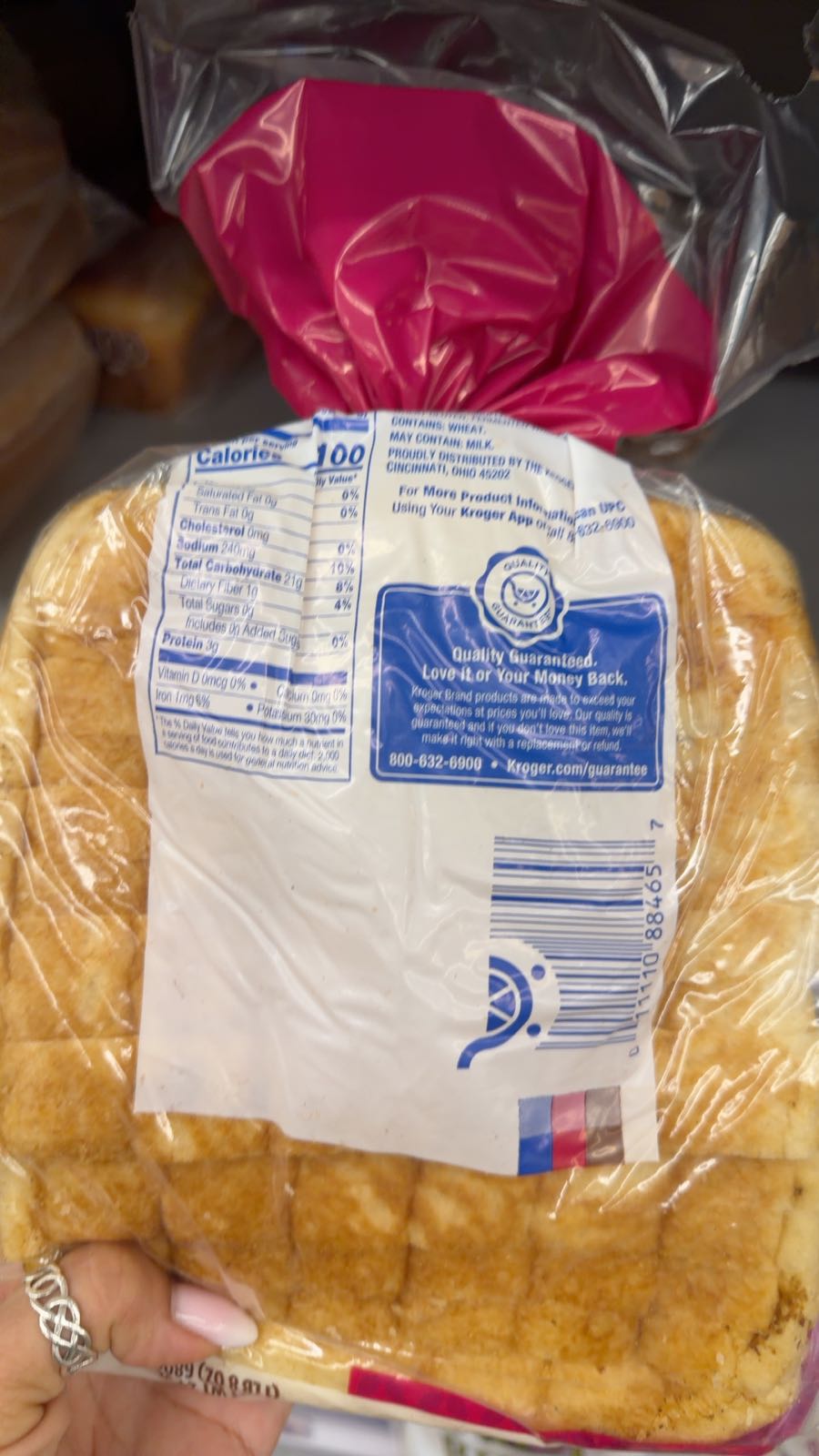
At a glance
Summary
This bread contains whole wheat flour, which is beneficial for its fiber and nutrient content. However, the presence of soybean oil, a highly processed seed oil, and calcium propionate, a synthetic preservative, detracts from its healthiness. The product is moderately processed, which limits its score, and includes added sugar, which can contribute to health issues if consumed in excess.
Key ingredients 13
Whole Wheat FlourGood
Whole wheat flour is a source of complex carbohydrates and dietary fiber. It retains the bran and germ, providing essential nutrients like B vitamins and minerals. Compared to refined flour, it offers better nutritional value and supports digestive health.
Risks
May contain gluten, which can be problematic for individuals with celiac disease or gluten sensitivity.
Benefits
Rich in dietary fiber, which aids in digestion and helps maintain stable blood sugar levels. Provides essential nutrients like B vitamins and minerals.
WaterNeutral
Water is a basic ingredient used to hydrate and bind the dough. It is essential for the baking process but does not contribute significant nutritional value. Its role is primarily functional in the bread-making process.
See more about Water →Vital Wheat GlutenNeutral
Vital wheat gluten is used to improve the elasticity and texture of bread. It is a concentrated form of gluten protein, enhancing the dough's strength. While it improves bread quality, it does not add significant nutritional benefits.
Risks
Contains gluten, which can be harmful to individuals with celiac disease or gluten intolerance.
Benefits
Improves bread texture and elasticity, making it more palatable and structurally sound.
YeastNeutral
Yeast is a microorganism used to ferment sugars, producing carbon dioxide that leavens the bread. It is essential for the bread-making process but does not provide significant nutritional benefits. Its primary role is functional, contributing to bread's texture and flavor.
Benefits
Contributes to the leavening and flavor development of bread.
MolassesNeutral
Molasses is a byproduct of sugar refining, used for its rich flavor and color. It contains some minerals like iron and calcium, but in small amounts. Its primary role in bread is to enhance flavor and color.
Risks
Contains sugar, which can contribute to health issues if consumed in excess.
Benefits
Provides a rich flavor and contains trace amounts of minerals like iron and calcium.
SaltNeutral
Salt is used to enhance flavor and control yeast activity in bread. It is a necessary component for taste but does not provide significant nutritional benefits. Excessive salt intake can lead to health issues like hypertension.
Risks
High sodium intake can contribute to hypertension and cardiovascular diseases.
Benefits
Enhances flavor and helps control yeast fermentation in bread.
Raisin Juice ConcentrateNeutral
Raisin juice concentrate is used as a natural sweetener and flavor enhancer. It contains natural sugars and some antioxidants. While it adds flavor, it does not significantly enhance the nutritional profile of bread.
Risks
Contains natural sugars, which can contribute to increased calorie intake.
Benefits
Provides natural sweetness and contains some antioxidants.
Sodium Stearoyl LactylateNeutral
Sodium stearoyl lactylate is an emulsifier used to improve dough strength and bread texture. It is a common food additive with no significant nutritional value. Its primary role is functional, enhancing the quality of baked goods.
Benefits
Improves dough strength and texture, enhancing the quality of bread.
Ammonium SulfateNeutral
Ammonium sulfate is used as a dough conditioner to improve bread volume and texture. It is a common food additive with no significant nutritional value. Its role is primarily functional in the baking process.
Benefits
Improves dough conditioning, enhancing bread volume and texture.
Fumaric AcidNeutral
Fumaric acid is used as an acidulant to enhance flavor and preserve bread. It is a common food additive with no significant nutritional benefits. Its primary role is to stabilize and improve the shelf life of baked goods.
Benefits
Enhances flavor and helps preserve the freshness of bread.
SugarBad
Sugar is added to enhance flavor and aid in yeast fermentation. However, it is a refined carbohydrate that can contribute to increased blood sugar levels. Excessive consumption of sugar is linked to various health issues, including obesity and diabetes.
Risks
High intake of sugar can lead to weight gain, increased risk of type 2 diabetes, and dental cavities.
Benefits
Provides energy and enhances the flavor profile of the bread.
Calcium PropionateBad
Calcium propionate is a preservative used to inhibit mold growth in bread. While effective, it is a synthetic additive with no nutritional benefits. Some individuals may experience allergic reactions or digestive issues.
Risks
May cause allergic reactions or digestive issues in sensitive individuals.
Benefits
Extends shelf life by preventing mold growth in bread.
Soybean OilVery Bad
Soybean oil is a seed oil high in omega-6 fatty acids, which can promote inflammation when consumed in excess. It is highly processed and often extracted using chemical solvents. Its use in bread is primarily for texture and moisture.
Risks
High omega-6 content may promote inflammation and is linked to various chronic diseases when consumed in excess.
Processing
Processed Foods
Get the full breakdown in the Scout appTake Scout shopping
Scan any product to see lab results, healthy alternatives, and your personalized analysis.
Are you Kroger? Fix an error Get the badge Get tested