
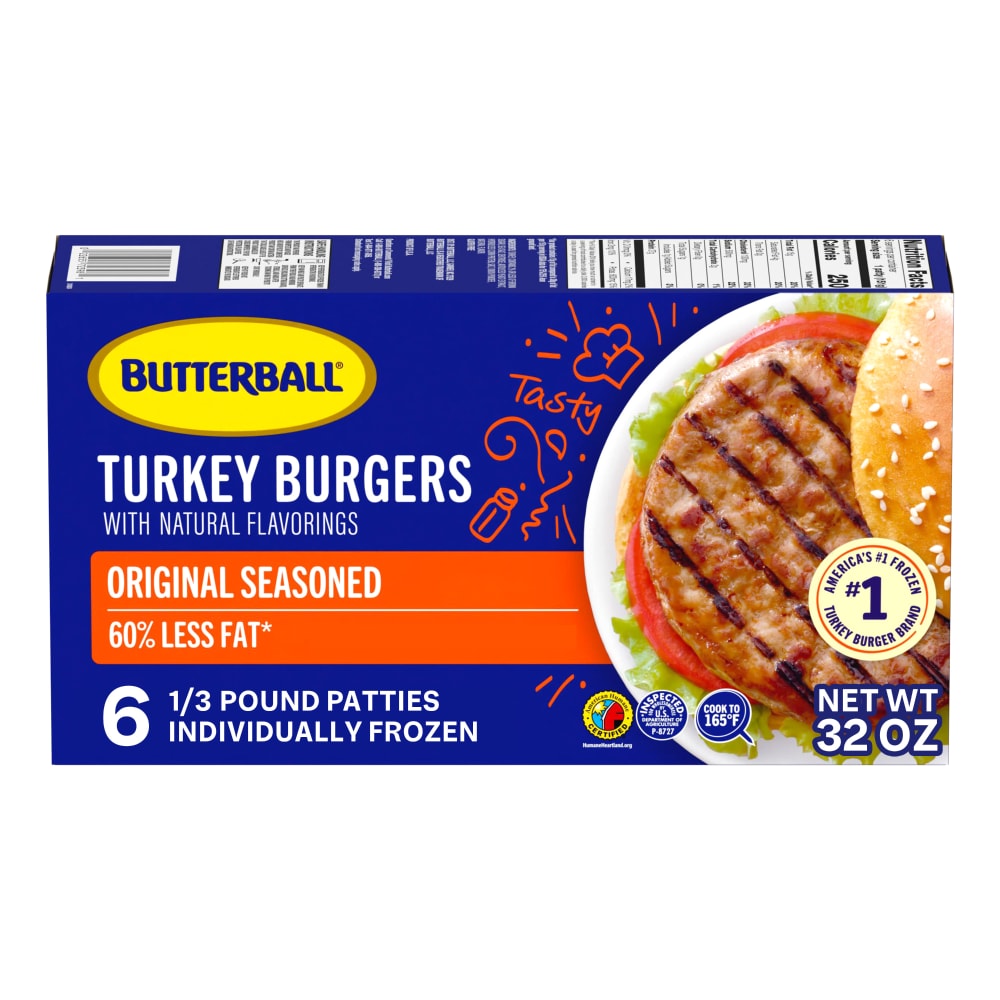



Butterball TURKEY BURGERS
Analysis updated August 2026 · How Scout scores
At a glance
Summary
This turkey burger product is ultra-processed, which limits its potential health score despite having turkey as a primary ingredient. The presence of added sugars like dextrose and brown sugar, along with natural flavors, contributes to its processing level and raises concerns about added sugars and lack of ingredient transparency. While it contains beneficial ingredients like turkey, onion powder, and garlic powder, the overall processing and inclusion of less desirable additives impact its health rating.
Key ingredients 10
TurkeyGood
Turkey is a high-quality source of protein with essential amino acids. It is minimally processed and provides important nutrients like B vitamins and selenium. Compared to red meats, turkey is lower in saturated fat.
Benefits
Rich in protein and essential nutrients, supporting muscle growth and maintenance.
Onion PowderGood
Onion powder is a dehydrated form of onion used for flavoring. It retains some of the beneficial compounds found in fresh onions, such as antioxidants. It is minimally processed and adds flavor without additional calories.
Benefits
Contains antioxidants and enhances flavor.
SpicesGood
Spices are used to enhance flavor and may provide various health benefits. They are minimally processed and can contain antioxidants and anti-inflammatory compounds. The specific benefits depend on the types of spices used.
Benefits
May provide antioxidants and enhance flavor.
Garlic PowderGood
Garlic powder is a dehydrated form of garlic that retains many of its beneficial compounds. It is minimally processed and provides flavor along with potential health benefits like improved heart health. Garlic is known for its antioxidant and anti-inflammatory properties.
Benefits
Contains antioxidants and may support heart health.
SaltNeutral
Salt is used as a seasoning and preservative in foods. It is a refined product that provides sodium, an essential mineral. Excessive consumption can lead to health issues like hypertension.
Risks
High sodium intake can contribute to hypertension and cardiovascular disease.
Benefits
Provides essential sodium necessary for fluid balance and nerve function.
Hydrolyzed Corn ProteinNeutral
Hydrolyzed corn protein is used as a flavor enhancer and source of amino acids. It is a processed ingredient that can contain glutamates, similar to MSG. It is generally safe but may cause reactions in sensitive individuals.
Risks
Potential for allergic reactions or sensitivity in some individuals.
Benefits
Provides amino acids and enhances flavor.
DextroseBad
Dextrose is a simple sugar used as a sweetener and preservative. It is highly processed and can contribute to increased blood sugar levels. Frequent consumption of added sugars is linked to metabolic disorders.
Risks
May contribute to obesity, insulin resistance, and other metabolic disorders when consumed in excess.
Brown SugarBad
Brown sugar is a refined sugar with molasses, used for sweetness and flavor. It is processed and can contribute to increased calorie intake and blood sugar spikes. Excessive sugar consumption is associated with various health issues.
Risks
High sugar intake is linked to obesity, type 2 diabetes, and dental cavities.
Yeast ExtractBad
Concentrated glutamate source — MSG-adjacent flavor enhancer.
Risks
May cause sensitivity in individuals sensitive to glutamates.
Benefits
Enhances flavor and provides some B vitamins.
Natural FlavorsBad
Natural flavors are used to enhance taste but are highly processed and can contain a variety of chemical compounds. They lack transparency, making it difficult to assess their health impact. The term 'natural' does not guarantee safety or health benefits.
Risks
Lack of transparency and potential for allergic reactions or sensitivities.
Processing
Ultra-Processed Foods
Get the full breakdown in the Scout appTake Scout shopping
Scan any product to see lab results, healthy alternatives, and your personalized analysis.
Download on theApp Store GET IT ONGoogle PlayAmazon pricing & content
Amazon price as of . Product prices and availability are accurate as of the date/time indicated and are subject to change. Any price and availability information displayed on Amazon.com at the time of purchase will apply to the purchase of this product.
CERTAIN CONTENT THAT APPEARS ON THIS SITE COMES FROM AMAZON. THIS CONTENT IS PROVIDED “AS IS” AND IS SUBJECT TO CHANGE OR REMOVAL AT ANY TIME.