
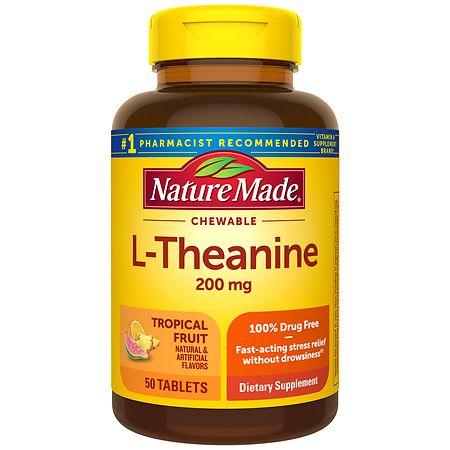



Nature Made L-Theanine Chewable Tablets - 50ct: Tropical Fruit Flavor, Multivitamin
Analysis updated August 2026 · How Scout scores
At a glance
Summary
This product contains cane sugar and natural flavors, which can be concerning due to their potential health impacts and lack of transparency. However, it avoids major harmful additives like artificial sweeteners or dyes, and the use of xylitol as a sweetener is a positive aspect. The presence of a few additives is typical for flavored supplements, but the overall formulation could be cleaner.
Key ingredients 8
XylitolNeutral
Xylitol is a sugar alcohol used as a sweetener that has fewer calories than sugar and does not spike blood sugar levels. It is often used in sugar-free products and can be beneficial for dental health. However, excessive consumption may cause digestive issues.
Risks
Excessive consumption may lead to digestive discomfort, such as bloating or diarrhea.
Benefits
Xylitol can help reduce the risk of dental cavities and has a lower glycemic index than regular sugar.
Stearic AcidNeutral
Stearic acid is a saturated fatty acid used as a binder or lubricant in supplements. It is generally considered safe and does not have significant health impacts at typical consumption levels. It is naturally found in animal and plant fats.
See more about Stearic Acid →Silicon DioxideNeutral
Silicon dioxide is used as an anti-caking agent to prevent clumping in powdered products. It is generally recognized as safe by food safety authorities. It is inert and does not react with other ingredients.
See more about Silicon Dioxide →Citric AcidNeutral
Citric acid is a natural preservative and flavor enhancer commonly used in food and supplements. It is found naturally in citrus fruits and is generally recognized as safe. It can help improve the stability and taste of products.
Risks
In rare cases, it may cause irritation or allergic reactions in sensitive individuals.
Benefits
Citric acid can enhance flavor and preserve the freshness of products.
SaltNeutral
Salt is used to enhance flavor and as a preservative in food products. While necessary for bodily functions, excessive intake can lead to health issues such as hypertension. It is important to consume in moderation.
Risks
Excessive salt intake can lead to high blood pressure and cardiovascular issues.
Benefits
Salt is essential for maintaining fluid balance and nerve function in the body.
Magnesium StearateNeutral
Magnesium stearate is commonly used as a flow agent in supplement manufacturing to prevent ingredients from sticking to equipment. It is generally considered safe in small amounts. It does not contribute significant nutritional value.
See more about Magnesium Stearate →Cane SugarBad
Cane sugar is a refined sugar that can contribute to increased blood sugar levels and potential weight gain. It is often used as a sweetener in processed foods, which can lead to overconsumption. Excessive intake of sugar is linked to various health issues, including obesity and metabolic syndrome.
Risks
High consumption of cane sugar can lead to obesity, type 2 diabetes, and dental cavities.
Natural FlavorsBad
Natural flavors are often used to enhance taste but can be a catch-all term for a variety of substances. The lack of transparency in what constitutes 'natural flavors' can be concerning for consumers seeking to avoid certain additives. They may contain solvents or preservatives that are not disclosed.
Risks
Potential allergens or undisclosed additives may be present, posing a risk to sensitive individuals.
Processing
Ultra-Processed Foods
Get the full breakdown in the Scout appTake Scout shopping
Scan any product to see lab results, healthy alternatives, and your personalized analysis.
Download on theApp Store GET IT ONGoogle PlayAmazon pricing & content
Amazon price as of . Product prices and availability are accurate as of the date/time indicated and are subject to change. Any price and availability information displayed on Amazon.com at the time of purchase will apply to the purchase of this product.
CERTAIN CONTENT THAT APPEARS ON THIS SITE COMES FROM AMAZON. THIS CONTENT IS PROVIDED “AS IS” AND IS SUBJECT TO CHANGE OR REMOVAL AT ANY TIME.