
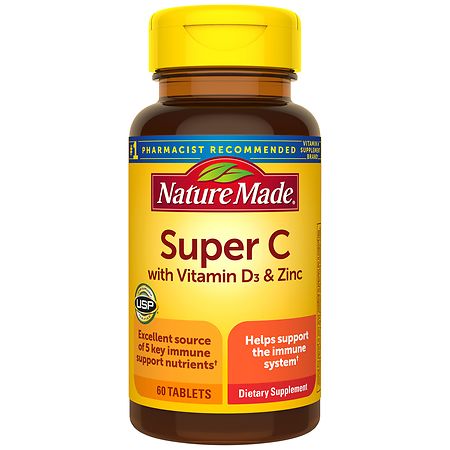



Nature Made Super C with Vitamin D3 & Zinc 60 Tablets
Analysis updated June 2026 · How Scout scores
At a glance
Summary
This supplement contains several synthetic additives such as polyethylene glycol and polysorbate 80, which are used for texture and stability but do not contribute to nutritional value and may cause adverse reactions in sensitive individuals. The presence of added colors, which are often unnecessary and linked to potential health concerns, further impacts the formulation quality. While the product provides essential vitamins, the inclusion of these additives and the level of processing reduce its overall score.
Key ingredients 12
Cellulose GelNeutral
Cellulose gel is a common binder and filler in supplements, providing structure without adding calories. It is derived from plant fibers and is generally considered safe for consumption. It does not contribute any nutritional value but helps in the manufacturing process.
See more about Cellulose Gel →HypromelloseNeutral
Hypromellose is used as a coating agent and to control the release of active ingredients in supplements. It is a semi-synthetic polymer derived from cellulose and is widely regarded as safe. It does not provide any nutritional benefits but aids in the stability and delivery of the supplement.
See more about Hypromellose →Croscarmellose SodiumNeutral
Croscarmellose sodium is a disintegrant used to help tablets dissolve and release their active ingredients. It is a cross-linked polymer of carboxymethylcellulose sodium and is considered safe for use in supplements. It does not provide nutritional benefits but enhances the effectiveness of the supplement.
See more about Croscarmellose Sodium →Magnesium StearateNeutral
Magnesium stearate is a common flow agent used in supplement manufacturing to prevent ingredients from sticking to equipment. It is a salt of stearic acid and magnesium and is generally recognized as safe. It does not provide nutritional benefits but ensures consistent production quality.
See more about Magnesium Stearate →Silicon DioxideNeutral
Silicon dioxide is used as an anti-caking agent to prevent clumping in powdered supplements. It is a naturally occurring mineral and is considered safe for consumption. It does not offer nutritional benefits but helps maintain the quality of the product.
See more about Silicon Dioxide →Triethyl CitrateNeutral
Triethyl citrate is used as a plasticizer and stabilizer in supplements, helping to maintain the integrity of the tablet. It is an ester of citric acid and is considered safe for consumption. It does not provide nutritional benefits but supports the physical properties of the supplement.
See more about Triethyl Citrate →Sodium CitrateNeutral
Sodium citrate is used as a buffering agent to maintain the pH balance in supplements. It is a salt of citric acid and is generally recognized as safe. While it helps stabilize the product, it does not provide nutritional benefits.
See more about Sodium Citrate →GelatinNeutral
Gelatin is used as a gelling agent in supplements, providing structure and aiding in the encapsulation of ingredients. It is derived from animal collagen and is generally considered safe. While it does not offer significant nutritional benefits in small amounts, it supports the physical form of the supplement.
See more about Gelatin →Modified Food StarchBad
Chemically modified starch additive.
See more about Modified Food Starch →Color AddedBad
The use of added colors in supplements is often unnecessary and can be associated with artificial dyes. These dyes are used to enhance the appearance of the product but do not contribute to its nutritional value. Some artificial colors have been linked to allergic reactions and hyperactivity in sensitive individuals.
Risks
Potential risks include allergic reactions and hyperactivity in sensitive individuals.
Polyethylene GlycolBad
Polyethylene glycol is used as a solvent and plasticizer in supplements, aiding in the formulation of tablets. It is a synthetic polymer and its use in food products is controversial due to potential laxative effects. While generally considered safe in small amounts, it does not contribute to nutritional value.
Risks
Potential laxative effects and gastrointestinal discomfort in sensitive individuals.
Polysorbate 80Bad
Polysorbate 80 is an emulsifier used to improve the texture and stability of supplements. It is a synthetic compound that can cause allergic reactions in some individuals. Its use is controversial due to potential impacts on gut health and it does not offer nutritional benefits.
Risks
Potential allergic reactions and impacts on gut health.
Processing
Ultra-Processed Foods
Get the full breakdown in the Scout appTake Scout shopping
Scan any product to see lab results, healthy alternatives, and your personalized analysis.
Download on theApp Store GET IT ONGoogle PlayAmazon pricing & content
Amazon price as of . Product prices and availability are accurate as of the date/time indicated and are subject to change. Any price and availability information displayed on Amazon.com at the time of purchase will apply to the purchase of this product.
CERTAIN CONTENT THAT APPEARS ON THIS SITE COMES FROM AMAZON. THIS CONTENT IS PROVIDED “AS IS” AND IS SUBJECT TO CHANGE OR REMOVAL AT ANY TIME.