
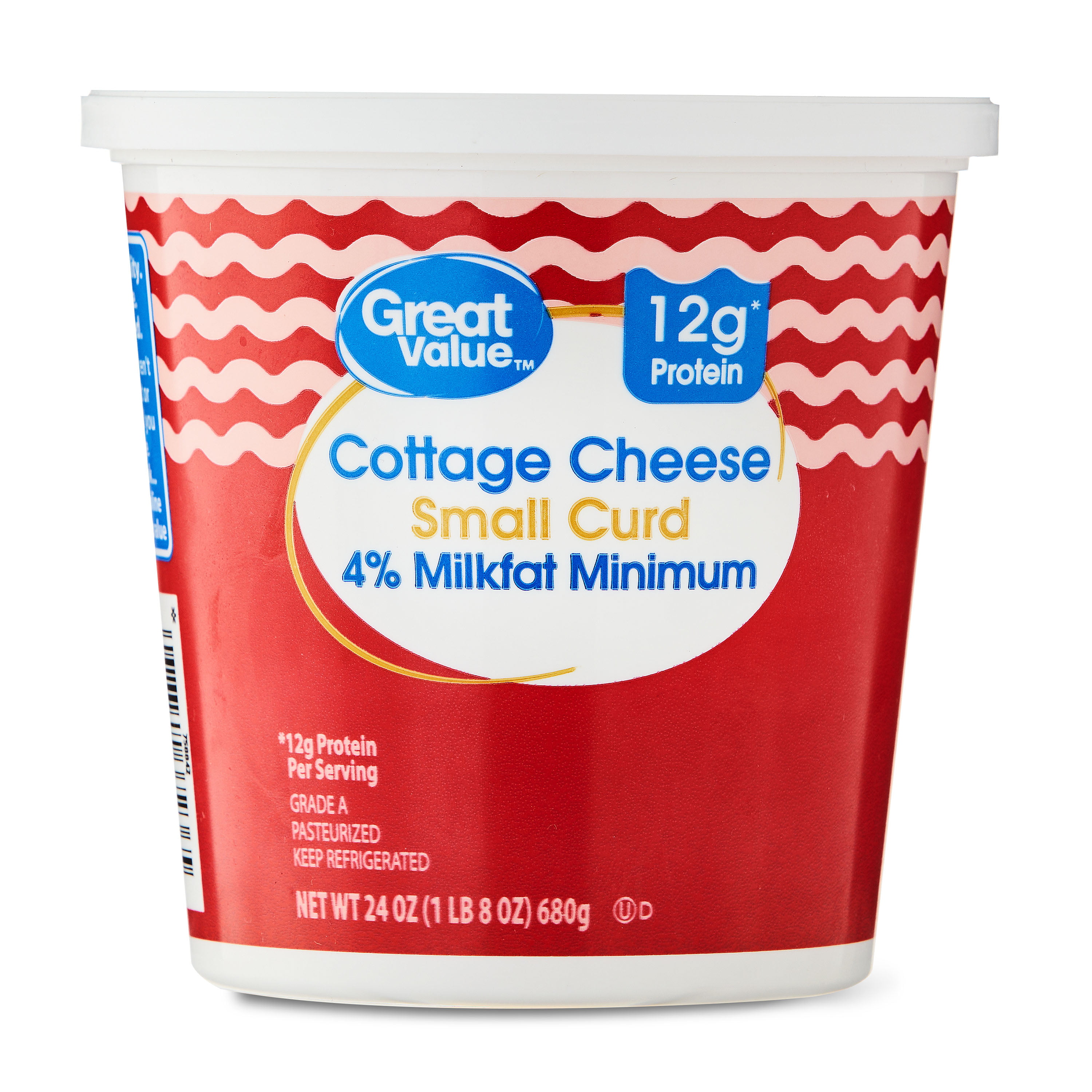


Cottage Cheese Small Curd 4% Milk Fat Minimum
Great ValueAnalysis updated July 2026 · How Scout scores
Near you
Great Value is carried at Walmart stores. Find one within 25 miles.
At a glance
Summary
This cottage cheese contains beneficial ingredients like cultured pasteurized nonfat milk and milk, which provide essential nutrients such as protein and calcium. However, the presence of maltodextrin and guar gum, both processed additives, detracts from its overall healthiness. The product's processing level further limits its score, as it is not minimally processed.
Key ingredients 9
Cultured pasteurized nonfat milkGood
Cultured pasteurized nonfat milk is a primary source of protein and calcium. The culturing process enhances digestibility and probiotic content. Pasteurization ensures safety by eliminating harmful bacteria.
Benefits
Provides high-quality protein and calcium essential for bone health. The culturing process may support gut health through probiotics.
MilkGood
Milk is a rich source of essential nutrients including calcium, vitamin D, and protein. It supports bone health and muscle function. The presence of natural fats aids in the absorption of fat-soluble vitamins.
Risks
Lactose intolerance may cause digestive issues in sensitive individuals.
Benefits
Offers a balanced profile of macronutrients and micronutrients essential for overall health.
CreamGood
Traditional whole-fat dairy ingredient.
Risks
High in saturated fats which may impact heart health if consumed in excess.
Benefits
Enhances flavor and texture, providing a creamy consistency.
WheyNeutral
Whey is a byproduct of cheese production and a source of high-quality protein. It contains essential amino acids beneficial for muscle repair. The processing of whey ensures it is free from lactose for those with intolerance.
Benefits
Provides high-quality protein that supports muscle growth and repair.
Nonfat milkNeutral
Nonfat milk is a low-calorie source of protein and calcium. It lacks the fat content of whole milk, which may reduce the absorption of fat-soluble vitamins. It is often used to reduce the overall fat content of dairy products.
Benefits
Offers protein and calcium without added fat, suitable for low-fat diets.
SaltNeutral
Salt is used for flavor enhancement and preservation. It is a common ingredient in cheese production. Excessive consumption can lead to increased blood pressure.
Risks
High sodium intake may contribute to hypertension and cardiovascular issues.
Benefits
Enhances flavor and acts as a preservative.
Guar gumNeutral
Standard formulation ingredient — neither beneficial nor harmful at typical use.
Risks
May cause bloating and gas in sensitive individuals.
Citric acidNeutral
Citric acid is a natural preservative and flavor enhancer. It is commonly used to maintain acidity and freshness in foods. It is generally recognized as safe when consumed in typical amounts.
Benefits
Helps preserve freshness and enhances flavor.
MaltodextrinBad
Maltodextrin is a highly processed carbohydrate used as a thickener and filler. It has a high glycemic index, which can spike blood sugar levels. It is often used in processed foods to improve texture.
Risks
May cause rapid blood sugar spikes and is not suitable for diabetics.
Processing
Processed Foods
Get the full breakdown in the Scout appTake Scout shopping
Scan any product to see lab results, healthy alternatives, and your personalized analysis.
Download on theApp Store GET IT ONGoogle Play