
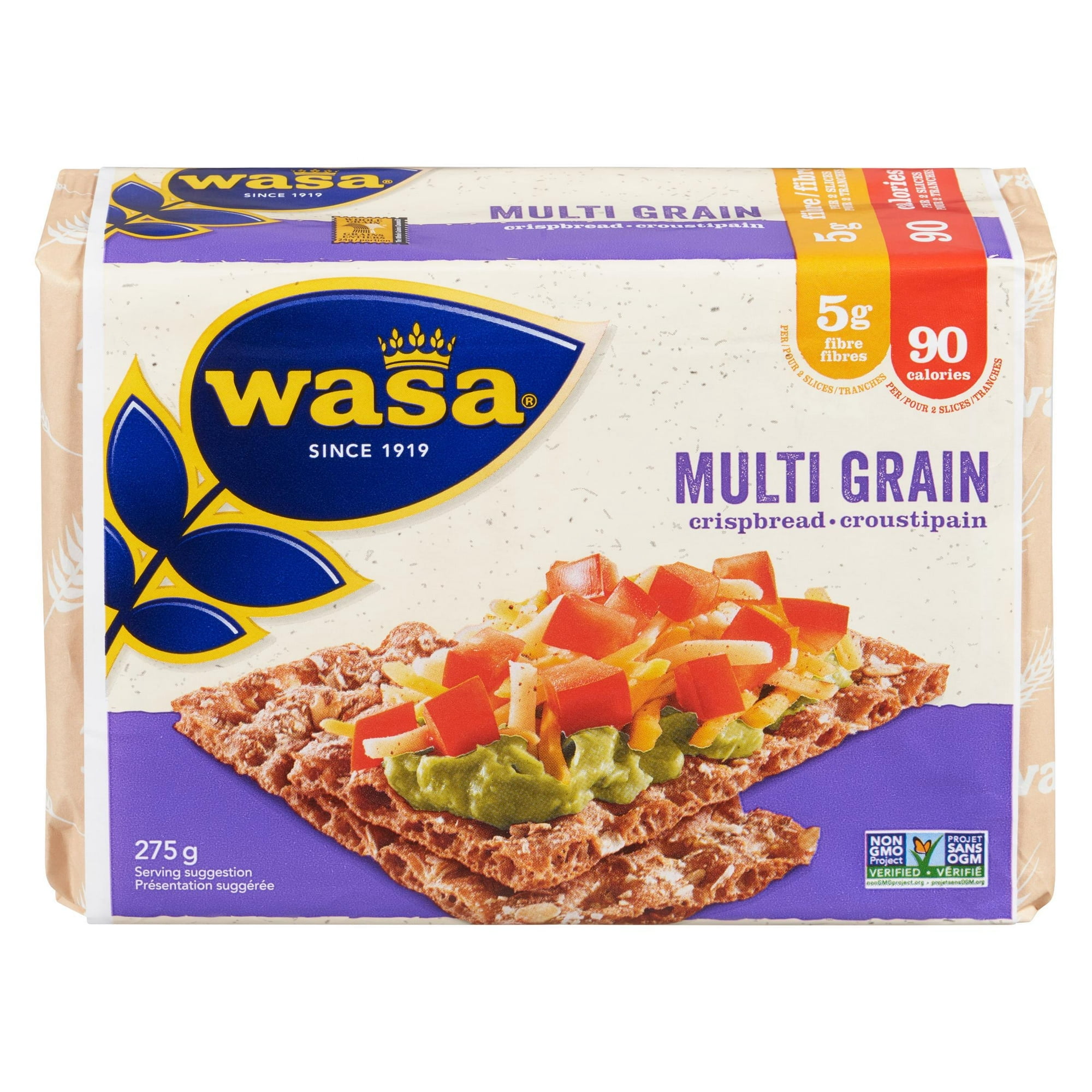


Wasa Multigrain Whole Grain Crispbread
Analysis updated July 2026 · How Scout scores
At a glance
Summary
This crispbread is made primarily from whole grain flours, which are minimally processed and provide beneficial nutrients like fiber and essential vitamins. However, it is classified as ultra-processed due to the inclusion of sunflower lecithin and its overall processing level, which limits its score. Despite the presence of healthy whole grains, the processing level prevents it from achieving a higher rating.
Key ingredients 10
Whole grain rye flourVery Good
Whole grain rye flour is a nutrient-dense ingredient rich in fiber and essential nutrients. It is minimally processed, retaining its bran and germ, which contribute to its health benefits. Compared to refined flours, it offers a lower glycemic index, supporting better blood sugar control.
Benefits
High in dietary fiber, which supports digestive health and may aid in weight management. Contains essential nutrients like magnesium and phosphorus.
Oat flakesVery Good
Oat flakes are a whole grain ingredient known for their high fiber content and heart health benefits. They are minimally processed, preserving their nutritional integrity. Oats contain beta-glucans, which are beneficial for cholesterol management.
Benefits
Rich in beta-glucans that can help lower cholesterol levels and support heart health. Provides a good source of vitamins and minerals, including manganese and phosphorus.
Whole grain oat flourVery Good
Whole grain oat flour is a nutritious flour alternative that is high in fiber and protein. It is minimally processed, retaining its natural nutrients and health benefits. Oat flour is known for its ability to improve heart health and support weight management.
Benefits
Contains beta-glucans that can help reduce cholesterol levels and improve heart health. Provides a good source of protein and essential nutrients.
SourdoughGood
Sourdough is a fermented dough that enhances the bioavailability of nutrients and improves digestibility. The fermentation process can reduce phytic acid, which may enhance mineral absorption. It also contributes to a unique flavor profile and texture.
Benefits
May improve gut health due to the presence of beneficial bacteria from fermentation. Can enhance the absorption of minerals like iron and zinc.
Whole grain wheat flourGood
Whole grain wheat flour is a nutritious ingredient that retains the bran, germ, and endosperm, offering a full spectrum of nutrients. It is less processed than refined flour, providing more fiber and micronutrients. This flour supports digestive health and provides sustained energy.
Risks
Contains gluten, which may be a concern for individuals with celiac disease or gluten sensitivity.
Benefits
High in dietary fiber, which aids in digestion and may help in maintaining healthy blood sugar levels. Provides essential nutrients like B vitamins and iron.
Whole grain barley flourGood
Whole grain barley flour is a nutritious ingredient rich in fiber and essential nutrients. It is less processed than refined flours, retaining its bran and germ. Barley flour is known for its ability to support heart health and improve digestion.
Risks
Contains gluten, which may be a concern for individuals with celiac disease or gluten sensitivity.
Benefits
High in soluble fiber, which can help lower cholesterol levels and support heart health. Provides essential nutrients like selenium and magnesium.
YeastNeutral
Yeast is a common leavening agent used in baking to help dough rise. It is a natural ingredient that contributes to the texture and flavor of baked goods. While it provides some B vitamins, its nutritional impact is minimal in small quantities.
Benefits
Contributes to the leavening process, improving the texture and volume of baked goods. Provides a small amount of B vitamins.
SaltNeutral
Salt is used as a seasoning and preservative in food products. It is a necessary nutrient for maintaining fluid balance and nerve function. However, excessive consumption can lead to health issues such as hypertension.
Risks
Excessive intake may contribute to high blood pressure and cardiovascular disease.
Benefits
Essential for maintaining fluid balance and nerve function in the body.
Barley malt extractNeutral
Barley malt extract is a sweetener derived from barley that adds flavor and color to baked goods. It is less processed than refined sugars and retains some nutrients from the barley. However, it is still a source of sugar and should be consumed in moderation.
Risks
Contains sugars that can contribute to increased calorie intake and potential blood sugar spikes.
Benefits
Provides a natural source of sweetness and flavor, with some retained nutrients from barley.
Sunflower lecithinBad
Sunflower lecithin is an emulsifier used to improve texture and shelf life in processed foods. It is derived from sunflower seeds and is less processed than soy lecithin. However, it is still an additive and may not provide significant health benefits.
Risks
May cause digestive issues in sensitive individuals when consumed in large amounts.
Benefits
Helps improve the texture and consistency of food products, with fewer allergenic concerns compared to soy lecithin.
Processing
Ultra-Processed Foods
Get the full breakdown in the Scout appTake Scout shopping
Scan any product to see lab results, healthy alternatives, and your personalized analysis.
Download on theApp Store GET IT ONGoogle PlayAmazon pricing & content
Amazon price as of . Product prices and availability are accurate as of the date/time indicated and are subject to change. Any price and availability information displayed on Amazon.com at the time of purchase will apply to the purchase of this product.
CERTAIN CONTENT THAT APPEARS ON THIS SITE COMES FROM AMAZON. THIS CONTENT IS PROVIDED “AS IS” AND IS SUBJECT TO CHANGE OR REMOVAL AT ANY TIME.