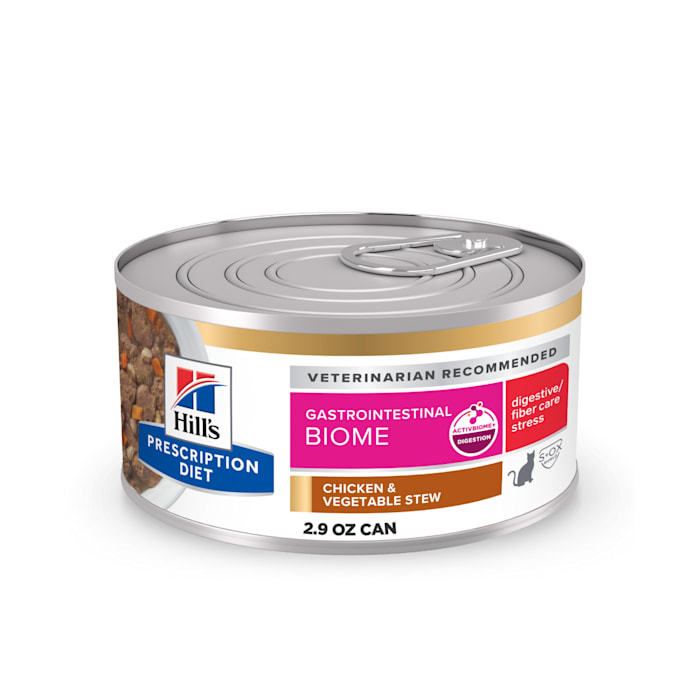
Hill's Prescription Diet Gastrointestinal Biome Stress Digestive Care Chicken & Vegetable Stew Cat Food, 2.9 oz.
At a glance
Summary
This cat food contains several beneficial ingredients such as chicken, pork liver, and fish oil, which provide essential nutrients and support overall health. However, it is considered ultra-processed due to the inclusion of ingredients like natural flavor and a variety of additives, which reduce its overall nutritional quality. The presence of soybean oil, a seed oil, also contributes to a lower score due to its potential health concerns.
Key ingredients 45
Chicken brothGood
Chicken broth is a source of hydration and flavor. It provides essential nutrients and amino acids. It is minimally processed and adds palatability to pet food.
Benefits
Provides hydration and enhances flavor, making the food more appealing to pets.
ChickenGood
Chicken is a high-quality protein source rich in essential amino acids. It supports muscle maintenance and overall health in pets. It is a natural ingredient with minimal processing.
Benefits
Rich in protein and essential amino acids, supporting muscle health and overall nutrition.
Pork liverGood
Pork liver is a nutrient-dense organ meat providing vitamins and minerals. It is a natural source of vitamin A and iron. It enhances the nutritional profile of pet food.
Risks
Excessive consumption may lead to vitamin A toxicity.
Benefits
Provides essential vitamins and minerals, enhancing the nutritional value of the diet.
CarrotsGood
Carrots are a source of fiber and beta-carotene, a precursor to vitamin A. They support digestive health and provide antioxidants. They are minimally processed and add natural sweetness.
Benefits
Rich in fiber and antioxidants, supporting digestive health and providing essential nutrients.
PumpkinGood
Pumpkin is a fiber-rich ingredient that aids in digestion. It provides vitamins and minerals, supporting overall health. It is a natural ingredient with minimal processing.
Benefits
Supports digestive health and provides essential nutrients and fiber.
Fish oilGood
Fish oil is rich in omega-3 fatty acids, supporting skin and coat health. It provides anti-inflammatory benefits and supports cardiovascular health. It is a beneficial addition to pet diets.
Benefits
Rich in omega-3 fatty acids, supporting skin, coat, and cardiovascular health.
Vitamin E supplementGood
Vitamin E is an antioxidant that supports immune function. It is added to pet food to enhance nutritional value. It is a beneficial addition to pet diets.
Benefits
Supports immune function and acts as an antioxidant.
Pyridoxine hydrochlorideGood
Beneficial ingredient — whole-food or functional value in this product class.
Benefits
Supports protein metabolism and neurological function.
Vitamin D3 supplementGood
Vitamin D3 is essential for calcium absorption and bone health. It is added to pet food to enhance nutritional value. It is a beneficial addition to pet diets.
Benefits
Supports calcium absorption and bone health.
BiotinGood
Beneficial ingredient — whole-food or functional value in this product class.
Benefits
Supports skin and coat health.
TaurineGood
Taurine is an essential amino acid for cats, supporting heart and eye health. It is added to pet food to ensure nutritional adequacy. It is a beneficial addition to cat diets.
Benefits
Supports heart and eye health in cats.
Rice starchNeutral
Rice starch is used as a thickening agent in pet food. It provides carbohydrates but lacks significant nutritional value. It is a processed ingredient with a neutral impact on health.
Benefits
Provides texture and consistency to the food.
Wheat glutenNeutral
Wheat gluten is a protein source used to enhance texture. It is a processed ingredient that may cause allergies in some pets. It provides protein but lacks a complete amino acid profile.
Risks
May cause allergic reactions in pets sensitive to gluten.
Benefits
Enhances texture and provides additional protein.
Soybean oilNeutral
Soybean oil is a source of omega-6 fatty acids. In pet food, it is considered neutral due to its role in providing essential fatty acids. It is a processed oil with a balanced impact in pet diets.
Risks
High omega-6 content may promote inflammation when consumed in excess.
Benefits
Provides essential fatty acids necessary for skin and coat health.
Potassium alginateNeutral
Potassium alginate is used as a thickening and stabilizing agent. It is derived from seaweed and is generally considered safe. It has no significant nutritional impact.
Benefits
Improves texture and stability of the product.
Citric acidNeutral
Citric acid is used as a preservative and flavor enhancer. It is naturally found in citrus fruits and is widely used in food products. It has no significant nutritional impact.
Benefits
Acts as a preservative, extending shelf life and enhancing flavor.
Dried citrus pulpNeutral
Dried citrus pulp is a source of fiber and natural flavor. It is a byproduct of citrus juice production. It provides fiber but has limited nutritional value.
Benefits
Adds fiber and natural flavor to the food.
Choline chlorideNeutral
Choline chloride is a source of choline, an essential nutrient. It supports liver function and brain health. It is a synthetic form of choline used in pet food.
Benefits
Supports liver function and brain health.
L-lysineNeutral
L-lysine is an essential amino acid important for protein synthesis. It supports immune function and overall health. It is a beneficial addition to pet diets.
Benefits
Supports protein synthesis and immune function.
Ground walnut shellsNeutral
Ground walnut shells are used as a fiber source. They provide texture and bulk to pet food. They are a natural ingredient with limited nutritional value.
Benefits
Adds fiber and texture to the food.
Guar gumNeutral
Guar gum is used as a thickening agent in pet food. It is derived from guar beans and is generally considered safe. It has no significant nutritional impact.
Risks
Excessive consumption may cause digestive issues.
Benefits
Improves texture and consistency of the product.
FructooligosaccharidesNeutral
Fructooligosaccharides are prebiotics that support gut health. They promote the growth of beneficial bacteria in the digestive tract. They are a beneficial addition to pet diets.
Benefits
Supports gut health by promoting beneficial bacteria growth.
Calcium lactateNeutral
Calcium lactate is a source of calcium, supporting bone health. It is a synthetic form of calcium used in pet food. It provides essential minerals but is processed.
Benefits
Supports bone health by providing essential calcium.
Calcium gluconateNeutral
Calcium gluconate is a source of calcium, important for bone health. It is a synthetic form of calcium used in pet food. It provides essential minerals but is processed.
Benefits
Supports bone health by providing essential calcium.
Calcium chlorideNeutral
Calcium chloride is used as a firming agent and source of calcium. It is a synthetic ingredient with no significant nutritional impact. It is generally considered safe in pet food.
Benefits
Provides calcium and acts as a firming agent.
Oat fiberNeutral
Oat fiber is a source of dietary fiber, supporting digestive health. It is a natural ingredient with minimal processing. It provides bulk and aids in digestion.
Benefits
Supports digestive health by providing dietary fiber.
Potassium citrateNeutral
Potassium citrate is used to regulate acidity and provide potassium. It is a synthetic ingredient with no significant nutritional impact. It is generally considered safe in pet food.
Benefits
Regulates acidity and provides potassium.
Sodium tripolyphosphateNeutral
Sodium tripolyphosphate is used as a preservative and emulsifier. It is a synthetic ingredient with no significant nutritional impact. It is generally considered safe in pet food.
Benefits
Acts as a preservative and emulsifier, extending shelf life.
VitaminsNeutral
Vitamins are essential nutrients required for various bodily functions. They are added to pet food to ensure nutritional adequacy. They are synthetic but necessary for health.
Benefits
Provide essential nutrients necessary for overall health.
Thiamine mononitrateNeutral
Thiamine mononitrate is a synthetic form of vitamin B1. It is essential for energy metabolism and neurological function. It is added to pet food to ensure nutritional adequacy.
Benefits
Supports energy metabolism and neurological function.
L-ascorbyl-2-polyphosphateNeutral
L-ascorbyl-2-polyphosphate is a source of vitamin C. It is used to enhance the nutritional profile of pet food. It is a synthetic ingredient with antioxidant properties.
Benefits
Provides vitamin C, supporting immune function and acting as an antioxidant.
Niacin supplementNeutral
Niacin is a B vitamin important for energy metabolism. It is added to pet food to ensure nutritional adequacy. It is a synthetic ingredient but necessary for health.
Benefits
Supports energy metabolism and overall health.
Calcium pantothenateNeutral
Calcium pantothenate is a synthetic form of vitamin B5. It is important for energy metabolism and synthesis of coenzyme A. It is added to pet food to ensure nutritional adequacy.
Benefits
Supports energy metabolism and synthesis of coenzyme A.
Riboflavin supplementNeutral
Riboflavin is a B vitamin important for energy metabolism. It is added to pet food to ensure nutritional adequacy. It is a synthetic ingredient but necessary for health.
Benefits
Supports energy metabolism and overall health.
Folic acidNeutral
Folic acid is a synthetic form of vitamin B9. It is important for DNA synthesis and cell division. It is added to pet food to ensure nutritional adequacy.
Benefits
Supports DNA synthesis and cell division.
Vitamin B12 supplementNeutral
Vitamin B12 is important for red blood cell formation and neurological function. It is added to pet food to ensure nutritional adequacy. It is a synthetic ingredient but necessary for health.
Benefits
Supports red blood cell formation and neurological function.
Sodium chlorideNeutral
Sodium chloride is used as a seasoning and preservative. It is a source of sodium, essential for fluid balance. It is a common ingredient in pet food with no significant nutritional impact.
Risks
Excessive sodium intake may lead to health issues.
Benefits
Provides sodium, essential for fluid balance and nerve function.
Calcium carbonateNeutral
Calcium carbonate is a source of calcium, supporting bone health. It is a synthetic ingredient used in pet food. It provides essential minerals but is processed.
Benefits
Supports bone health by providing essential calcium.
MineralsNeutral
Minerals are essential nutrients required for various bodily functions. They are added to pet food to ensure nutritional adequacy. They are synthetic but necessary for health.
Benefits
Provide essential nutrients necessary for overall health.
Zinc oxideNeutral
Zinc oxide is a source of zinc, important for immune function and skin health. It is a synthetic ingredient used in pet food. It provides essential minerals but is processed.
Benefits
Supports immune function and skin health by providing zinc.
Ferrous sulfateNeutral
Ferrous sulfate is a source of iron, important for red blood cell formation. It is a synthetic ingredient used in pet food. It provides essential minerals but is processed.
Benefits
Supports red blood cell formation by providing iron.
Manganese sulfateNeutral
Manganese sulfate is a source of manganese, important for bone health and metabolism. It is a synthetic ingredient used in pet food. It provides essential minerals but is processed.
Benefits
Supports bone health and metabolism by providing manganese.
Calcium iodateNeutral
Calcium iodate is a source of iodine, important for thyroid function. It is a synthetic ingredient used in pet food. It provides essential minerals but is processed.
Benefits
Supports thyroid function by providing iodine.
Natural flavorBad
Natural flavor is a catch-all term for flavoring agents. It lacks transparency and may include various additives. It is a processed ingredient with potential allergenic concerns.
Risks
May contain undisclosed additives that could cause allergic reactions.
Benefits
Enhances the palatability of the food.
Copper sulfateBad
Processed additive flagged under Scout's ingredient doctrine.
Benefits
Supports red blood cell formation and immune function by providing copper.
Processing
Ultra-Processed Foods
Get the full breakdown in the Scout appTake Scout shopping
Scan any product to see lab results, healthy alternatives, and your personalized analysis.