
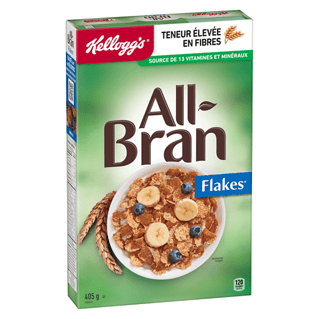


All-Bran Kellogg's* All-Bran* Flakes Cereal, 405g 405g
Analysis updated August 2026 · How Scout scores
At a glance
Summary
This cereal contains whole grain wheat and wheat bran, which are beneficial for providing dietary fiber and essential nutrients. However, the presence of added sugars, such as sugar and corn and barley malt extract, contributes to the overall sugar content, which can be detrimental to health if consumed in excess. The product is moderately processed, which limits its score, and the inclusion of added vitamins and minerals like iron is a positive aspect.
Key ingredients 6
Whole grain wheatGood
Whole grain wheat is a source of dietary fiber and essential nutrients. It is minimally processed, retaining the bran, germ, and endosperm. This contributes to better digestive health and provides sustained energy release.
Risks
Contains gluten, which may be a concern for individuals with celiac disease or gluten sensitivity.
Benefits
Rich in dietary fiber, which supports digestive health and helps maintain stable blood sugar levels.
IronGood
Iron is an essential mineral that plays a critical role in oxygen transport and energy production. It is often added to cereals to prevent iron deficiency anemia. Fortification helps meet daily iron requirements, especially in populations at risk of deficiency.
Risks
Excessive iron intake can lead to toxicity, particularly in individuals with hemochromatosis.
Benefits
Supports oxygen transport in the blood and helps prevent iron deficiency anemia.
Wheat branNeutral
Wheat bran is a byproduct of milling and is high in insoluble fiber. It aids in digestion and can help prevent constipation. However, it lacks the full nutrient profile of whole grains.
Risks
May cause digestive discomfort in some individuals if consumed in large quantities.
Benefits
Provides insoluble fiber that supports bowel regularity and digestive health.
SaltNeutral
Salt is used as a flavor enhancer and preservative. It is a source of sodium, which is essential for maintaining fluid balance and nerve function. However, excessive sodium intake is a health concern.
Risks
High sodium intake is associated with increased risk of hypertension and cardiovascular diseases.
Benefits
Provides essential sodium necessary for various bodily functions.
Thiamine hydrochlorideNeutral
Thiamine hydrochloride is a synthetic form of vitamin B1 used to fortify foods. It is essential for energy metabolism and nerve function. Fortification helps prevent thiamine deficiency, especially in processed foods.
Benefits
Supports energy metabolism and proper nerve function.
SugarsBad
Sugars, including sugar and corn and barley malt extract, contribute to added sugar content in the diet. Excessive consumption of added sugars is linked to various health issues such as obesity and dental cavities. These sugars are refined and lack nutritional benefits.
Risks
High intake of added sugars can lead to weight gain, increased risk of type 2 diabetes, and dental problems.
Processing
Processed Foods
Get the full breakdown in the Scout appTake Scout shopping
Scan any product to see lab results, healthy alternatives, and your personalized analysis.
Download on theApp Store GET IT ONGoogle PlayAmazon pricing & content
Amazon price as of . Product prices and availability are accurate as of the date/time indicated and are subject to change. Any price and availability information displayed on Amazon.com at the time of purchase will apply to the purchase of this product.
CERTAIN CONTENT THAT APPEARS ON THIS SITE COMES FROM AMAZON. THIS CONTENT IS PROVIDED “AS IS” AND IS SUBJECT TO CHANGE OR REMOVAL AT ANY TIME.