
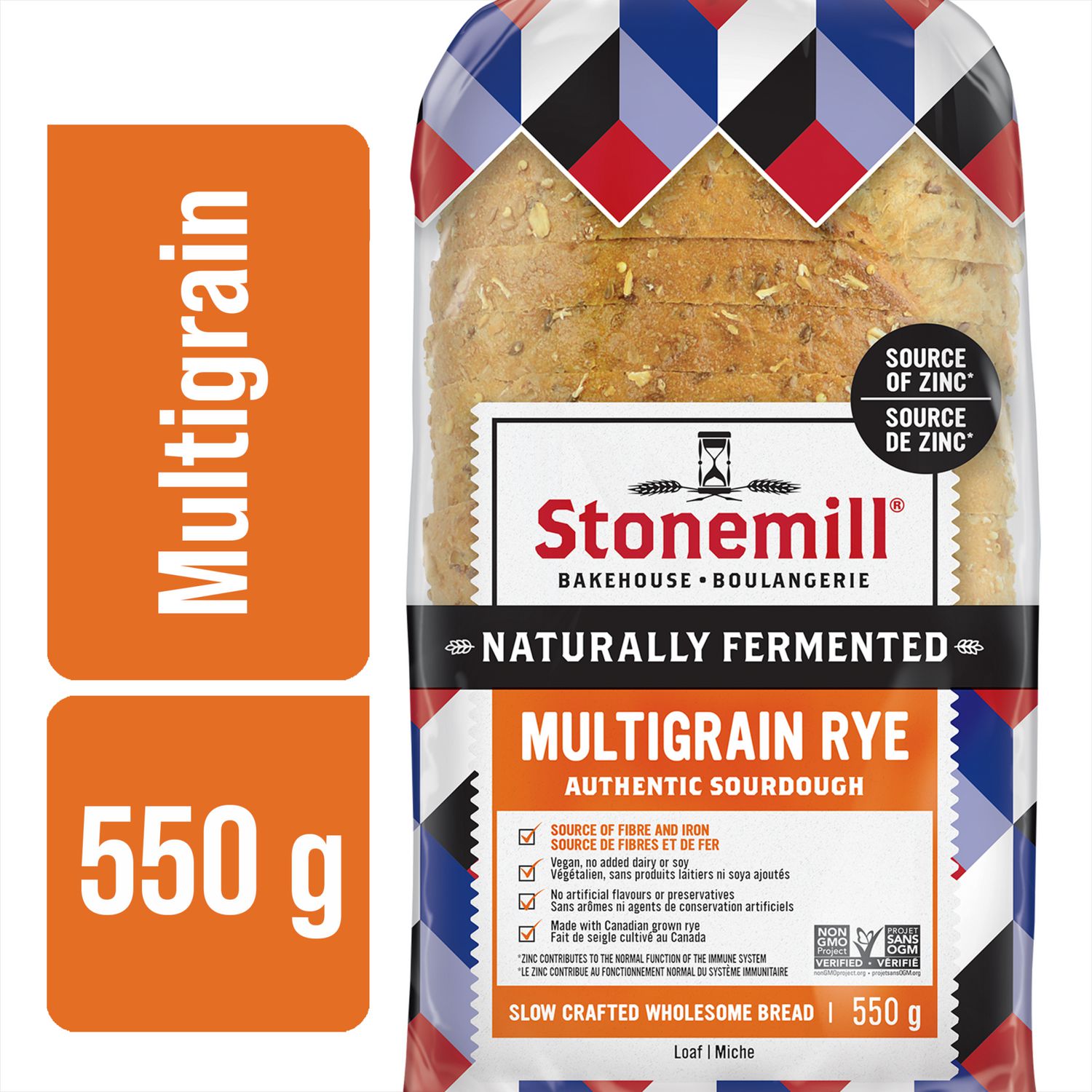


Stonemill Authentic Sourdough Rye Multigrain Sliced Bread
Analysis updated July 2026 · How Scout scores
At a glance
Summary
This bread features a variety of beneficial ingredients such as organic sourdough, flax seeds, and rolled oats, which contribute to its nutritional value. The presence of only one additive and the absence of harmful ingredients like seed oils or artificial additives enhance its health profile. However, as a processed food, its score is capped due to the level of processing involved.
Key ingredients 19
Organic sourdoughGood
Organic sourdough is made from fermented grains, which can improve digestibility and nutrient absorption. The fermentation process can enhance the bioavailability of minerals. Being organic, it is free from synthetic pesticides and fertilizers.
Benefits
May improve gut health and nutrient absorption due to fermentation.
Brown flax seedsGood
Brown flax seeds are rich in omega-3 fatty acids and fiber, supporting heart health and digestion. They contain lignans, which have antioxidant properties. Whole seeds provide a good source of nutrients when ground.
Risks
May cause digestive discomfort if consumed in large amounts.
Benefits
Rich in omega-3 fatty acids and fiber, supporting heart health and digestion.
Rolled oatsGood
Rolled oats are a whole grain rich in fiber, particularly beta-glucan, which can help lower cholesterol levels. They provide a good source of vitamins, minerals, and antioxidants. Oats are minimally processed, retaining most of their nutritional value.
Risks
May contain gluten if cross-contaminated during processing.
Benefits
Supports heart health and provides sustained energy due to high fiber content.
Sunflower seedsGood
Sunflower seeds are a good source of healthy fats, protein, and vitamin E, an antioxidant. They provide essential nutrients and can support heart health. Whole seeds are nutrient-dense and minimally processed.
Risks
May cause allergic reactions in some individuals.
Benefits
Rich in healthy fats and vitamin E, supporting heart health and providing antioxidant benefits.
Golden flax seedsGood
Golden flax seeds are similar to brown flax seeds, offering omega-3 fatty acids and fiber. They support heart health and have antioxidant properties due to lignans. Whole seeds are nutrient-rich and beneficial when ground.
Risks
May cause digestive discomfort if consumed in large amounts.
Benefits
Provides omega-3 fatty acids and fiber, supporting heart health and digestion.
Sea saltGood
Sea salt is a natural source of sodium and trace minerals, minimally processed compared to refined table salt. It enhances flavor and provides essential electrolytes. Its mineral content can vary based on the source.
Risks
Excessive sodium intake can lead to health issues such as hypertension.
Benefits
Provides essential electrolytes and trace minerals, enhancing flavor naturally.
Apple cider vinegarGood
Apple cider vinegar is known for its potential health benefits, including aiding digestion and having antimicrobial properties. It is made from fermented apple juice, retaining beneficial compounds. It can enhance the flavor and shelf life of bread.
Benefits
May aid digestion and provide antimicrobial benefits, enhancing flavor.
Wheat branGood
Wheat bran is the outer layer of the wheat kernel, rich in fiber and nutrients. It supports digestive health and provides essential vitamins and minerals. As a whole grain component, it adds nutritional value to bread.
Risks
May cause digestive discomfort in some individuals if consumed in large amounts.
Benefits
Rich in fiber, supporting digestive health and providing essential nutrients.
Millet seedsGood
Millet seeds are a gluten-free grain rich in fiber, vitamins, and minerals. They support digestive health and provide essential nutrients. As a whole grain, they add nutritional diversity to bread.
Benefits
Rich in fiber and nutrients, supporting digestive health and providing essential vitamins and minerals.
Organic whole wheat flourGood
Organic whole wheat flour is made from the entire wheat kernel, retaining fiber and nutrients. Being organic, it is free from synthetic pesticides and fertilizers. It provides more nutritional benefits compared to refined flour.
Risks
May cause allergic reactions in individuals with wheat allergies or gluten intolerance.
Benefits
Rich in fiber and nutrients, supporting digestive health and providing essential vitamins and minerals.
WaterNeutral
Water is a fundamental ingredient in bread making, hydrating the flour and activating yeast. It is essential for dough formation but does not contribute nutritional value. Its role is primarily functional in the baking process.
See more about Water →YeastNeutral
Yeast is a microorganism used in bread making to leaven the dough. It contributes to the texture and flavor of the bread. While essential for baking, it does not provide significant nutritional benefits.
See more about Yeast →Raisin juice concentrateNeutral
Raisin juice concentrate is used as a natural sweetener, providing some sugars and flavor. It is less processed than refined sugars but still contributes to the sugar content. It offers minimal nutritional benefits beyond sweetness.
Risks
Contributes to sugar content, which should be consumed in moderation.
Benefits
Provides natural sweetness with some antioxidants from raisins.
Durum semolinaNeutral
Durum semolina is a coarse flour made from durum wheat, used for its high protein content and firm texture. It is commonly used in pasta and some bread products. While it provides protein, it lacks the fiber of whole grains.
Risks
May cause allergic reactions in individuals with wheat allergies or gluten intolerance.
Benefits
Provides protein and contributes to the texture of bread.
Malted barley flourNeutral
Malted barley flour is used to enhance flavor and improve dough fermentation. It contains enzymes that aid in breaking down starches. While it contributes to flavor, it does not offer significant nutritional benefits.
Risks
May contain gluten, which can be a concern for those with celiac disease or gluten sensitivity.
Benefits
Enhances flavor and aids in dough fermentation.
Cultured wheat starchNeutral
Cultured wheat starch is used as a natural preservative, enhancing shelf life without synthetic additives. It is derived from wheat and undergoes fermentation. While functional, it does not provide significant nutritional benefits.
Risks
May cause allergic reactions in individuals with wheat allergies or gluten intolerance.
Benefits
Acts as a natural preservative, extending shelf life without synthetic additives.
Natural citric acidNeutral
Natural citric acid is used as a preservative and flavor enhancer, derived from citrus fruits. It helps maintain freshness and adds a slight tangy flavor. It is generally recognized as safe and widely used in food products.
Benefits
Helps maintain freshness and enhances flavor naturally.
EnzymesNeutral
Enzymes are used in bread making to improve dough handling and texture. They are naturally occurring proteins that catalyze biochemical reactions. While functional, they do not provide nutritional benefits.
Benefits
Improves dough handling and texture in bread making.
Wheat flourBad
Refined grain flour stripped of bran and germ.
Risks
May cause allergic reactions in individuals with wheat allergies or gluten intolerance.
Benefits
Provides carbohydrates for energy but lacks the fiber and nutrients of whole grain flour.
Processing
Processed Foods
Get the full breakdown in the Scout appTake Scout shopping
Scan any product to see lab results, healthy alternatives, and your personalized analysis.
Download on theApp Store GET IT ONGoogle Play