
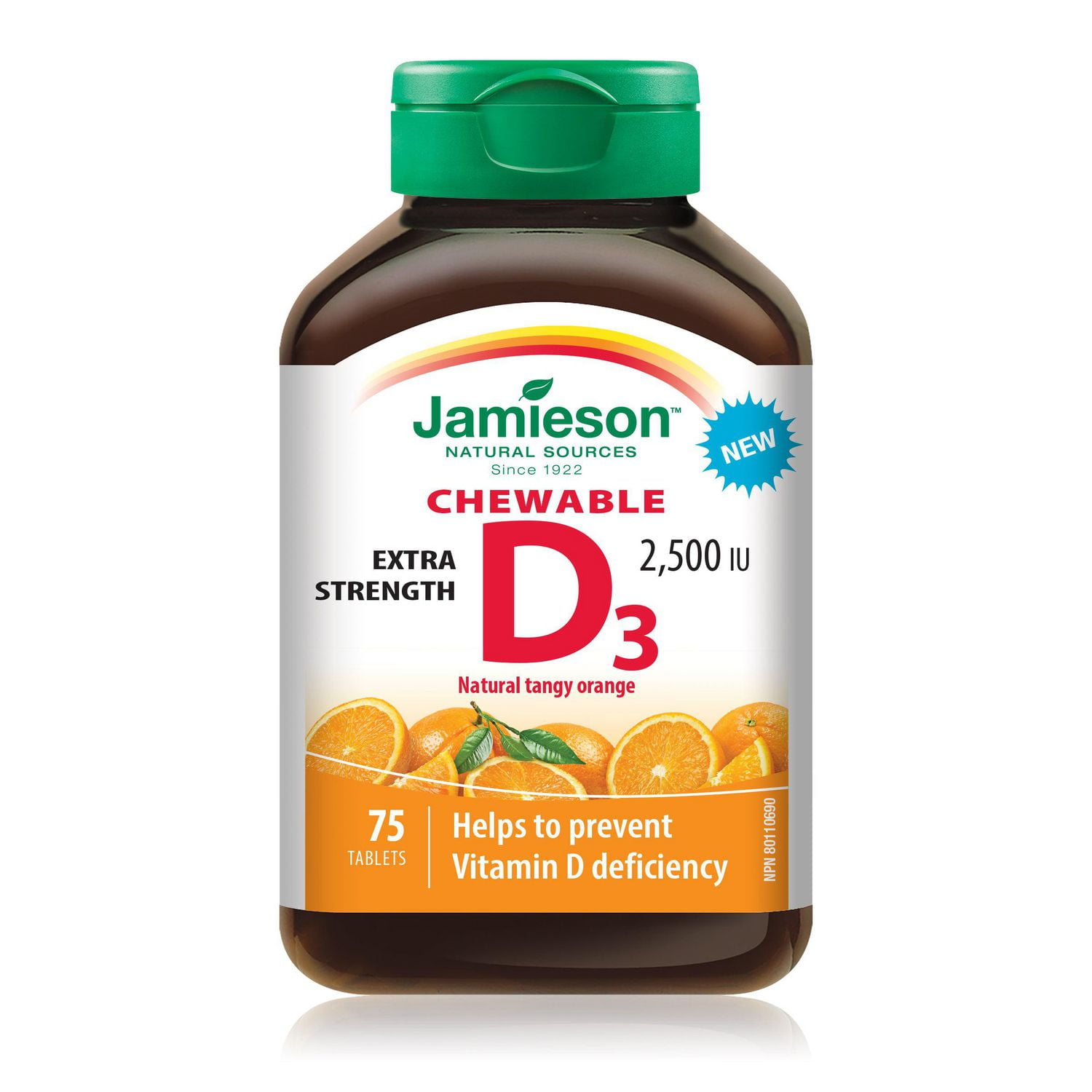

Jamieson Laboratories Jamieson Vitamin D3 Chewable Tablets, 2500 Iu, Extra Strength, Orange, 75 Count
Analysis updated August 2026 · How Scout scores
At a glance
Summary
This supplement contains Vitamin D3, which is beneficial for bone health and immune function. However, the presence of sucralose, an artificial sweetener, raises concerns due to its potential impact on gut health and insulin response. Additionally, the use of natural orange flavors, which lack transparency, contributes to a moderate processing level.
Key ingredients 9
Vitamin D3Good
Vitamin D3 is essential for calcium absorption and bone health. It is a high-quality active ingredient in supplements, providing significant health benefits. Its role in immune function and mood regulation further enhances its value.
Benefits
Supports bone health, immune function, and mood regulation.
CelluloseNeutral
Cellulose is a common filler and binder in supplements, derived from plant fibers. It is generally considered safe and non-digestible, adding bulk without calories. It does not provide nutritional benefits but aids in tablet formation.
See more about Cellulose →Citric AcidNeutral
Citric acid is used as a preservative and flavor enhancer in supplements. It is naturally found in citrus fruits and is generally recognized as safe. It helps maintain product stability and taste.
Risks
Excessive consumption may cause dental erosion or stomach upset.
Benefits
Enhances flavor and preserves product stability.
Vegetable Stearic AcidNeutral
Vegetable stearic acid is a fatty acid used as a lubricant in tablet manufacturing. It is derived from vegetable oils and is generally considered safe. It does not provide nutritional benefits but aids in the manufacturing process.
See more about Vegetable Stearic Acid →Vegetable Magnesium StearateNeutral
Vegetable magnesium stearate is a common flow agent in supplements, derived from vegetable oils. It is generally recognized as safe and helps ensure consistent tablet quality. It does not provide nutritional benefits.
See more about Vegetable Magnesium Stearate →SilicaNeutral
Silica is used as an anti-caking agent in supplements, ensuring product stability. It is naturally occurring and generally considered safe. It does not provide nutritional benefits but aids in product consistency.
See more about Silica →DextroseBad
Refined added sugar.
Risks
Excessive consumption may contribute to weight gain and blood sugar spikes.
Natural Orange FlavoursBad
Natural orange flavors are used to enhance the taste of supplements but can be a catch-all term for various compounds. The lack of transparency in sourcing and processing raises concerns. It does not provide nutritional benefits and may contain undisclosed additives.
Risks
Potential for undisclosed additives and allergens.
SucraloseBad
Sucralose is an artificial sweetener used to provide sweetness without calories. Concerns exist about its potential impact on gut health and insulin response. It does not provide nutritional benefits and may have long-term health implications.
Risks
Potential impact on gut microbiota and insulin sensitivity.
Benefits
Provides sweetness without adding calories.
Processing
Processed Foods
Get the full breakdown in the Scout appTake Scout shopping
Scan any product to see lab results, healthy alternatives, and your personalized analysis.
Download on theApp Store GET IT ONGoogle Play