
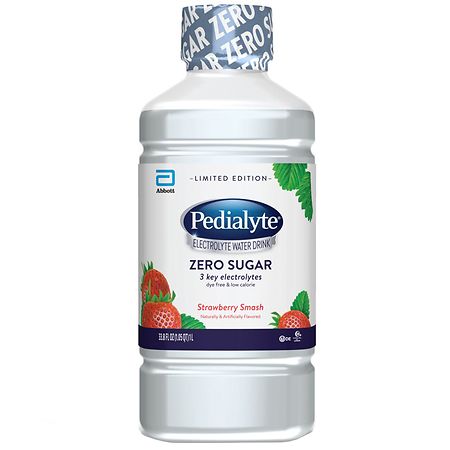



Pedialyte Zero Sugar Electrolyte Water Strawberry Smash - 33.8 fl oz
Analysis updated September 2026 · How Scout scores
At a glance
Summary
This electrolyte water contains essential electrolytes like salt and potassium citrate, which are beneficial for hydration. However, the presence of artificial sweeteners such as sucralose and acesulfame potassium raises concerns due to potential impacts on metabolism and gut health. Additionally, the use of 'natural flavors' adds to the processing level, reducing transparency about the product's composition.
Key ingredients 8
SaltGood
Salt is an essential electrolyte that helps maintain fluid balance and nerve function. It is a critical component in rehydration solutions. However, excessive intake can lead to hypertension.
Risks
Excessive consumption may lead to high blood pressure and cardiovascular issues.
Benefits
Essential for maintaining electrolyte balance and proper hydration.
Sodium CitrateGood
Beneficial ingredient — whole-food or functional value in this product class.
Risks
May contribute to increased sodium intake, which can affect blood pressure.
Benefits
Helps maintain pH balance and supports electrolyte replenishment.
WaterNeutral
Water is a neutral ingredient that serves as the base for the beverage. It is essential for hydration but does not provide additional nutritional benefits. It is free from calories and additives.
See more about Water →Citric AcidNeutral
Citric acid is commonly used as a preservative and flavor enhancer in beverages. It is generally recognized as safe but can cause dental erosion if consumed in excess. It is naturally found in citrus fruits.
Risks
May contribute to dental erosion if consumed in large quantities.
Potassium CitrateNeutral
Potassium citrate is used to provide potassium, an essential electrolyte. It helps in maintaining normal cell function and fluid balance. However, excessive intake can cause hyperkalemia.
Risks
Excessive intake may lead to hyperkalemia, which can affect heart function.
Benefits
Helps maintain electrolyte balance and supports muscle and nerve function.
Natural FlavorBad
Natural flavors are often criticized for being a catch-all term that can include a variety of chemical compounds. They are highly processed and lack transparency regarding their specific composition. This can lead to consumer confusion and potential exposure to unwanted additives.
Risks
Potential exposure to undisclosed additives and chemicals.
SucraloseBad
Sucralose is an artificial sweetener that provides sweetness without calories. It is highly processed and may affect gut health. Some studies suggest it may alter glucose and insulin levels.
Risks
Potential impact on gut microbiota and glucose metabolism.
Benefits
Provides sweetness without adding calories.
Acesulfame PotassiumBad
Acesulfame potassium is an artificial sweetener used to enhance sweetness without calories. It is often criticized for potential health concerns, including effects on metabolism and gut health. It is stable under heat and often used in combination with other sweeteners.
Risks
May affect metabolism and gut health with long-term consumption.
Benefits
Provides sweetness without contributing to caloric intake.
Processing
Processed Foods
Get the full breakdown in the Scout appTake Scout shopping
Scan any product to see lab results, healthy alternatives, and your personalized analysis.
Download on theApp Store GET IT ONGoogle Play