
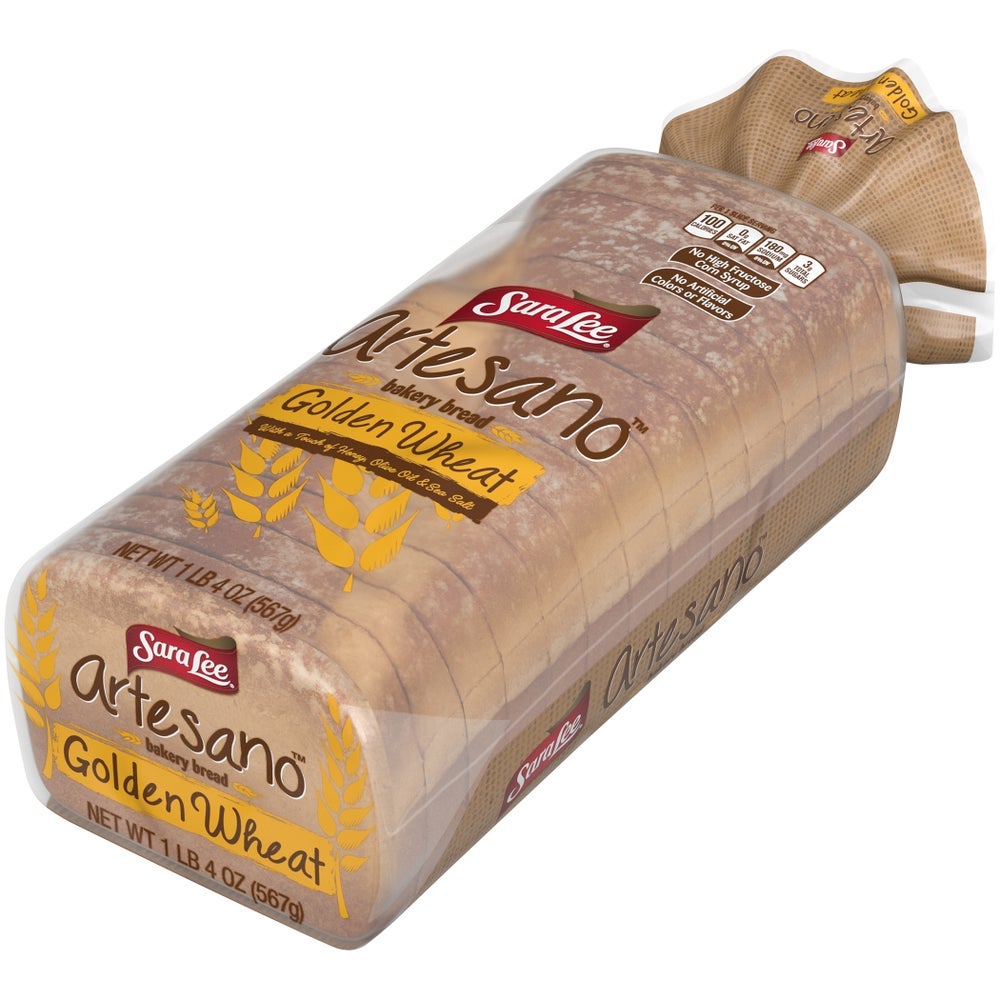



Artesano bakery bread
Summary
This bread is ultra-processed, which limits its healthiness despite some beneficial ingredients like malted barley flour and reduced iron. The presence of soybean oil, a highly processed seed oil, and added sugar contribute negatively to its nutritional profile. The inclusion of multiple additives further impacts its overall quality, making it less desirable compared to less processed options.
At a glance
Key ingredients 17
Enriched wheat flourNeutral
Enriched wheat flour is a refined flour that has been fortified with vitamins and minerals. It lacks the fiber and nutrients found in whole grain flour. The enrichment process adds back some nutrients lost during processing, but it is still less nutritious than whole grain alternatives.
Risks
May contribute to blood sugar spikes and lacks the fiber of whole grains.
Benefits
Provides essential vitamins and minerals like iron and B vitamins due to enrichment.
Malted barley flourGood
Malted barley flour is used to enhance flavor and improve the texture of baked goods. It contains enzymes that help break down starches into sugars, aiding in fermentation. This ingredient can improve the nutritional profile by adding some fiber and protein.
Benefits
Enhances flavor and texture while providing some fiber and protein.
Reduced ironGood
Reduced iron is added to fortify foods with iron, an essential mineral for oxygen transport in the blood. It helps prevent iron deficiency anemia. The bioavailability of iron in this form is generally good, though it can vary based on dietary factors.
Risks
Excessive iron intake can lead to toxicity, but this is rare from fortified foods alone.
Benefits
Essential for preventing iron deficiency anemia and supporting overall health.
NiacinNeutral
Niacin, or vitamin B3, is added to enriched flour to support metabolic health. It plays a role in converting food into energy. While beneficial, it is typically consumed in adequate amounts through a balanced diet.
Benefits
Supports energy metabolism and overall health.
Thiamin mononitrateNeutral
Thiamin mononitrate is a form of vitamin B1 used to fortify foods. It is essential for energy metabolism and nerve function. While beneficial, it is usually consumed adequately through a varied diet.
Benefits
Supports energy metabolism and nerve function.
RiboflavinNeutral
Riboflavin, or vitamin B2, is added to enriched flour to support energy production and cellular function. It is water-soluble and generally safe. While beneficial, it is typically consumed in adequate amounts through a balanced diet.
Benefits
Supports energy production and cellular function.
Folic acidNeutral
Folic acid is a synthetic form of folate used to fortify foods and prevent neural tube defects. It is crucial for DNA synthesis and cell division. While beneficial, excessive intake from supplements can mask vitamin B12 deficiency.
Risks
Excessive intake can mask vitamin B12 deficiency.
Benefits
Prevents neural tube defects and supports DNA synthesis.
WaterNeutral
Water is used as a solvent and to hydrate ingredients in bread making. It is essential for the dough formation and baking process. Water itself does not provide nutritional benefits but is necessary for the product's texture.
Benefits
Essential for dough formation and baking process.
YeastNeutral
Yeast is a microorganism used in baking to leaven bread, creating a light and airy texture. It ferments sugars, producing carbon dioxide and alcohol. While it does not provide significant nutritional benefits, it is crucial for bread texture.
Benefits
Essential for leavening and texture in bread.
SugarBad
Sugar is used to enhance flavor and aid in yeast fermentation. However, it contributes to added sugars in the diet, which can lead to health issues like obesity and diabetes. Its presence in bread should be minimized to reduce health risks.
Risks
Contributes to obesity, diabetes, and other metabolic disorders when consumed in excess.
Benefits
Enhances flavor and aids in yeast fermentation.
Vegetable oilVery Bad
Vegetable oil, specifically soybean oil, is a seed oil high in omega-6 fatty acids. It is highly processed and can contribute to inflammation when consumed in excess. Alternatives like olive oil or avocado oil are healthier options.
Risks
High omega-6 content may promote inflammation when consumed in excess.
Wheat glutenNeutral
Wheat gluten is a protein that provides elasticity and structure to bread. It is essential for the texture of many baked goods. While generally safe, it can cause issues for those with gluten intolerance or celiac disease.
Risks
Can cause adverse reactions in individuals with gluten intolerance or celiac disease.
Benefits
Provides structure and elasticity to bread.
SaltNeutral
Salt is used to enhance flavor and control yeast activity in bread making. It is essential for taste but should be consumed in moderation to avoid health issues like hypertension. The amount used in bread is typically moderate.
Risks
Excessive intake can lead to hypertension and cardiovascular issues.
Benefits
Enhances flavor and controls yeast activity.
Cultured wheat flourNeutral
Cultured wheat flour is used as a natural preservative to extend shelf life. It is made by fermenting wheat flour with bacteria. While it does not provide significant nutritional benefits, it helps maintain product freshness.
Benefits
Acts as a natural preservative to extend shelf life.
Soy lecithinNeutral
Soy lecithin is an emulsifier that helps blend ingredients and improve texture. It is derived from soybeans and is generally considered safe. While it does not provide significant nutritional benefits, it is useful in maintaining product consistency.
Benefits
Improves texture and consistency in baked goods.
Citric acidNeutral
Citric acid is used as a preservative and to enhance flavor. It is naturally found in citrus fruits and is generally recognized as safe. While it does not provide nutritional benefits, it helps maintain product freshness.
Benefits
Acts as a preservative and enhances flavor.
EnzymesNeutral
Enzymes are added to improve dough handling and bread quality. They are proteins that catalyze biochemical reactions and are generally safe. While they do not provide nutritional benefits, they enhance the baking process.
Benefits
Enhances dough handling and bread quality.
Processing
Ultra-Processed Foods
Get the full breakdown in the Scout app
Scan any product to see lab results, healthy alternatives, and your personalized analysis.
Download on theApp Store