


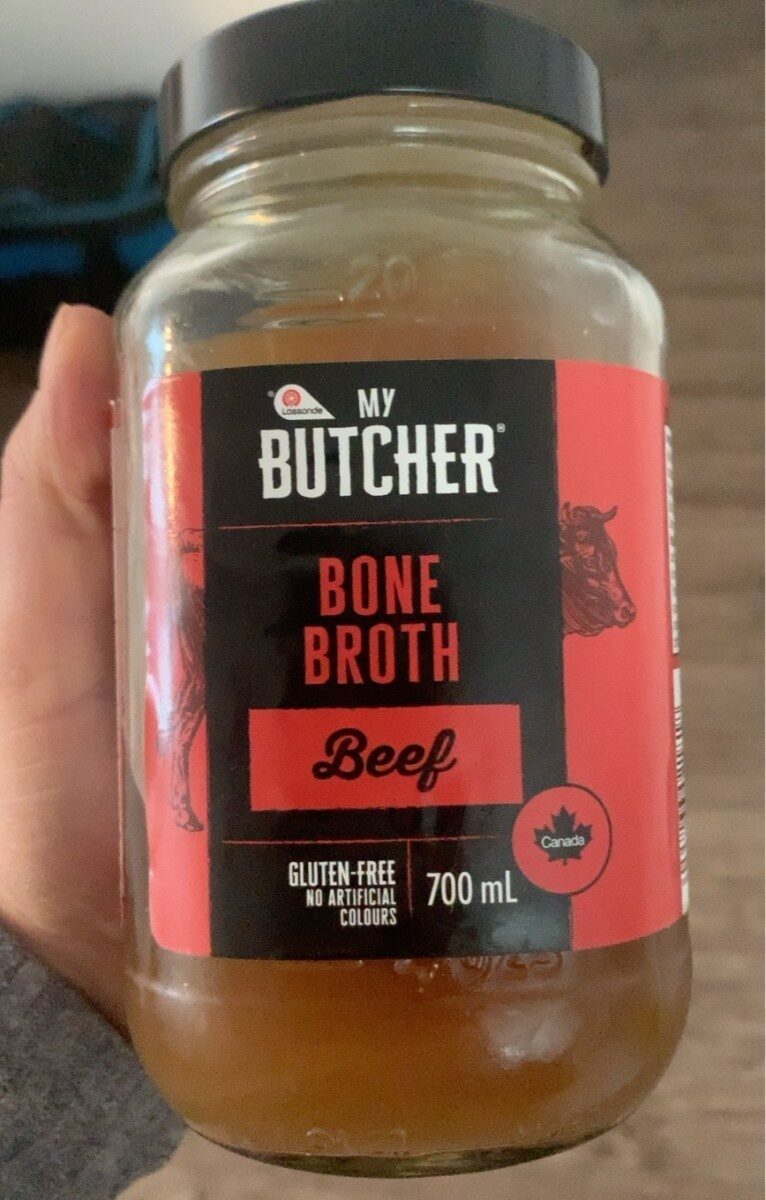
At a glance
Summary
This beef bone broth contains beneficial ingredients like beef bone broth, which is nutrient-rich and supports joint health. However, it also includes several less desirable components such as canola oil, sugar, and natural flavors, which contribute to its processed nature. The presence of these ingredients, along with its processing level, limits its overall health score.
Key ingredients 10
Beef Bone BrothGood
Beef bone broth is a nutrient-rich liquid made by simmering beef bones. It contains collagen, amino acids, and minerals that support joint health and digestion. The slow cooking process helps extract nutrients from the bones.
Benefits
Rich in collagen and amino acids that support joint health and digestion. Provides minerals like calcium and magnesium.
WaterNeutral
Water is a neutral ingredient used as a base in many food products. It serves as a solvent and carrier for other ingredients. No significant health impacts are associated with water in this context.
See more about Water →Beef ExtractNeutral
Beef extract is a concentrated form of beef flavor used to enhance taste. It is made by reducing beef broth to a thick paste. While it adds flavor, it does not provide significant nutritional benefits.
Benefits
Enhances flavor without adding significant calories or fat.
SaltNeutral
Salt is used to enhance flavor and preserve food. It is a source of sodium, which is essential for fluid balance and nerve function. However, excessive intake can lead to hypertension.
Risks
Excessive salt intake can lead to high blood pressure and cardiovascular issues.
Benefits
Provides essential sodium for fluid balance and nerve function.
Vegetable JuiceNeutral
Vegetable juice is used for flavor and color enhancement. It can provide some vitamins and minerals depending on the vegetables used. However, in small amounts, it does not significantly impact nutritional value.
Benefits
May provide small amounts of vitamins and minerals depending on the vegetables used.
SugarBad
Sugar is a refined carbohydrate that can contribute to increased blood sugar levels. It is often added for taste but provides no essential nutrients. Excessive consumption can lead to health issues like obesity and diabetes.
Risks
High intake of sugar can lead to obesity, diabetes, and other metabolic disorders.
Yeast ExtractBad
Concentrated glutamate source — MSG-adjacent flavor enhancer.
Benefits
Contains B vitamins and enhances flavor with umami notes.
Brown SugarBad
Brown sugar is a refined sugar with molasses added for flavor. It is similar to white sugar in terms of nutritional impact. Excessive consumption can contribute to health issues like obesity and diabetes.
Risks
High intake of brown sugar can lead to obesity, diabetes, and other metabolic disorders.
Natural FlavorBad
Natural flavor is a catch-all term for flavoring agents derived from natural sources. It lacks transparency and can include a variety of chemical compounds. While it enhances taste, it provides no nutritional benefits.
Risks
Lack of transparency in ingredients can pose allergy risks and unknown health impacts.
Canola OilVery Bad
Canola oil is a seed oil high in omega-6 fatty acids, which can promote inflammation. It is often highly processed and refined. The extraction process may involve chemicals that reduce its nutritional quality.
Risks
High omega-6 content may promote inflammation when consumed in excess.
Processing
Processed Foods
Get the full breakdown in the Scout appTake Scout shopping
Scan any product to see lab results, healthy alternatives, and your personalized analysis.
Download on theApp Store GET IT ONGoogle Play