
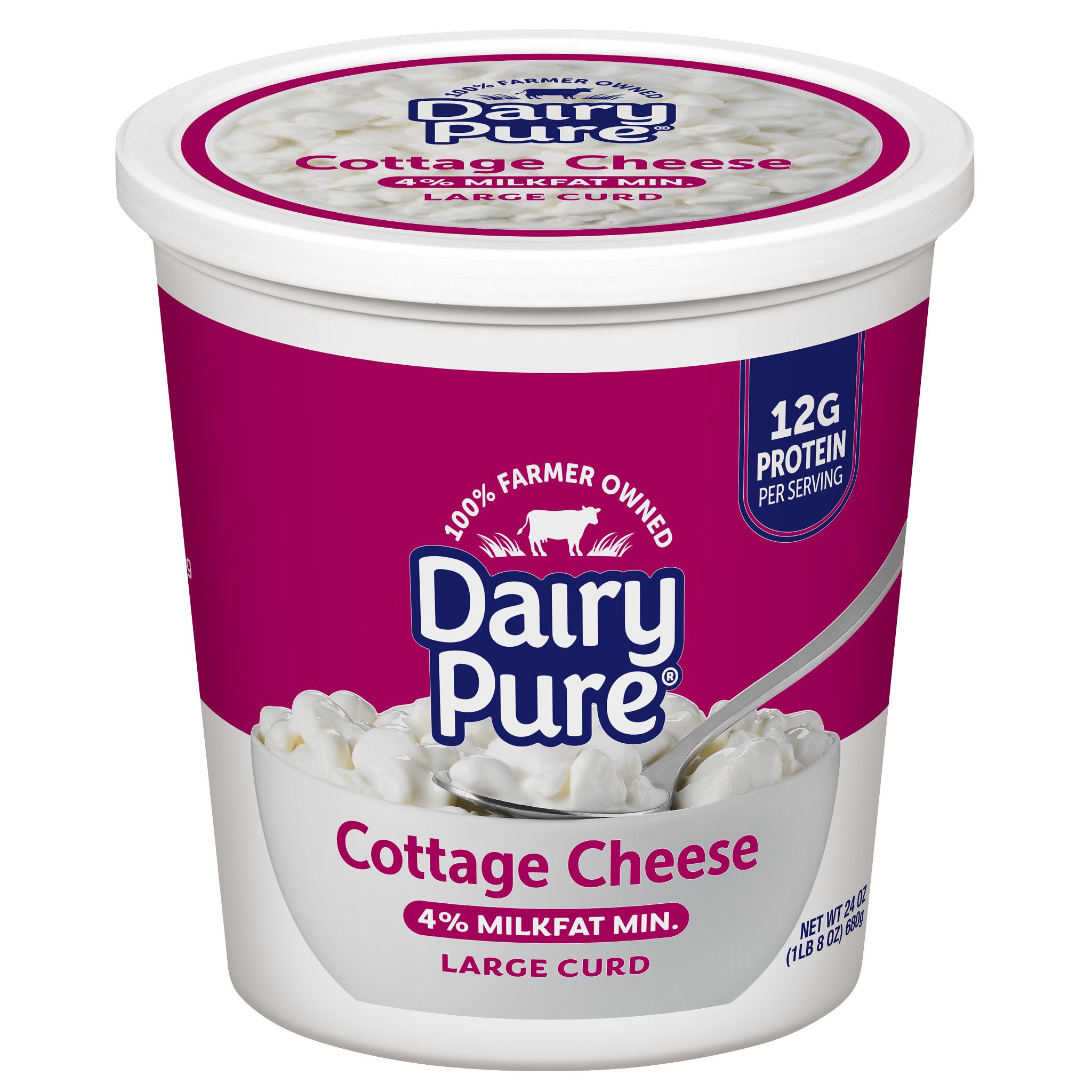


At a glance
Summary
This cottage cheese is ultra-processed, containing multiple stabilizers and additives such as guar gum, xanthan gum, and carrageenan, which can cause digestive issues in some individuals. Despite having a decent protein content, the presence of these additives and the high level of processing limit its healthiness compared to more traditional cheese products with simpler ingredient lists.
Key ingredients 10
MilkGood
Whole dairy ingredient.
Risks
May cause digestive issues for individuals with lactose intolerance.
Benefits
Rich in calcium and vitamin D, supporting bone health.
CreamGood
Traditional whole-fat dairy ingredient.
Risks
High in saturated fat, which may contribute to heart disease if consumed in excess.
Benefits
Enhances texture and flavor, and aids in the absorption of fat-soluble vitamins.
Cultured nonfat milkNeutral
Cultured nonfat milk is a primary ingredient in cottage cheese, providing protein and calcium. It is processed through fermentation, which can enhance digestibility. However, it lacks the fat content found in whole milk, which may reduce its satiety value.
Benefits
Provides a source of protein and calcium, essential for bone health.
SaltNeutral
Salt is used to enhance flavor and preserve the product. It is a common additive in processed foods. Excessive consumption can lead to high blood pressure and other cardiovascular issues.
Risks
High sodium intake is associated with increased risk of hypertension.
Benefits
Enhances flavor and acts as a preservative.
Guar gumNeutral
Standard formulation ingredient — neither beneficial nor harmful at typical use.
Risks
May cause bloating and gas in some individuals.
Xanthan gumNeutral
Fermentation-derived thickener, well tolerated at food-use levels.
Risks
May cause digestive discomfort such as bloating or gas.
Locust bean gumNeutral
Locust bean gum is a natural thickener derived from carob seeds. It is used to improve texture and stability in food products. Generally considered safe, it can cause mild digestive issues in sensitive individuals.
Risks
May cause mild digestive issues in sensitive individuals.
Benefits
Helps improve texture and stability of food products.
Vitamin A palmitateNeutral
Vitamin A palmitate is a synthetic form of vitamin A added to fortify foods. It helps maintain healthy vision and immune function. Overconsumption can lead to toxicity, but it is generally safe in regulated amounts.
Risks
Excessive intake can lead to vitamin A toxicity.
Benefits
Supports vision and immune health.
Carbon dioxideNeutral
Carbon dioxide is used to maintain freshness and extend shelf life in packaged foods. It is a naturally occurring gas and is generally recognized as safe. It does not contribute any nutritional value.
Benefits
Helps maintain product freshness and extend shelf life.
CarrageenanBad
Carrageenan is used as a thickener and stabilizer in many processed foods. It is derived from red seaweed but has been linked to digestive issues and inflammation. Its safety is debated, with some studies suggesting potential gastrointestinal harm.
Risks
Associated with digestive inflammation and discomfort in some studies.
Processing
Ultra-Processed Foods
Get the full breakdown in the Scout appTake Scout shopping
Scan any product to see lab results, healthy alternatives, and your personalized analysis.
Download on theApp Store GET IT ONGoogle Play