
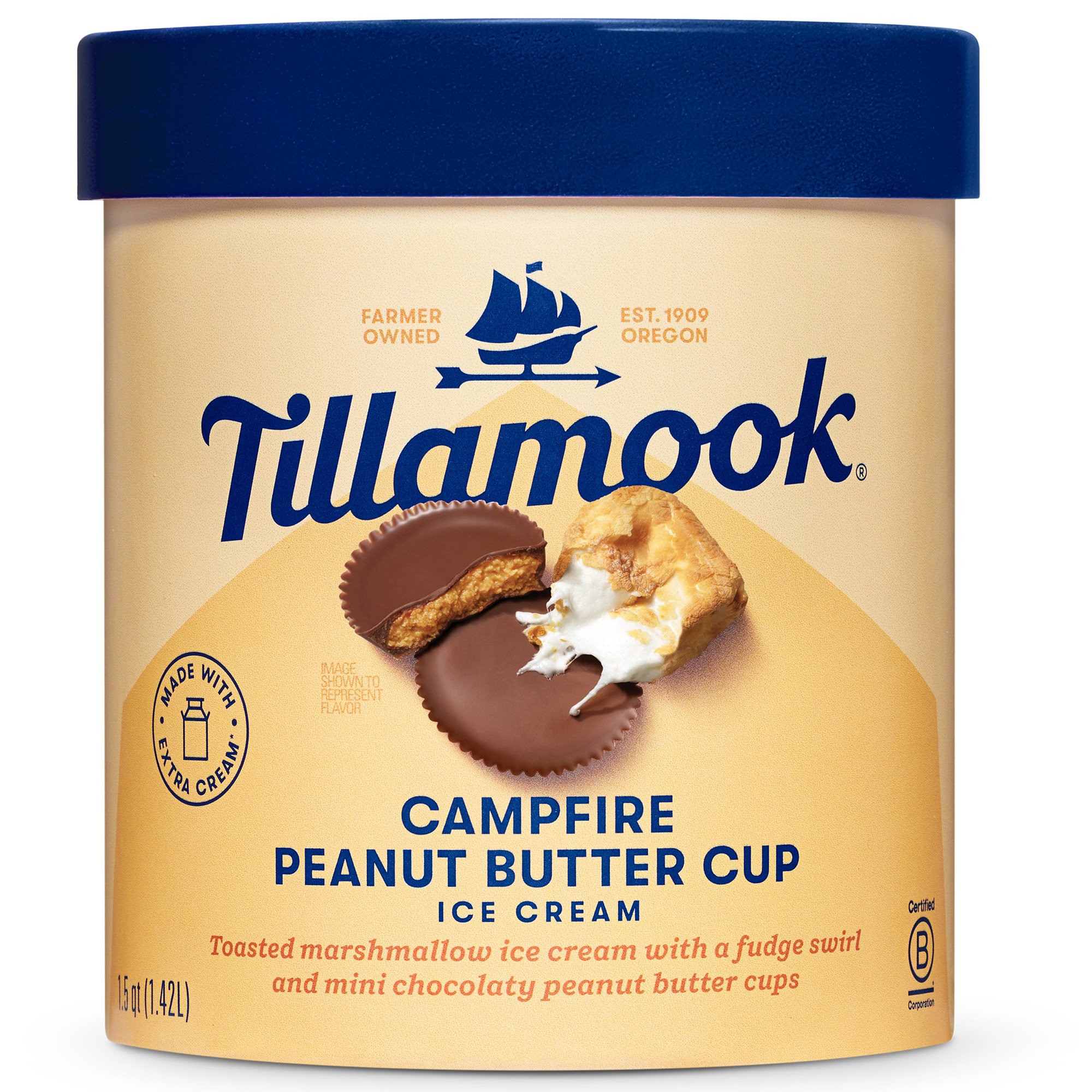





Tillamook Campfire Peanut Butter Cup Ice Cream
TillamookAnalysis updated August 2026 · How Scout scores
At a glance
Summary
This ice cream contains high-quality ingredients like cream, milk, and butter, which contribute to its rich texture and flavor. However, it is heavily processed, with added sugars and natural flavors that detract from its nutritional value. The presence of multiple additives and its classification as an ultra-processed food further limit its healthfulness.
Key ingredients 15
CreamGood
Cream is a high-quality dairy product rich in fats and vitamins. It provides a creamy texture and flavor to the ice cream. Being a minimally processed ingredient, it retains its nutritional benefits.
Risks
High in saturated fats, which may contribute to heart disease if consumed in excess.
Benefits
Rich in fat-soluble vitamins like A, D, E, and K, which are essential for various bodily functions.
MilkGood
Milk is a nutrient-rich liquid that provides essential vitamins and minerals. It contributes to the creamy texture and nutritional profile of the ice cream. As a whole food, it offers a balanced source of macronutrients.
Risks
Lactose intolerance can cause digestive issues for some individuals.
Benefits
Rich in calcium, vitamin D, and protein, supporting bone health and muscle function.
ButterGood
Butter is a dairy product rich in fats and fat-soluble vitamins. It enhances flavor and texture in the ice cream. As a natural fat, it is less processed than many alternatives.
Risks
High in saturated fats, which may increase cholesterol levels if consumed in excess.
Benefits
Contains vitamins A, D, E, and K, which are important for various bodily functions.
Pasteurized Egg YolksGood
Egg yolks are a source of high-quality protein and essential nutrients. They contribute to the creamy texture and richness of the ice cream. Pasteurization ensures safety by reducing the risk of foodborne illness.
Risks
High in cholesterol, which may be a concern for individuals with specific dietary restrictions.
Benefits
Rich in vitamins and minerals, including vitamin D, choline, and selenium, supporting brain and immune health.
Skim MilkNeutral
Standard formulation ingredient — neither beneficial nor harmful at typical use.
Benefits
Provides calcium and protein, which are important for bone health and muscle maintenance.
MolassesNeutral
Molasses is a byproduct of sugar refining that adds flavor and color. It contains some vitamins and minerals, unlike refined sugar. Its use in small amounts provides a unique taste without significant nutritional impact.
Risks
High in sugar content, which can contribute to health issues if consumed in large quantities.
Benefits
Contains trace minerals such as iron, calcium, and magnesium.
Enriched FlourNeutral
Enriched flour is refined wheat flour with added nutrients like iron and B vitamins. It provides structure and texture in baked goods. While enriched, it lacks the fiber of whole grains.
Risks
May cause issues for those with gluten intolerance or celiac disease.
Benefits
Provides essential nutrients like iron and B vitamins due to enrichment.
Tara GumNeutral
Tara gum is a natural thickening agent derived from the seeds of the tara tree. It is used to improve texture and stability in ice cream. As a natural additive, it is generally considered safe.
Benefits
Helps improve texture and consistency without significant nutritional impact.
Guar GumNeutral
Guar gum is a natural thickener derived from guar beans. It is used to stabilize and thicken ice cream. It is a common food additive with no significant health concerns.
Risks
Excessive consumption may cause digestive issues like bloating or gas.
Benefits
Improves texture and stability in food products.
SaltNeutral
Salt is used to enhance flavor and balance sweetness in ice cream. It is a common culinary ingredient with no significant processing. While essential, excessive intake can lead to health issues.
Risks
High sodium intake is linked to increased blood pressure and cardiovascular risk.
Benefits
Essential for maintaining fluid balance and nerve function.
Baking SodaNeutral
Baking soda is a leavening agent used to improve texture and rise in baked goods. It is a simple chemical compound with no significant processing. It is generally recognized as safe in food applications.
Benefits
Helps improve texture and rise in baked goods.
SugarBad
Sugar is a refined carbohydrate that provides sweetness but lacks nutritional value. Excessive consumption can lead to health issues like obesity and diabetes. It is a highly processed ingredient with no essential nutrients.
Risks
High sugar intake is linked to increased risk of obesity, type 2 diabetes, and dental cavities.
Brown SugarBad
Processed additive flagged under Scout's ingredient doctrine.
Risks
Similar health risks as white sugar, including potential for weight gain and increased risk of metabolic diseases.
Benefits
Contains trace amounts of minerals like calcium, potassium, and iron due to molasses content.
Wheat FlourBad
Refined grain flour stripped of bran and germ.
Risks
May cause allergic reactions in individuals with gluten intolerance or celiac disease.
Benefits
Provides energy through carbohydrates and some protein content.
Natural FlavorBad
Natural flavor is a broad term that can include various extracts and compounds. It is used to enhance or mimic flavors in processed foods. Lack of transparency in its composition can be concerning for some consumers.
Risks
Potential for undisclosed allergens or additives within the 'natural flavor' category.
Processing
Ultra-Processed Foods
Get the full breakdown in the Scout appTake Scout shopping
Scan any product to see lab results, healthy alternatives, and your personalized analysis.
Download on theApp Store GET IT ONGoogle PlayAmazon pricing & content
Amazon price as of . Product prices and availability are accurate as of the date/time indicated and are subject to change. Any price and availability information displayed on Amazon.com at the time of purchase will apply to the purchase of this product.
CERTAIN CONTENT THAT APPEARS ON THIS SITE COMES FROM AMAZON. THIS CONTENT IS PROVIDED “AS IS” AND IS SUBJECT TO CHANGE OR REMOVAL AT ANY TIME.