
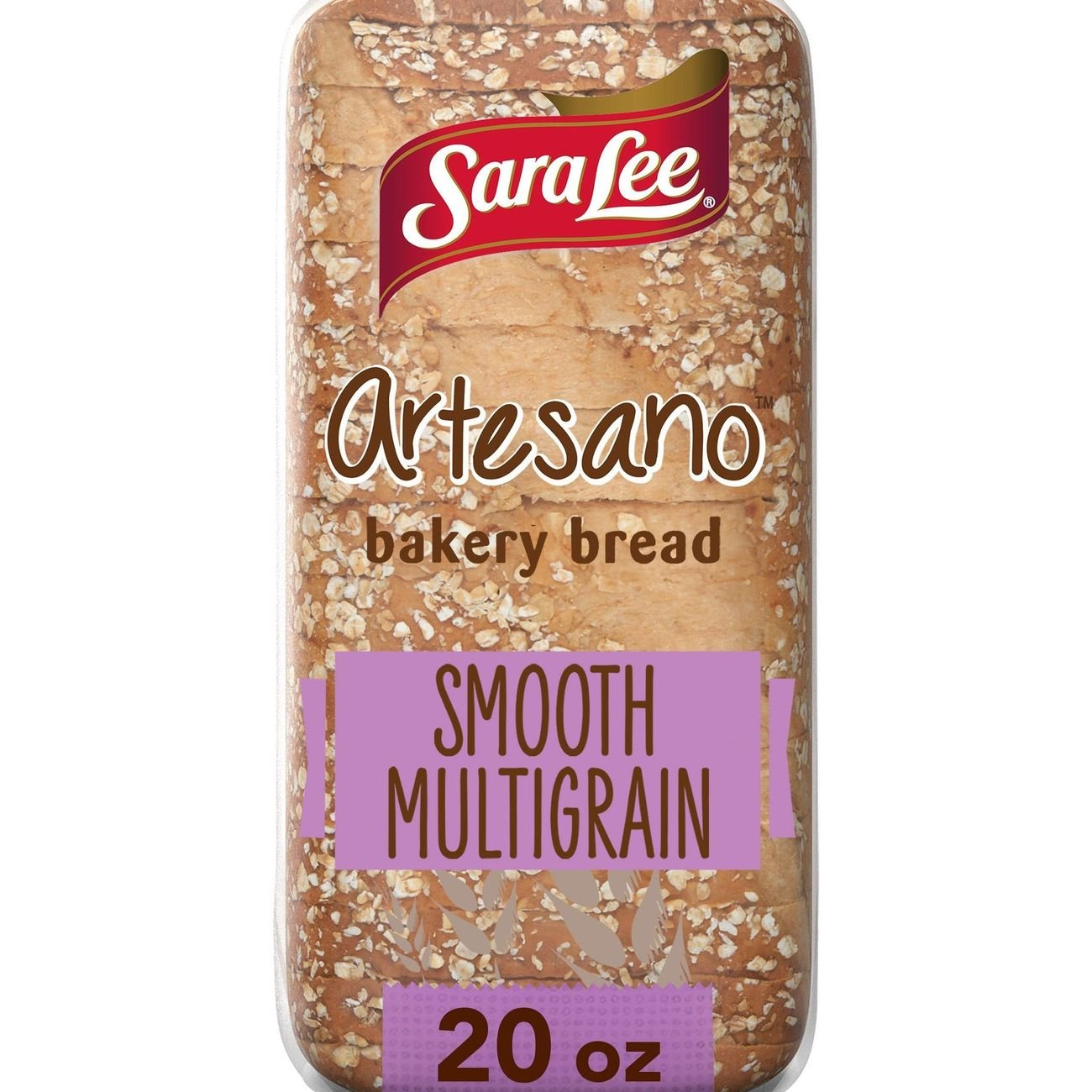

Smooth Multigrain bakery bread
Summary
This multigrain bread contains beneficial whole grains like oats, whole wheat, and rye, which enhance its nutritional profile. However, the presence of refined sugar and soybean oil, along with the use of natural flavors, detracts from its healthiness. Additionally, the bread is highly processed, which limits its overall score despite the inclusion of some nutritious ingredients.
At a glance
Key ingredients 22
Enriched wheat flourNeutral
Enriched wheat flour is refined flour that has been fortified with vitamins and minerals. It lacks the fiber and nutrients found in whole grain flour. While it provides essential nutrients, it is less beneficial than whole grain alternatives.
Risks
May contribute to blood sugar spikes due to its refined nature.
Benefits
Provides essential vitamins and minerals such as iron and B vitamins.
WaterNeutral
Water is a basic ingredient used to hydrate and bind the dough. It is essential for the baking process but does not contribute any nutritional value. It is a neutral ingredient with no health risks or benefits.
See more about Water →SugarBad
Sugar is a refined carbohydrate that can contribute to increased calorie intake without providing essential nutrients. Excessive consumption is linked to various health issues such as obesity and diabetes. It is often used to enhance flavor but should be consumed in moderation.
Risks
High intake can lead to obesity, insulin resistance, and dental cavities.
Benefits
Provides quick energy but lacks essential nutrients.
Vegetable oilVery Bad
Soybean oil is a seed oil high in omega-6 fatty acids, which can promote inflammation when consumed in excess. It is often highly processed and refined, which can reduce its nutritional quality. Compared to healthier fats, it is considered less beneficial.
Risks
High omega-6 content may promote inflammation and contribute to chronic diseases.
Wheat glutenNeutral
Wheat gluten is a protein found in wheat that provides elasticity to dough. It is essential for the texture of bread but can cause issues for those with gluten intolerance or celiac disease. It is a neutral ingredient for those without gluten sensitivities.
Risks
Can cause adverse reactions in individuals with gluten intolerance or celiac disease.
Benefits
Provides protein and improves the texture and structure of bread.
YeastGood
Yeast is a microorganism used in baking to ferment and leaven dough. It contributes to the bread's texture and flavor. It is a natural ingredient with no significant health risks.
Benefits
Enhances flavor and texture of bread through fermentation.
OatsVery Good
Oats are a whole grain rich in fiber, vitamins, and minerals. They support heart health and provide sustained energy. Their inclusion in bread enhances its nutritional profile.
Benefits
Rich in fiber and nutrients, supporting heart health and digestion.
TriticaleGood
Triticale is a hybrid grain combining wheat and rye, offering a higher protein content. It provides essential nutrients and fiber. It is beneficial for enhancing the nutritional value of bread.
Benefits
Offers higher protein content and essential nutrients.
Whole wheatVery Good
Whole wheat is a whole grain that retains all parts of the grain, providing fiber and essential nutrients. It supports digestive health and provides sustained energy. It is a healthier alternative to refined grains.
Benefits
Rich in fiber and nutrients, supporting digestive health and energy levels.
Sea saltGood
Unrefined sea salt — a minimally processed, natural source of sodium and essential trace minerals, and a legitimate whole-food seasoning. Treated as a positive ingredient.
Risks
Excessive consumption can lead to high blood pressure and related health issues.
Benefits
Contains trace minerals and enhances flavor.
RyeGood
Rye is a whole grain that provides fiber, vitamins, and minerals. It supports heart health and digestion. Its inclusion in bread enhances its nutritional value.
Benefits
Rich in fiber and nutrients, supporting heart health and digestion.
BarleyGood
Barley is a whole grain rich in fiber, vitamins, and minerals. It supports heart health and provides sustained energy. Its inclusion in bread enhances its nutritional profile.
Benefits
Rich in fiber and nutrients, supporting heart health and energy levels.
MilletGood
Millet is a gluten-free grain rich in fiber, vitamins, and minerals. It supports digestive health and provides sustained energy. Its inclusion in bread enhances its nutritional value.
Benefits
Rich in fiber and nutrients, supporting digestive health and energy levels.
BuckwheatGood
Buckwheat is a gluten-free grain rich in fiber, vitamins, and minerals. It supports heart health and provides sustained energy. Its inclusion in bread enhances its nutritional profile.
Benefits
Rich in fiber and nutrients, supporting heart health and energy levels.
Brown riceGood
Brown rice is a whole grain that retains its bran and germ, providing fiber and essential nutrients. It supports digestive health and provides sustained energy. Its inclusion in bread enhances its nutritional value.
Benefits
Rich in fiber and nutrients, supporting digestive health and energy levels.
Cultured wheat flourNeutral
Cultured wheat flour is treated with natural cultures to enhance flavor and shelf life. It is a neutral ingredient with no significant health risks or benefits. It is used to improve the quality of baked goods.
See more about Cultured wheat flour →MolassesNeutral
Molasses is a byproduct of sugar refining that contains some vitamins and minerals. It adds flavor and color to baked goods. While it provides some nutrients, it is still a form of sugar and should be consumed in moderation.
Risks
Excessive consumption can contribute to high sugar intake.
Benefits
Contains some vitamins and minerals, adding flavor and color.
Natural flavorsBad
Natural flavors are additives used to enhance taste, but their exact composition is often undisclosed. They can contain a variety of chemicals and are considered less desirable than whole food ingredients. Their use is common in processed foods to improve flavor profiles.
Risks
May contain undisclosed chemicals and allergens.
Soy lecithinNeutral
Soy lecithin is an emulsifier derived from soybeans, used to improve texture and shelf life. It is generally recognized as safe but may cause issues for those with soy allergies. It is a neutral ingredient with no significant health risks or benefits.
Risks
May cause allergic reactions in individuals with soy allergies.
Benefits
Improves texture and shelf life of baked goods.
Malt extractNeutral
Malt extract is derived from barley and used to enhance flavor and color in baked goods. It contains some vitamins and minerals but is primarily used for its taste. It is a neutral ingredient with minimal health impact.
Benefits
Adds flavor and color, with minimal nutritional contribution.
Grain vinegarNeutral
Grain vinegar is used as a preservative and flavor enhancer in baked goods. It is a natural ingredient with no significant health risks or benefits. It helps to extend the shelf life of products.
Benefits
Acts as a preservative and flavor enhancer.
Citric acidNeutral
Citric acid is a natural preservative and flavor enhancer used in food products. It is generally recognized as safe and has no significant health risks. It is used to improve the shelf life and taste of products.
Benefits
Enhances flavor and preserves freshness.
Processing
Ultra-Processed Foods
Get the full breakdown in the Scout app
Scan any product to see lab results, healthy alternatives, and your personalized analysis.
Download on theApp Store