
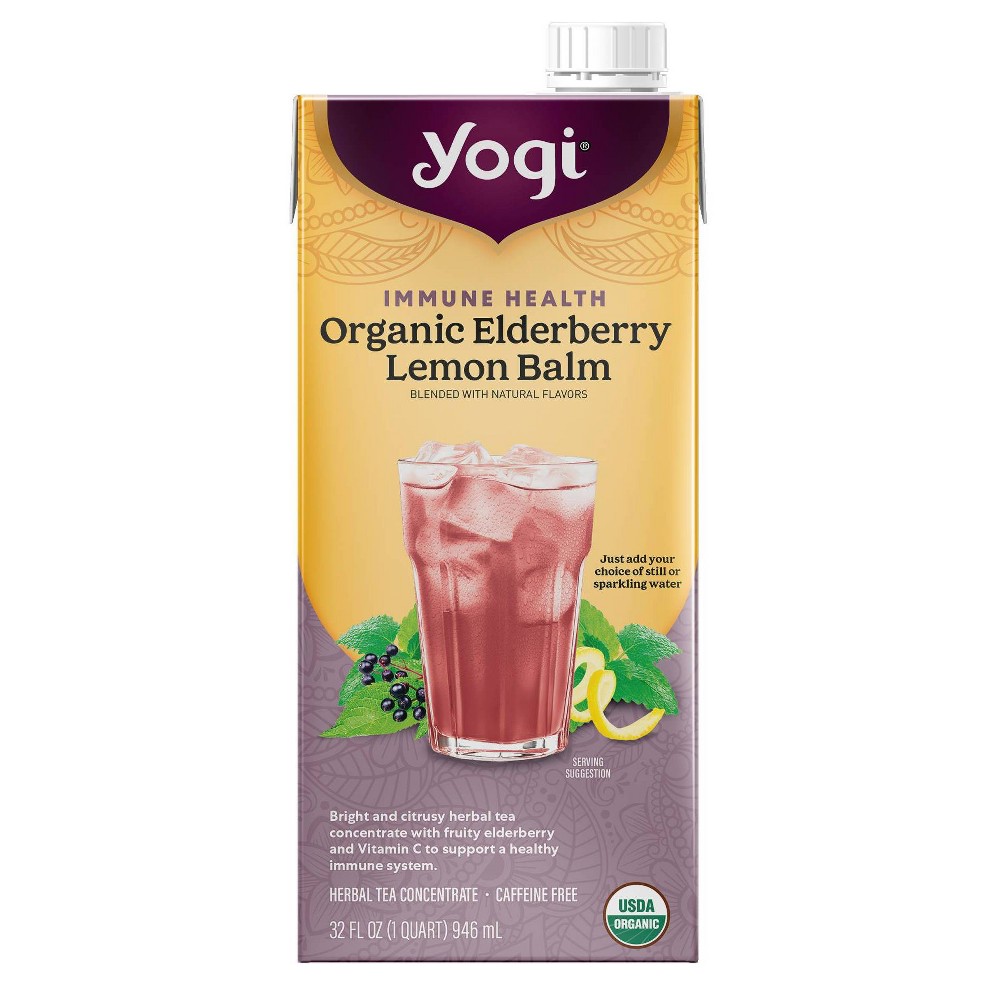


Yogi Organic Elderberry Lemon Balm Herbal Tea Concentrate - 32 fl oz: Decaffeinated
Analysis updated August 2026 · How Scout scores
At a glance
Summary
This herbal tea concentrate is made from a variety of beneficial organic ingredients such as elderberry, lemon balm, and ginger, which are known for their health-promoting properties. The product is minimally processed, enhancing its nutritional profile, but the presence of 'natural flavor' introduces some concern due to its lack of transparency. Overall, the clean ingredient list and organic certification contribute positively to its rating.
Key ingredients 15
Brewed TeaVery Good
Brewed tea, made from water and green rooibos leaf, is a natural source of antioxidants. The organic nature of the ingredients enhances its health benefits by reducing exposure to pesticides. It provides a calming effect and supports overall well-being.
Benefits
Rich in antioxidants that help combat oxidative stress and support heart health.
Lemon BalmVery Good
Lemon balm is known for its calming properties and potential to reduce anxiety and stress. It is often used in herbal medicine for its soothing effects on the nervous system. The organic quality ensures minimal exposure to harmful chemicals.
Benefits
May help improve mood and cognitive function, and support digestive health.
ElderberryVery Good
Elderberry is rich in vitamins and antioxidants, particularly vitamin C and anthocyanins. It is traditionally used to support immune function and reduce the severity of cold and flu symptoms. The organic nature enhances its health benefits.
Benefits
Supports immune health and may reduce inflammation.
GingerVery Good
Ginger is widely recognized for its anti-inflammatory and digestive benefits. It is often used to alleviate nausea and improve digestion. The organic nature of the ingredient enhances its health benefits.
Benefits
Supports digestive health and may reduce inflammation.
HibiscusVery Good
Hibiscus is rich in antioxidants and has been shown to support cardiovascular health by helping to lower blood pressure. It is often used in herbal teas for its tart flavor and health benefits. The organic nature enhances its health benefits.
Benefits
May help lower blood pressure and provide antioxidant benefits.
Red Rooibos LeafVery Good
Red rooibos leaf is caffeine-free and rich in antioxidants, making it a popular choice for a healthy herbal tea. It is known for its potential to support heart health and reduce inflammation. The organic quality ensures a cleaner product.
Benefits
Supports heart health and provides antioxidant benefits.
LemongrassGood
Lemongrass is known for its refreshing flavor and potential health benefits, including anti-inflammatory and antimicrobial properties. It is commonly used in herbal teas for its soothing effects. The organic quality ensures a cleaner product.
Benefits
May aid digestion and provide antioxidant benefits.
Licorice RootGood
Licorice root is known for its sweet flavor and potential health benefits, including soothing sore throats and supporting respiratory health. It is often used in herbal remedies for its anti-inflammatory properties. The organic quality ensures minimal exposure to harmful chemicals.
Risks
Excessive consumption may lead to increased blood pressure and potassium imbalance.
Benefits
May support respiratory health and provide anti-inflammatory benefits.
Cinnamon BarkGood
Cinnamon bark is known for its antioxidant properties and potential to support blood sugar regulation. It is often used in herbal teas for its warming flavor and health benefits. The organic nature enhances its health benefits.
Risks
Excessive consumption may lead to liver damage due to coumarin content.
Benefits
May support blood sugar regulation and provide antioxidant benefits.
Black PepperGood
Beneficial ingredient — whole-food or functional value in this product class.
Benefits
May enhance nutrient absorption and provide antioxidant benefits.
Lemon PeelGood
Lemon peel is rich in vitamin C and other antioxidants, providing potential health benefits. It is often used in herbal teas for its zesty flavor and health benefits. The organic nature enhances its health benefits.
Benefits
Rich in vitamin C and may support immune health.
Ascorbic AcidGood
Ascorbic acid, also known as vitamin C, is an essential nutrient and antioxidant. It supports immune function and skin health. The inclusion of this vitamin enhances the nutritional profile of the tea.
Benefits
Supports immune health and acts as an antioxidant.
Citric AcidNeutral
Citric acid is commonly used as a preservative and flavor enhancer. It is generally recognized as safe and is naturally found in citrus fruits. The organic quality ensures minimal exposure to harmful chemicals.
Benefits
Acts as a preservative and enhances flavor.
Cane SugarBad
Processed additive flagged under Scout's ingredient doctrine.
Risks
Excessive consumption may lead to weight gain and increased risk of metabolic disorders.
Benefits
Provides energy and enhances flavor.
Natural FlavorBad
Natural flavor is a catch-all term that can include a variety of substances, some of which may be highly processed. It lacks transparency and may contain additives that are not disclosed. The presence of natural flavors is often seen as a negative due to potential hidden ingredients.
Risks
May contain undisclosed additives and allergens.
Processing
Processed Culinary Ingredients
Get the full breakdown in the Scout appTake Scout shopping
Scan any product to see lab results, healthy alternatives, and your personalized analysis.
Download on theApp Store GET IT ONGoogle Play