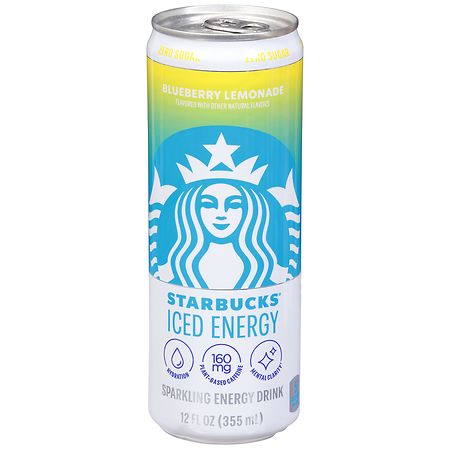
Starbucks Iced Energy Zero Sugar Sparkling Energy Drink Blueberry Lemonade - 12.0 fl oz
At a glance
Summary
This energy drink contains no added sugar, which is a positive aspect, but it does include artificial sweeteners like sucralose and acesulfame potassium, which are highly processed and may have potential health concerns. The presence of preservatives such as sodium benzoate and potassium sorbate also contributes to its ultra-processed nature. However, the inclusion of beneficial ingredients like green coffee bean extract and ginseng extract provides some redeeming qualities. It comes in an aluminum can, whose plastic lining costs it a few points.
Key ingredients 16
Green Coffee Bean ExtractGood
Green coffee bean extract is derived from unroasted coffee beans and is known for its antioxidant properties. It contains chlorogenic acids, which may support weight management and metabolic health. It provides a natural source of caffeine.
Risks
Excessive consumption may lead to caffeine-related side effects such as jitteriness.
Benefits
Rich in antioxidants and may support metabolic health.
Fruit And Vegetable Concentrate For ColorGood
Fruit and vegetable concentrates are used for natural coloring and are derived from whole foods. They provide a natural alternative to artificial dyes and may contain trace nutrients. They enhance the visual appeal of the product without artificial additives.
Benefits
Provides natural coloring and may contain trace nutrients.
Ginseng ExtractGood
Ginseng extract is derived from the ginseng root and is known for its potential to boost energy and improve cognitive function. It contains ginsenosides, which may have antioxidant and anti-inflammatory effects. It is often used in energy drinks for its stimulating properties.
Risks
Excessive consumption may lead to insomnia or nervousness.
Benefits
May boost energy and improve cognitive function.
NiacinamideGood
Niacinamide, also known as vitamin B3, is an essential nutrient that supports energy metabolism and skin health. It is water-soluble and commonly added to fortified foods and beverages. It plays a role in converting food into energy.
Benefits
Supports energy metabolism and skin health.
D-Calcium PantothenateGood
D-Calcium pantothenate is a form of vitamin B5, essential for energy metabolism and the synthesis of coenzyme A. It is water-soluble and commonly added to fortified foods and beverages. It supports the conversion of carbohydrates, fats, and proteins into energy.
Benefits
Essential for energy metabolism and synthesis of coenzyme A.
Pyridoxine HydrochlorideGood
Pyridoxine hydrochloride is a form of vitamin B6, important for protein metabolism and cognitive development. It is water-soluble and often added to fortified foods and beverages. It plays a role in neurotransmitter synthesis and immune function.
Benefits
Supports protein metabolism and cognitive development.
Carbonated WaterNeutral
Carbonated water is simply water infused with carbon dioxide gas under pressure. It is a common base for many beverages and does not have significant health impacts. It provides a refreshing sensation without any nutritional value.
See more about Carbonated Water →Citric AcidNeutral
Citric acid is a natural acid found in citrus fruits and used as a preservative and flavor enhancer. It is generally recognized as safe and commonly used in food and beverages. It can enhance flavor without adding calories.
Risks
Excessive consumption may lead to dental erosion.
Benefits
It can enhance the flavor of beverages and act as a preservative.
Malic AcidNeutral
Malic acid is a naturally occurring acid found in fruits and used to enhance flavor. It is generally recognized as safe and commonly used in food and beverages. It contributes to the tartness of the drink.
Benefits
Enhances flavor and provides a tart taste.
Potassium ChlorideNeutral
Potassium chloride is used as a salt substitute and electrolyte in foods and beverages. It helps maintain fluid balance and nerve function. It is often used to enhance the mineral content of products.
Risks
Excessive intake may lead to hyperkalemia, especially in individuals with kidney issues.
Benefits
Helps maintain fluid balance and nerve function.
SaltNeutral
Salt is used to enhance flavor and preserve foods. It is a common ingredient in many processed foods and beverages. While necessary for bodily functions, excessive intake can lead to health issues.
Risks
Excessive intake may lead to hypertension and cardiovascular issues.
Benefits
Enhances flavor and is necessary for bodily functions.
Natural FlavorsBad
Natural flavors are a catch-all term for flavoring agents derived from natural sources but can be highly processed. The lack of transparency in their composition raises concerns about potential allergens and additives. They are often used to enhance flavor without providing nutritional benefits.
Risks
Potential allergens and additives may be present without clear labeling.
SucraloseBad
Sucralose is an artificial sweetener used to provide sweetness without calories. It is highly processed and may affect gut health and insulin response. It is often used as a sugar substitute in low-calorie products.
Risks
May affect gut health and insulin response.
Benefits
Provides sweetness without adding calories.
Sodium BenzoateBad
Sodium benzoate is a preservative used to prevent microbial growth in acidic foods and beverages. It can form benzene, a carcinogen, when combined with vitamin C under certain conditions. It is commonly used in processed foods and beverages.
Risks
Potential formation of benzene, a carcinogen, when combined with vitamin C.
Benefits
Extends shelf life by preventing microbial growth.
Potassium SorbateBad
Potassium sorbate is a preservative used to inhibit mold and yeast growth in foods and beverages. It is synthetically produced and may cause allergic reactions in sensitive individuals. It is widely used to extend the shelf life of products.
Risks
May cause allergic reactions in sensitive individuals.
Benefits
Prevents mold and yeast growth, extending shelf life.
Acesulfame PotassiumBad
Acesulfame potassium is an artificial sweetener used to provide sweetness without calories. It is highly processed and may have potential health concerns related to long-term consumption. It is often used in combination with other sweeteners to enhance sweetness.
Risks
Potential health concerns related to long-term consumption.
Benefits
Provides sweetness without adding calories.
Processing
Ultra-Processed Foods
Get the full breakdown in the Scout appTake Scout shopping
Scan any product to see lab results, healthy alternatives, and your personalized analysis.
Are you Starbucks? Fix an error Get the badge Get tested
Amazon pricing & content
Amazon price as of . Product prices and availability are accurate as of the date/time indicated and are subject to change. Any price and availability information displayed on Amazon.com at the time of purchase will apply to the purchase of this product.
CERTAIN CONTENT THAT APPEARS ON THIS SITE COMES FROM AMAZON. THIS CONTENT IS PROVIDED “AS IS” AND IS SUBJECT TO CHANGE OR REMOVAL AT ANY TIME.