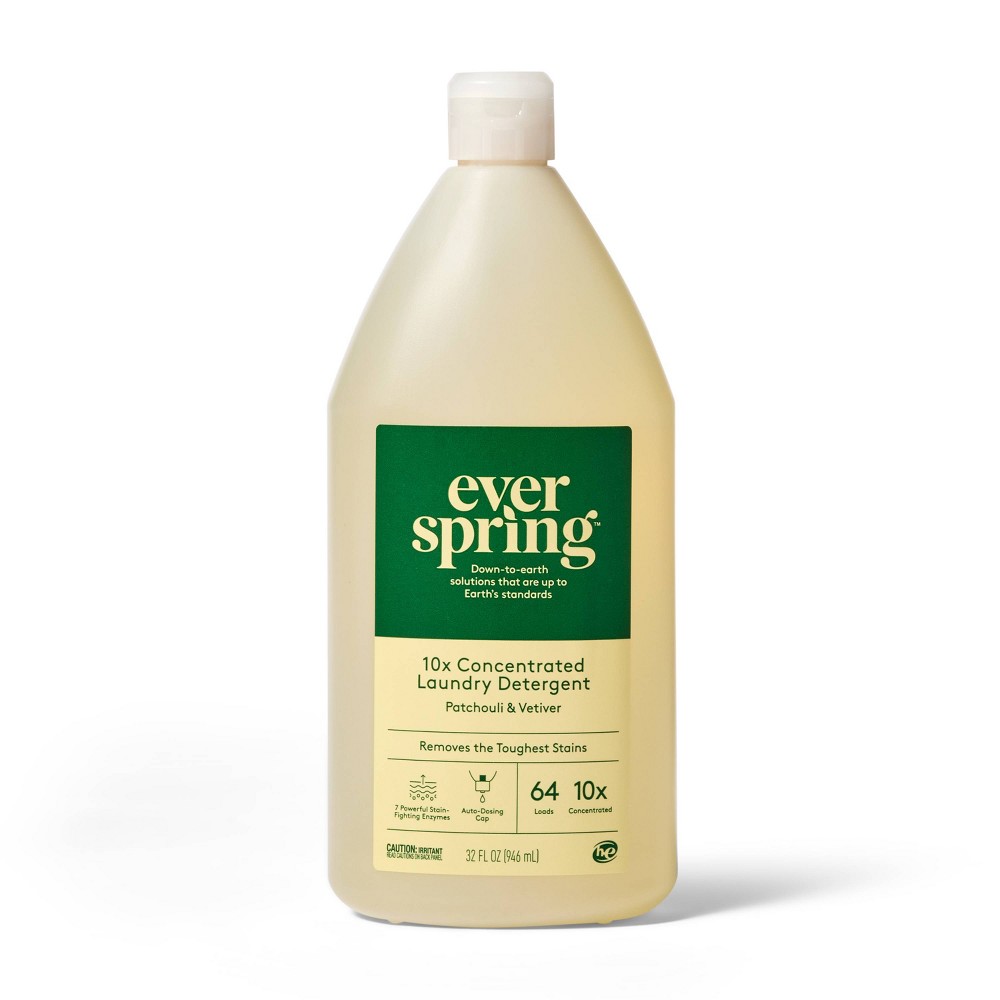
Patchouli & Vetiver Ultra-Concentrated Liquid Laundry Detergent 64 Loads - 32 fl oz - Everspring™
At a glance
Summary
This detergent contains several beneficial ingredients such as plant-derived surfactants and biodegradable enzymes, which enhance cleaning efficiency and are environmentally friendly. However, the presence of Laureth-6, an ethoxylated surfactant with potential contamination risks, and undisclosed synthetic fragrance components, which may cause allergic reactions, negatively impact its safety profile. The combination of these factors results in a moderate processing level with both positive and negative aspects. Its plastic packaging can shed microplastics into the product and lowers its score.
Key ingredients 12
Alkyl PolyglucosideGood
Alkyl polyglucoside is a plant-derived surfactant known for its mildness and biodegradability. It is effective in cleaning without being harsh on the skin. It is considered environmentally friendly.
Risks
There are minimal risks associated with this ingredient.
Benefits
It provides effective cleaning while being gentle on the skin and the environment.
AmylaseGood
Amylase is an enzyme that breaks down starches into sugars, enhancing cleaning efficiency. It is biodegradable and derived from natural sources. It is safe for use in detergents.
Risks
There are minimal risks associated with amylase in cleaning products.
Benefits
Amylase improves the removal of starch-based stains from fabrics.
CellulaseGood
Cellulase is an enzyme that breaks down cellulose fibers, aiding in the removal of dirt and stains. It is biodegradable and derived from natural sources. It is safe for use in detergents.
Risks
There are minimal risks associated with cellulase in cleaning products.
Benefits
Cellulase enhances the cleaning power of detergents by breaking down cellulose-based stains.
LipaseGood
Lipase is an enzyme that breaks down fats and oils, enhancing cleaning efficiency. It is biodegradable and derived from natural sources. It is safe for use in detergents.
Risks
There are minimal risks associated with lipase in cleaning products.
Benefits
Lipase improves the removal of fat-based stains from fabrics.
MannanaseGood
Mannanase is an enzyme that breaks down mannans, a type of polysaccharide, aiding in stain removal. It is biodegradable and derived from natural sources. It is safe for use in detergents.
Risks
There are minimal risks associated with mannanase in cleaning products.
Benefits
Mannanase enhances the cleaning power of detergents by breaking down complex carbohydrates.
WaterNeutral
Water is a universal solvent used to dissolve other ingredients. It acts as a carrier for the active components in the detergent. It is generally safe and non-toxic.
Risks
There are no significant risks associated with water in this context.
Benefits
Water helps in the even distribution of detergent ingredients during washing.
GlycerinNeutral
Standard formulation ingredient — neither beneficial nor harmful at typical use.
Risks
There are minimal risks associated with glycerin in cleaning products.
Benefits
Glycerin can help protect fabrics from drying out and maintain their softness.
Sodium OleateNeutral
Sodium oleate is a fatty acid salt used as a surfactant and emulsifying agent. It helps in breaking down oils and greases. It is generally considered safe for use in cleaning products.
Risks
There are no significant risks associated with sodium oleate in this context.
Benefits
It aids in the emulsification and removal of oily stains.
Caprylyl GlycolNeutral
Caprylyl glycol is used as a skin-conditioning agent and preservative. It helps maintain product stability and extend shelf life. It is generally considered safe for use in cleaning products.
Risks
There are no significant risks associated with caprylyl glycol in this context.
Benefits
It helps in preserving the product and maintaining its effectiveness over time.
Citric AcidNeutral
Common acidulant and preservative — safe at typical use levels, neither beneficial nor harmful.
Risks
There are minimal risks associated with citric acid in cleaning products.
Benefits
Citric acid improves the effectiveness of detergents by softening water and removing mineral deposits.
Laureth-6Bad
Laureth-6 is an ethoxylated surfactant that can be contaminated with 1,4-dioxane, a potential carcinogen. It is used to reduce surface tension and improve cleaning efficiency. However, its production process raises safety concerns.
Risks
Potential contamination with 1,4-dioxane poses health risks, including cancer.
Benefits
It enhances the cleaning power of the detergent by helping to remove dirt and oils.
FragranceVery Bad
Fragrance in cleaning products often contains synthetic compounds that can cause allergic reactions. It is used to impart a pleasant scent to the product. However, the specific components are not disclosed, raising safety concerns.
Risks
Potential allergens and irritants in synthetic fragrances can cause skin and respiratory issues.
Benefits
Fragrance provides a pleasant scent to the cleaned fabrics.
Processing
Processed Foods
Get the full breakdown in the Scout appTake Scout shopping
Scan any product to see lab results, healthy alternatives, and your personalized analysis.
Are you Everspring? Fix an error Get the badge Get tested