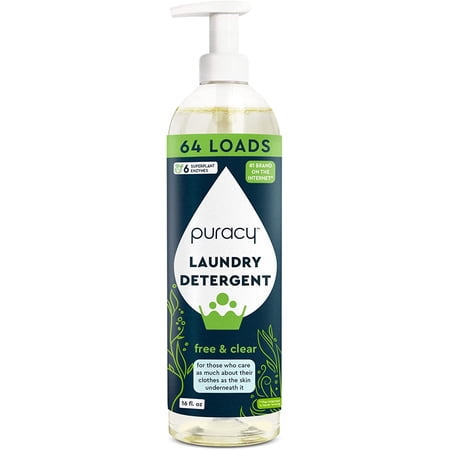
Puracy Natural Liquid Laundry Detergent with Stain Fighting Enzymes - Free & Clear 16 fl oz
At a glance
Summary
This laundry detergent features several plant-derived surfactants and enzymes, such as decyl glucoside and protease, which are effective and biodegradable, enhancing its environmental profile. However, the presence of alcohol ethoxylates raises concerns due to potential contamination with 1,4-dioxane, and benzisothiazolinone, which can cause skin irritation, slightly detracts from its overall safety and environmental impact. Its plastic packaging can shed microplastics into the product and lowers its score.
Key ingredients 21
Decyl GlucosideGood
Decyl glucoside is a mild, plant-derived surfactant that is effective in cleaning without being harsh on the skin. It is biodegradable and considered environmentally friendly. It is often used in natural and sensitive skin formulations.
Risks
Minimal risk of skin irritation compared to harsher surfactants.
Benefits
Mild and effective surfactant that is biodegradable and environmentally friendly.
Lauryl/Myristyl GlucosideGood
Lauryl/myristyl glucoside is a mild surfactant derived from natural sources. It is effective in cleaning and foaming without causing skin irritation. It is biodegradable and suitable for sensitive skin formulations.
Risks
Low risk of skin irritation.
Benefits
Mild, effective, and biodegradable surfactant suitable for sensitive skin.
ProteaseGood
Protease is an enzyme that breaks down protein-based stains, making it effective in laundry detergents. It is biodegradable and derived from natural sources. It enhances the cleaning power of detergents without harsh chemicals.
Risks
Minimal risk, generally safe for use in cleaning products.
Benefits
Effective in breaking down protein stains, biodegradable.
AmylaseGood
Amylase is an enzyme that breaks down starches, making it effective in removing food stains. It is biodegradable and derived from natural sources. It enhances the cleaning power of detergents without harsh chemicals.
Risks
Minimal risk, generally safe for use in cleaning products.
Benefits
Effective in breaking down starch stains, biodegradable.
MannanaseGood
Mannanase is an enzyme that breaks down mannan-based stains, such as those from food thickeners. It is biodegradable and derived from natural sources. It enhances the cleaning power of detergents without harsh chemicals.
Risks
Minimal risk, generally safe for use in cleaning products.
Benefits
Effective in breaking down mannan stains, biodegradable.
LipaseGood
Lipase is an enzyme that breaks down fats and oils, making it effective in removing greasy stains. It is biodegradable and derived from natural sources. It enhances the cleaning power of detergents without harsh chemicals.
Risks
Minimal risk, generally safe for use in cleaning products.
Benefits
Effective in breaking down fat and oil stains, biodegradable.
WaterNeutral
Water is a universal solvent and is used as a base in many cleaning products. It helps to dissolve other ingredients and facilitates the cleaning process. It is generally considered safe and non-toxic.
Benefits
Acts as a solvent and carrier for other ingredients.
GlycerinNeutral
Glycerin is a humectant that helps to retain moisture in formulations. It is generally safe and non-toxic, often used in personal care products. In cleaning products, it can help to prevent drying out of fabrics.
Risks
Generally considered safe with minimal risks.
Benefits
Helps to retain moisture and prevent drying out of fabrics.
C10-16 AlcoholsNeutral
C10-16 alcohols are fatty alcohols used as surfactants and emulsifiers in cleaning products. They help to break down oils and dirt. They are generally considered safe and non-irritating.
Risks
Low risk of skin irritation.
Benefits
Effective in breaking down oils and dirt, generally safe.
Cocamidopropyl BetaineNeutral
Cocamidopropyl betaine is a surfactant derived from coconut oil, used to enhance foam and cleaning efficacy. It is generally mild but can cause skin irritation in some individuals. It is biodegradable and commonly used in personal care products.
Risks
Potential skin irritant for sensitive individuals.
Benefits
Enhances foam and cleaning efficacy, biodegradable.
Lauramine OxideNeutral
Lauramine oxide is a surfactant and foam booster used in cleaning products. It is effective in removing dirt and grease. It is generally considered safe but can cause mild skin irritation in some cases.
Risks
Mild skin irritant for some individuals.
Benefits
Effective in removing dirt and grease, enhances foam.
BoraxNeutral
Borax is a naturally occurring mineral used as a cleaning agent and water softener. It is effective in removing stains and odors. However, it can be irritating to the skin and eyes and should be handled with care.
Risks
Can cause skin and eye irritation.
Benefits
Effective stain remover and water softener.
Zinc RicinoleateNeutral
Zinc ricinoleate is used as an odor absorber in cleaning products. It is effective in neutralizing odors without masking them with fragrances. It is generally considered safe and non-toxic.
Risks
Generally considered safe with minimal risks.
Benefits
Effective in neutralizing odors without fragrances.
Glyceryl OleateNeutral
Glyceryl oleate is an emulsifier and surfactant derived from natural sources. It helps to stabilize formulations and improve texture. It is generally considered safe and non-irritating.
Risks
Low risk of skin irritation.
Benefits
Stabilizes formulations and improves texture, generally safe.
Carboxymethyl InulinNeutral
Carboxymethyl inulin is a biodegradable polymer used as a dispersing agent in cleaning products. It helps to prevent redeposition of dirt on fabrics. It is derived from natural sources and considered environmentally friendly.
Risks
Generally considered safe with minimal risks.
Benefits
Prevents redeposition of dirt, biodegradable and environmentally friendly.
Calcium ChlorideNeutral
Calcium chloride is used as a stabilizer and thickener in cleaning products. It helps to maintain the consistency and effectiveness of the formulation. It is generally considered safe but can cause mild irritation if in contact with skin or eyes.
Risks
Can cause mild skin and eye irritation.
Benefits
Stabilizes and thickens formulations, generally safe.
Citric AcidNeutral
Common acidulant and preservative — safe at typical use levels, neither beneficial nor harmful.
Risks
Minimal risk, generally safe for use in cleaning products.
Benefits
Enhances cleaning power and breaks down mineral deposits, biodegradable.
Sodium CitrateNeutral
Sodium citrate is used as a water softener and pH adjuster in cleaning products. It helps to enhance the effectiveness of detergents. It is generally considered safe and non-toxic.
Risks
Generally considered safe with minimal risks.
Benefits
Enhances detergent effectiveness and softens water.
PropanediolNeutral
Propanediol is a solvent and humectant used in cleaning products. It helps to dissolve other ingredients and retain moisture. It is generally considered safe and non-toxic.
Risks
Generally considered safe with minimal risks.
Benefits
Dissolves ingredients and retains moisture, generally safe.
Alcohol Ethoxylates (C12-15)Bad
Alcohol ethoxylates are ethoxylated surfactants that can be effective in removing grease and stains. However, the ethoxylation process can lead to contamination with 1,4-dioxane, a potential carcinogen. This makes them a concern for both human health and the environment.
Risks
Potential contamination with 1,4-dioxane, which is a probable human carcinogen.
Benefits
Effective in removing grease and stains from fabrics.
BenzisothiazolinoneBad
Benzisothiazolinone is a preservative used to prevent microbial growth in cleaning products. It is effective but can cause skin sensitization and allergic reactions. It is considered a moderate risk for skin irritation.
Risks
Potential skin sensitizer and allergen.
Benefits
Prevents microbial growth and extends product shelf life.
Get the full breakdown in the Scout appTake Scout shopping
Scan any product to see lab results, healthy alternatives, and your personalized analysis.
Are you Puracy? Fix an error Get the badge Get tested
Amazon pricing & content
Amazon price as of . Product prices and availability are accurate as of the date/time indicated and are subject to change. Any price and availability information displayed on Amazon.com at the time of purchase will apply to the purchase of this product.
CERTAIN CONTENT THAT APPEARS ON THIS SITE COMES FROM AMAZON. THIS CONTENT IS PROVIDED “AS IS” AND IS SUBJECT TO CHANGE OR REMOVAL AT ANY TIME.