
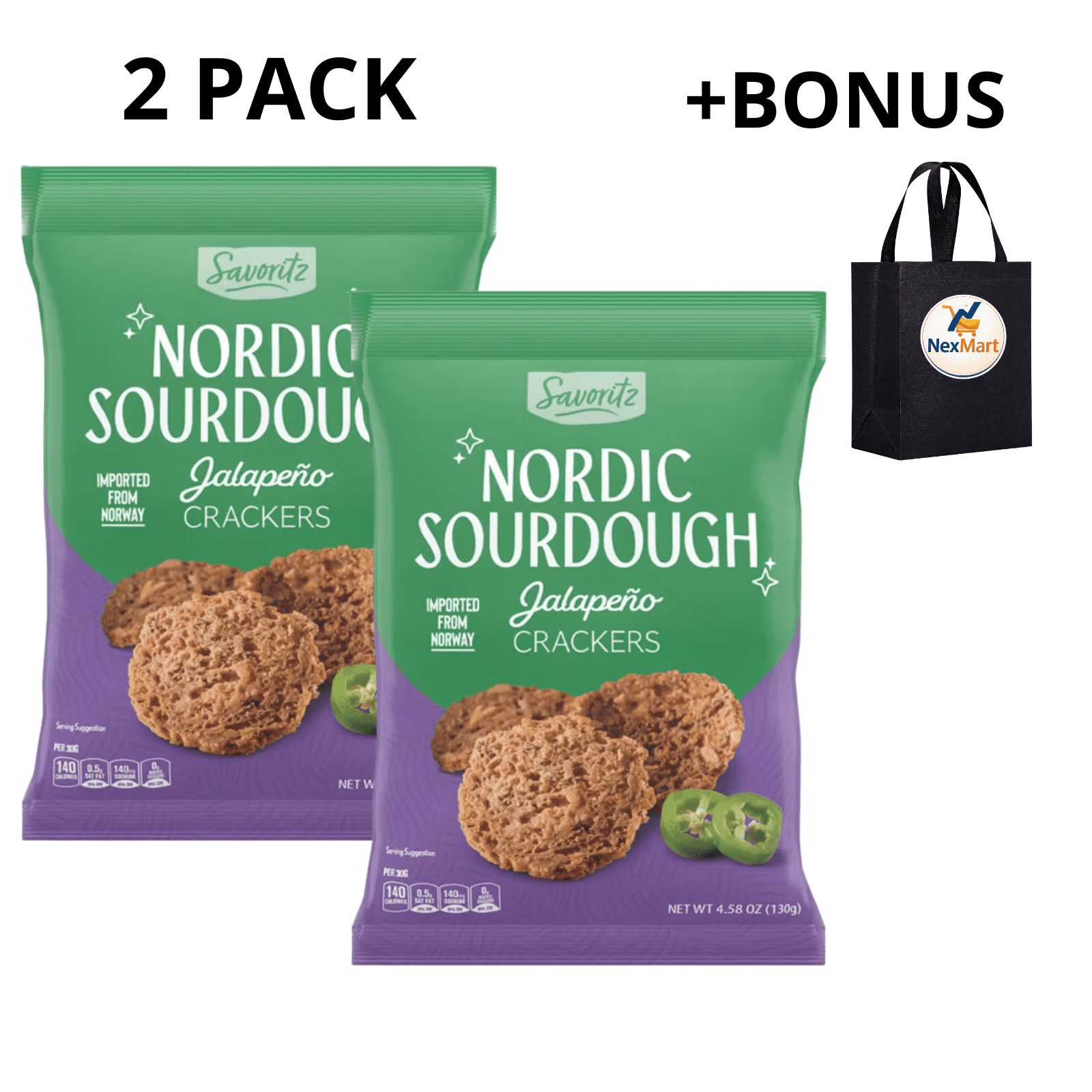


Nordic Sourdough Jalapeño Crackers
Summary
The Nordic Sourdough Jalapeño Crackers contain several beneficial whole grain ingredients like oat flour and whole grain rye flour, which provide fiber and nutrients. However, the presence of sunflower oil, a highly processed seed oil, and other processed ingredients like maltodextrin and natural flavors contribute to a higher level of processing. These factors, along with the inclusion of added sugars, limit the overall healthiness of the product despite its good macronutrient profile.
At a glance
Key ingredients 24
Oat flourGood
Oat flour is a whole grain flour that provides dietary fiber and essential nutrients. It is minimally processed, retaining most of its nutritional value. It supports heart health and aids in digestion.
Benefits
Rich in beta-glucans, which can help lower cholesterol levels and improve heart health.
Whole grain rye flourGood
Whole grain rye flour is a nutritious flour that contains fiber, vitamins, and minerals. It is less processed than refined flours, preserving its nutrient content. It can aid in digestion and provide sustained energy.
Benefits
Contains lignans, which may have antioxidant properties and support heart health.
OatsGood
Oats are a whole grain that is high in fiber and beneficial nutrients. They are minimally processed, retaining their natural health benefits. Oats can help regulate blood sugar levels and support heart health.
Benefits
Rich in beta-glucans, which can help lower cholesterol and improve heart health.
Oat branGood
Oat bran is the outer layer of the oat grain, rich in fiber and nutrients. It is minimally processed, maintaining its nutritional integrity. It supports digestive health and can help lower cholesterol levels.
Benefits
High in soluble fiber, which can aid in digestion and promote heart health.
Sunflower seedsGood
Sunflower seeds are a nutrient-dense seed rich in healthy fats, vitamins, and minerals. They are minimally processed, retaining their natural health benefits. They can support heart health and provide antioxidant properties.
Benefits
Rich in vitamin E and healthy fats, which support heart health and provide antioxidant benefits.
Brown flax seedsGood
Brown flax seeds are a rich source of omega-3 fatty acids and dietary fiber. They are minimally processed, preserving their nutritional benefits. They can support heart health and improve digestion.
Benefits
High in alpha-linolenic acid, which supports heart health and provides anti-inflammatory benefits.
Barley malt extractNeutral
Barley malt extract is a sweetener derived from barley that adds flavor and color to foods. It is moderately processed and contains some nutrients from barley. It is used primarily for its flavor-enhancing properties.
Risks
May contribute to added sugar intake if consumed in large quantities.
Benefits
Provides a natural source of sweetness and flavor without artificial additives.
Whole grain barley flourGood
Whole grain barley flour is a nutritious flour that contains fiber and essential nutrients. It is less processed than refined flours, retaining its nutrient content. It can aid in digestion and provide sustained energy.
Benefits
Contains beta-glucans, which may help lower cholesterol and support heart health.
YeastNeutral
Yeast is a microorganism used in baking to help dough rise. It is a natural ingredient that is minimally processed. It contributes to the texture and flavor of baked goods.
Benefits
Provides a natural leavening agent that enhances the texture of baked products.
SaltNeutral
Salt is a common seasoning used to enhance flavor in foods. It is a natural mineral that is minimally processed. It is essential for maintaining fluid balance and nerve function.
Risks
Excessive consumption may lead to high blood pressure and other cardiovascular issues.
Benefits
Essential for maintaining electrolyte balance and proper nerve function.
Sourdough starterGood
Sourdough starter is a fermented mixture of flour and water that enhances flavor and texture in baked goods. It is a natural leavening agent that is minimally processed. It can improve digestibility and nutrient absorption.
Benefits
Contains beneficial bacteria that can improve gut health and enhance nutrient absorption.
Sunflower oilVery Bad
Sunflower oil is a seed oil high in omega-6 fatty acids, which can promote inflammation. It is highly processed, often involving chemical extraction methods. It is not recommended for regular consumption due to its inflammatory potential.
Risks
High omega-6 content may promote inflammation when consumed in excess.
Seasoning maltodextrinBad
Maltodextrin is a highly processed carbohydrate used as a thickener and filler. It has a high glycemic index and can spike blood sugar levels. It is often used in processed foods for texture and bulk.
Risks
May cause rapid spikes in blood sugar levels, which can be concerning for individuals with insulin sensitivity.
Sea saltGood
Unrefined sea salt — a minimally processed, natural source of sodium and essential trace minerals, and a legitimate whole-food seasoning. Treated as a positive ingredient.
Risks
Excessive consumption may lead to high blood pressure and other cardiovascular issues.
Benefits
Contains trace minerals that may provide additional health benefits compared to regular table salt.
SugarBad
Sugar is a refined carbohydrate that provides empty calories with no essential nutrients. It is highly processed and can contribute to weight gain and metabolic issues. It is often used in processed foods for sweetness.
Risks
Excessive consumption can lead to obesity, type 2 diabetes, and other metabolic disorders.
DextroseBad
Dextrose is a simple sugar derived from corn that is used as a sweetener. It is highly processed and can rapidly increase blood sugar levels. It is often used in processed foods for its sweetness and quick energy.
Risks
May cause rapid spikes in blood sugar levels, which can be concerning for individuals with insulin sensitivity.
Yeast extractNeutral
Yeast extract is a flavor enhancer derived from yeast that adds umami taste to foods. It is moderately processed and contains some nutrients from yeast. It is used primarily for its flavor-enhancing properties.
Benefits
Provides a natural source of umami flavor without artificial additives.
Onion powderGood
Onion powder is a dehydrated form of onion that adds flavor to foods. It is minimally processed, retaining most of its nutritional value. It can enhance flavor without adding significant calories.
Benefits
Contains antioxidants and compounds that may support immune health.
Tomato powderGood
Tomato powder is a dehydrated form of tomatoes that adds flavor and nutrients to foods. It is minimally processed, preserving its nutritional benefits. It can provide vitamins and antioxidants.
Benefits
Rich in lycopene, an antioxidant that may support heart health and reduce inflammation.
Chili pepperGood
Chili pepper adds spice and flavor to foods and contains capsaicin, which may have health benefits. It is minimally processed, retaining its natural compounds. It can enhance metabolism and provide antioxidant properties.
Risks
May cause irritation or discomfort in sensitive individuals.
Benefits
Contains capsaicin, which may boost metabolism and provide anti-inflammatory benefits.
Lactic acidNeutral
Lactic acid is a naturally occurring acid used as a preservative and flavoring agent. It is produced through fermentation and is minimally processed. It helps maintain the acidity and flavor of foods.
Benefits
Acts as a natural preservative and can enhance the flavor profile of foods.
Citric acidNeutral
Citric acid is a natural acid found in citrus fruits used as a preservative and flavor enhancer. It is moderately processed and widely used in the food industry. It helps maintain the acidity and freshness of foods.
Benefits
Acts as a natural preservative and can enhance the flavor profile of foods.
SpicesGood
Spices such as garlic and jalapeño add flavor and potential health benefits to foods. They are minimally processed and retain their natural compounds. They can enhance flavor and provide antioxidant properties.
Benefits
Contains compounds that may support immune health and provide anti-inflammatory benefits.
Natural flavorVery Bad
Natural flavor is a catch-all term for flavoring agents derived from natural sources but often highly processed. It lacks transparency and can include a wide range of substances. It is used to enhance flavor without providing nutritional benefits.
Risks
Lack of transparency in ingredient composition may pose concerns for individuals with allergies or sensitivities.
Processing
Ultra-Processed Foods
Get the full breakdown in the Scout app
Scan any product to see lab results, healthy alternatives, and your personalized analysis.
Download on theApp Store