
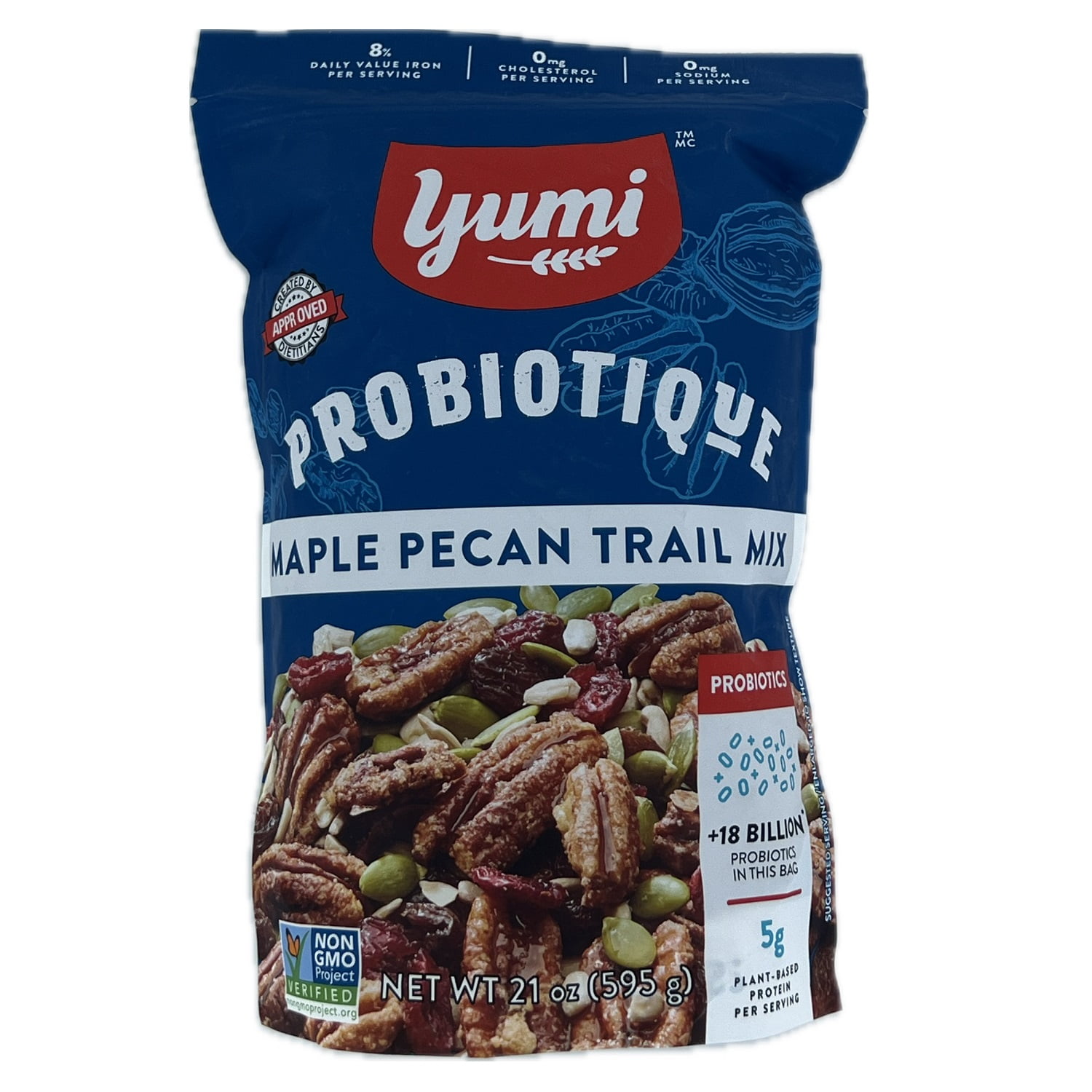


Probiotics Maple Pecan Crunch
Analysis updated September 2026 · How Scout scores
At a glance
Summary
This product contains a mix of beneficial ingredients like pecans, sunflower seeds, and pumpkin seeds, which provide healthy fats and nutrients. However, it is significantly processed, with added sugars and sunflower oil, which are less desirable due to their potential health impacts. The presence of natural flavors and emulsifiers further contributes to its processing level, limiting its overall healthfulness.
Key ingredients 14
Roasted pecan halvesGood
Pecans are a good source of healthy fats, fiber, and essential nutrients. They provide antioxidants and support heart health. Roasting enhances flavor without significantly degrading nutritional value.
Risks
Potential allergen for individuals with nut allergies.
Benefits
Rich in monounsaturated fats and antioxidants, which support heart health and reduce inflammation.
Sunflower seedsGood
Sunflower seeds are a good source of healthy fats, protein, and essential nutrients. They provide vitamin E and antioxidants that support heart health. Whole seeds are less processed and retain their nutritional value.
Risks
Potential allergen for individuals with seed allergies.
Benefits
Rich in vitamin E and healthy fats that support cardiovascular health.
Pumpkin seedsGood
Pumpkin seeds are nutrient-dense, providing healthy fats, protein, and minerals like magnesium and zinc. They support heart health and have anti-inflammatory properties. Whole seeds retain their nutritional benefits.
Risks
Potential allergen for individuals with seed allergies.
Benefits
High in magnesium and zinc, supporting immune function and bone health.
CranberriesGood
Beneficial ingredient — whole-food or functional value in this product class.
Risks
Added sugar increases calorie content and may contribute to weight gain.
Benefits
Contain antioxidants that may support urinary tract health.
Bacillus subtilis Rosell-179Good
Bacillus subtilis Rosell-179 is a probiotic strain that supports gut health. It can enhance digestion and boost the immune system. Probiotics are beneficial for maintaining a healthy gut microbiome.
Risks
Generally considered safe, but may cause mild digestive discomfort in some individuals.
Benefits
Supports gut health and may enhance immune function.
Corn starchNeutral
Corn starch is used as a thickening agent and has minimal nutritional value. It is a refined carbohydrate that provides energy but lacks fiber and essential nutrients. It is generally considered safe in moderate amounts.
Risks
Excessive consumption may contribute to blood sugar spikes.
Guar gumNeutral
Guar gum is a thickening agent derived from guar beans. It is used to improve texture and stability in foods. It is generally considered safe but can cause digestive issues in sensitive individuals.
Risks
May cause digestive discomfort in some individuals when consumed in large amounts.
Benefits
Can aid in improving the texture and consistency of food products.
Acacia gumNeutral
Acacia gum is a natural thickener and stabilizer derived from acacia trees. It is used to improve texture and is generally recognized as safe. It has minimal nutritional impact.
Risks
Excessive consumption may lead to digestive discomfort.
Benefits
May have prebiotic effects that support gut health.
RaisinsNeutral
Raisins are dried grapes that provide natural sugars and some fiber. They are a source of quick energy but can contribute to high sugar intake. They retain some antioxidants from grapes.
Risks
High sugar content may contribute to dental cavities if consumed in excess.
Benefits
Provide natural sugars and some antioxidants, offering a quick energy source.
Cane sugarBad
Refined sugar contributes to increased calorie intake without providing essential nutrients. It can lead to weight gain and increased risk of chronic diseases. Excessive consumption is linked to metabolic issues.
Risks
High intake may lead to obesity, type 2 diabetes, and dental cavities.
Brown rice syrupBad
Brown rice syrup is a refined sweetener with a high glycemic index. It can cause rapid spikes in blood sugar levels. It lacks the nutritional benefits of whole grains.
Risks
May contribute to blood sugar imbalances and weight gain if consumed in excess.
Natural flavorsBad
Natural flavors are often used to enhance taste but can be highly processed and contain undisclosed additives. They lack nutritional value and can mask the quality of the underlying ingredients. The term 'natural' does not guarantee health benefits.
Risks
Potential for undisclosed allergens or additives.
Sunflower lecithinBad
Sunflower lecithin is an emulsifier used to improve texture and shelf life. It is a processed ingredient that can contain residues from extraction processes. While generally recognized as safe, it offers no significant health benefits.
Risks
May contain residues from processing; potential allergen for some individuals.
Sunflower oilVery Bad
Sunflower oil is high in omega-6 fatty acids, which can promote inflammation when consumed in excess. It is often extracted using high heat and chemicals, which can degrade its nutritional quality. The high omega-6 content can disrupt the omega-3 to omega-6 balance in the diet.
Risks
High omega-6 content may promote inflammation and contribute to chronic diseases.
Processing
Processed Foods
Get the full breakdown in the Scout appTake Scout shopping
Scan any product to see lab results, healthy alternatives, and your personalized analysis.
Download on theApp Store GET IT ONGoogle Play