
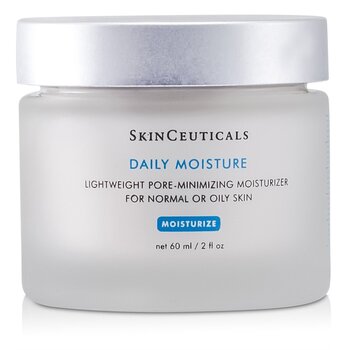

Skin CeuticalsDaily Moisture (For Normal or Oily Skin) 60ml/2oz
Analysis updated August 2026 · How Scout scores
At a glance
Summary
This moisturizer contains beneficial ingredients like glycerin, panthenol, and various algae extracts that provide hydration and antioxidant benefits. However, it also includes several parabens and phenoxyethanol, which are preservatives with potential endocrine disruption and irritation concerns. The presence of these synthetic chemicals and the processing level of the product limit its overall score.
Key ingredients 40
PanthenolVery Good
Panthenol is a form of Vitamin B5 used for its moisturizing and soothing properties. It helps to improve skin hydration and reduce irritation. It is considered safe and beneficial for most skin types.
Risks
Rarely, it can cause irritation in very sensitive skin.
Benefits
Improves skin hydration and soothes irritation.
Chamomilla Recutita Flower ExtractVery Good
Chamomilla Recutita Flower Extract is derived from chamomile and is used for its anti-inflammatory and soothing properties. It helps to calm irritated skin and reduce redness. It is considered safe and beneficial for most skin types.
Risks
Rarely, it can cause allergic reactions in individuals sensitive to chamomile.
Benefits
Calms irritated skin and reduces redness.
GlycerinGood
Glycerin is a humectant that attracts moisture to the skin, helping to keep it hydrated. It is widely used in skincare for its moisturizing properties. It is considered safe and beneficial for most skin types.
Risks
Rarely, it can cause irritation in very sensitive skin.
Benefits
Improves skin hydration and barrier function.
Hypnea Musciformis ExtractGood
Hypnea Musciformis Extract is derived from red algae and is used for its moisturizing and skin-conditioning properties. It is rich in polysaccharides that help retain moisture. It is generally considered safe and beneficial.
Risks
There are minimal risks associated with this ingredient.
Benefits
Enhances skin hydration and provides a soothing effect.
Sargassum Filipendula ExtractGood
Sargassum Filipendula Extract is derived from brown algae and is used for its antioxidant and moisturizing properties. It helps to protect the skin from environmental stressors. It is generally considered safe and beneficial.
Risks
There are minimal risks associated with this ingredient.
Benefits
Provides antioxidant protection and enhances skin hydration.
Tocopheryl AcetateGood
Tocopheryl Acetate is a form of Vitamin E used for its antioxidant properties. It helps to protect the skin from free radical damage. It is considered safe and beneficial for most skin types.
Risks
Rarely, it can cause irritation in very sensitive skin.
Benefits
Provides antioxidant protection and supports skin health.
Glycine Soja Oil/Soybean OilGood
Soybean Oil is a natural oil rich in fatty acids and antioxidants. It helps to moisturize and nourish the skin. It is generally considered safe and beneficial for most skin types.
Risks
May cause allergic reactions in individuals sensitive to soy.
Benefits
Moisturizes and nourishes the skin, providing essential fatty acids.
Gelidiella Acerosa ExtractGood
Gelidiella Acerosa Extract is derived from red algae and is used for its moisturizing and skin-conditioning properties. It helps to retain moisture and soothe the skin. It is generally considered safe and beneficial.
Risks
There are minimal risks associated with this ingredient.
Benefits
Enhances skin hydration and provides a soothing effect.
AllantoinGood
Allantoin is used for its soothing and skin-conditioning properties. It helps to reduce irritation and promote skin healing. It is considered safe and beneficial for most skin types.
Risks
Rarely, it can cause irritation in very sensitive skin.
Benefits
Soothes irritation and promotes skin healing.
Macrocystis Pyrifera ExtractGood
Macrocystis Pyrifera Extract is derived from giant kelp and is used for its moisturizing and antioxidant properties. It helps to protect the skin from environmental stressors. It is generally considered safe and beneficial.
Risks
There are minimal risks associated with this ingredient.
Benefits
Provides antioxidant protection and enhances skin hydration.
Hibiscus Sabdariffa Extract/Hibiscus Sabdariffa Flower ExtractGood
Hibiscus Sabdariffa Extract is used for its antioxidant and exfoliating properties. It helps to improve skin texture and protect against free radical damage. It is generally considered safe and beneficial.
Risks
There are minimal risks associated with this ingredient.
Benefits
Improves skin texture and provides antioxidant protection.
Zingiber Officinale Root Extract/Ginger Root ExtractGood
Ginger Root Extract is used for its antioxidant and anti-inflammatory properties. It helps to protect the skin from environmental stressors and reduce inflammation. It is generally considered safe and beneficial.
Risks
Rarely, it can cause irritation in very sensitive skin.
Benefits
Provides antioxidant protection and reduces inflammation.
Sodium HyaluronateGood
Sodium Hyaluronate is a form of hyaluronic acid used for its excellent moisturizing properties. It helps to retain moisture in the skin and improve elasticity. It is considered safe and highly beneficial for most skin types.
Risks
There are minimal risks associated with this ingredient.
Benefits
Deeply hydrates the skin and improves elasticity.
BisabololGood
Bisabolol is used for its soothing and anti-inflammatory properties. It helps to calm irritated skin and reduce redness. It is considered safe and beneficial for most skin types.
Risks
Rarely, it can cause irritation in very sensitive skin.
Benefits
Soothes irritation and reduces redness.
Aqua/WaterNeutral
Water is a common solvent used in cosmetics to dissolve other ingredients. It helps in the application and absorption of the product. It is generally considered safe and non-irritating.
Risks
There are no significant risks associated with water in cosmetics.
Benefits
Water helps in hydrating the skin and acts as a carrier for other beneficial ingredients.
Cetyl PalmitateNeutral
Cetyl Palmitate is an ester of cetyl alcohol and palmitic acid, used as an emollient and thickening agent. It provides a smooth texture to the product. It is generally considered safe for use in cosmetics.
Risks
May cause mild irritation in sensitive individuals.
Benefits
Helps to soften and smooth the skin.
Stearic AcidNeutral
Stearic Acid is a fatty acid used as an emulsifier and thickener in cosmetics. It helps to stabilize formulations and improve texture. It is generally considered safe for use in skincare products.
Risks
May cause mild irritation in sensitive skin.
Benefits
Contributes to the creamy texture of the product.
Glycol DistearateNeutral
Glycol Distearate is used as an opacifying agent and emulsifier in cosmetics. It helps to create a pearlescent appearance and improve texture. It is generally considered safe for use.
Risks
May cause mild irritation in sensitive individuals.
Benefits
Improves the aesthetic appeal and texture of the product.
Palmitic AcidNeutral
Palmitic Acid is a fatty acid used as an emollient and surfactant in cosmetics. It helps to soften the skin and stabilize formulations. It is generally considered safe for use.
Risks
May cause mild irritation in sensitive skin.
Benefits
Contributes to skin softness and product stability.
Butylene GlycolNeutral
Butylene Glycol is a solvent and humectant used in cosmetics to improve texture and moisture retention. It is generally considered safe for use in skincare products. It helps to enhance the penetration of other ingredients.
Risks
May cause mild irritation in sensitive skin.
Benefits
Improves skin hydration and product texture.
CyclopentasiloxaneNeutral
Cyclopentasiloxane is a silicone used to provide a silky, smooth feel to the skin. It helps to improve the spreadability of the product. It is generally considered safe for use in cosmetics.
Risks
May cause mild irritation in sensitive skin.
Benefits
Enhances the texture and application of the product.
SorbitolNeutral
Sorbitol is a sugar alcohol used as a humectant and thickener in cosmetics. It helps to retain moisture in the skin. It is generally considered safe for use.
Risks
May cause mild irritation in sensitive skin.
Benefits
Helps to maintain skin hydration.
PEG-100 StearateNeutral
PEG-100 Stearate is an emulsifier used to blend oil and water-based ingredients. It helps to stabilize formulations and improve texture. It is generally considered safe for use in cosmetics.
Risks
May cause mild irritation in sensitive skin.
Benefits
Improves product stability and texture.
Glyceryl StearateNeutral
Glyceryl Stearate is an emulsifier and emollient used to stabilize formulations and improve texture. It helps to soften and smooth the skin. It is generally considered safe for use in cosmetics.
Risks
May cause mild irritation in sensitive skin.
Benefits
Contributes to skin softness and product stability.
CarbomerNeutral
Carbomer is a thickening agent used to create gel-like textures in cosmetics. It helps to stabilize formulations and improve texture. It is generally considered safe for use.
Risks
May cause mild irritation in sensitive skin.
Benefits
Improves product texture and stability.
Hamamelis Virginiana Water/Witch Hazel WaterNeutral
Witch Hazel Water is used for its astringent and anti-inflammatory properties. It helps to tone the skin and reduce irritation. It is generally considered safe for use in cosmetics.
Risks
May cause irritation in sensitive skin due to its astringent nature.
Benefits
Tones the skin and reduces inflammation.
Polysorbate 20Neutral
Polysorbate 20 is an emulsifier used to blend oil and water-based ingredients. It helps to stabilize formulations and improve texture. It is generally considered safe for use in cosmetics.
Risks
May cause mild irritation in sensitive skin.
Benefits
Improves product stability and texture.
Myristic AcidNeutral
Myristic Acid is a fatty acid used as an emulsifier and surfactant in cosmetics. It helps to stabilize formulations and improve texture. It is generally considered safe for use.
Risks
May cause mild irritation in sensitive skin.
Benefits
Contributes to product stability and texture.
Cymbopogon Schoenanthus ExtractNeutral
Cymbopogon Schoenanthus Extract is derived from lemongrass and is used for its fragrance and astringent properties. It helps to tone the skin and provide a refreshing scent. It is generally considered safe for use in cosmetics.
Risks
May cause irritation in sensitive skin due to its astringent nature.
Benefits
Tones the skin and provides a refreshing scent.
Poterium Officinale Root ExtractNeutral
Poterium Officinale Root Extract is used for its astringent and skin-conditioning properties. It helps to tone the skin and improve texture. It is generally considered safe for use in cosmetics.
Risks
May cause irritation in sensitive skin due to its astringent nature.
Benefits
Tones the skin and improves texture.
Cinnamomum Cassia Bark ExtractNeutral
Cinnamomum Cassia Bark Extract is used for its fragrance and antioxidant properties. It helps to provide a pleasant scent and protect the skin from free radical damage. It is generally considered safe for use in cosmetics.
Risks
May cause irritation in sensitive skin due to its fragrance.
Benefits
Provides a pleasant scent and antioxidant protection.
PhenoxyethanolBad
Phenoxyethanol is a preservative used to prevent microbial growth in cosmetics. It is effective but can cause irritation in some individuals. It is considered safe in low concentrations but has potential for skin irritation.
Risks
Can cause skin irritation and allergic reactions in sensitive individuals.
Benefits
Prevents microbial growth, extending the shelf life of the product.
Propylene GlycolBad
Processed additive flagged under Scout's ingredient doctrine.
Risks
May cause mild irritation in sensitive skin.
Benefits
Enhances skin hydration and product texture.
TriethanolamineBad
Triethanolamine is used as a pH balancer and emulsifier in cosmetics. It can cause irritation and allergic reactions in some individuals. It is considered safe in low concentrations but has potential for skin irritation.
Risks
Can cause skin irritation and allergic reactions in sensitive individuals.
Benefits
Helps to stabilize formulations and adjust pH levels.
Disodium EDTABad
Processed additive flagged under Scout's ingredient doctrine.
Risks
May cause mild irritation in sensitive skin.
Benefits
Enhances product stability and efficacy.
CinnamalBad
Cinnamal is a fragrance ingredient that can cause allergic reactions and irritation in sensitive individuals. It is considered safe in low concentrations but has potential for skin irritation. It is used to provide a cinnamon-like scent.
Risks
Can cause skin irritation and allergic reactions in sensitive individuals.
Benefits
Provides a cinnamon-like scent to the product.
MethylparabenVery Bad
Methylparaben is a preservative used to prevent microbial growth in cosmetics. It is effective but has been associated with potential endocrine disruption. It is considered safe in low concentrations but has potential for skin irritation.
Risks
Can cause skin irritation and potential endocrine disruption.
Benefits
Prevents microbial growth, extending the shelf life of the product.
ButylparabenVery Bad
Butylparaben is a preservative used to prevent microbial growth in cosmetics. It is effective but has been associated with potential endocrine disruption. It is considered safe in low concentrations but has potential for skin irritation.
Risks
Can cause skin irritation and potential endocrine disruption.
Benefits
Prevents microbial growth, extending the shelf life of the product.
EthylparabenVery Bad
Ethylparaben is a preservative used to prevent microbial growth in cosmetics. It is effective but has been associated with potential endocrine disruption. It is considered safe in low concentrations but has potential for skin irritation.
Risks
Can cause skin irritation and potential endocrine disruption.
Benefits
Prevents microbial growth, extending the shelf life of the product.
PropylparabenVery Bad
Propylparaben is a preservative used to prevent microbial growth in cosmetics. It is effective but has been associated with potential endocrine disruption. It is considered safe in low concentrations but has potential for skin irritation.
Risks
Can cause skin irritation and potential endocrine disruption.
Benefits
Prevents microbial growth, extending the shelf life of the product.
Processing
Processed Foods
Get the full breakdown in the Scout appTake Scout shopping
Scan any product to see lab results, healthy alternatives, and your personalized analysis.
Download on theApp Store GET IT ONGoogle Play