
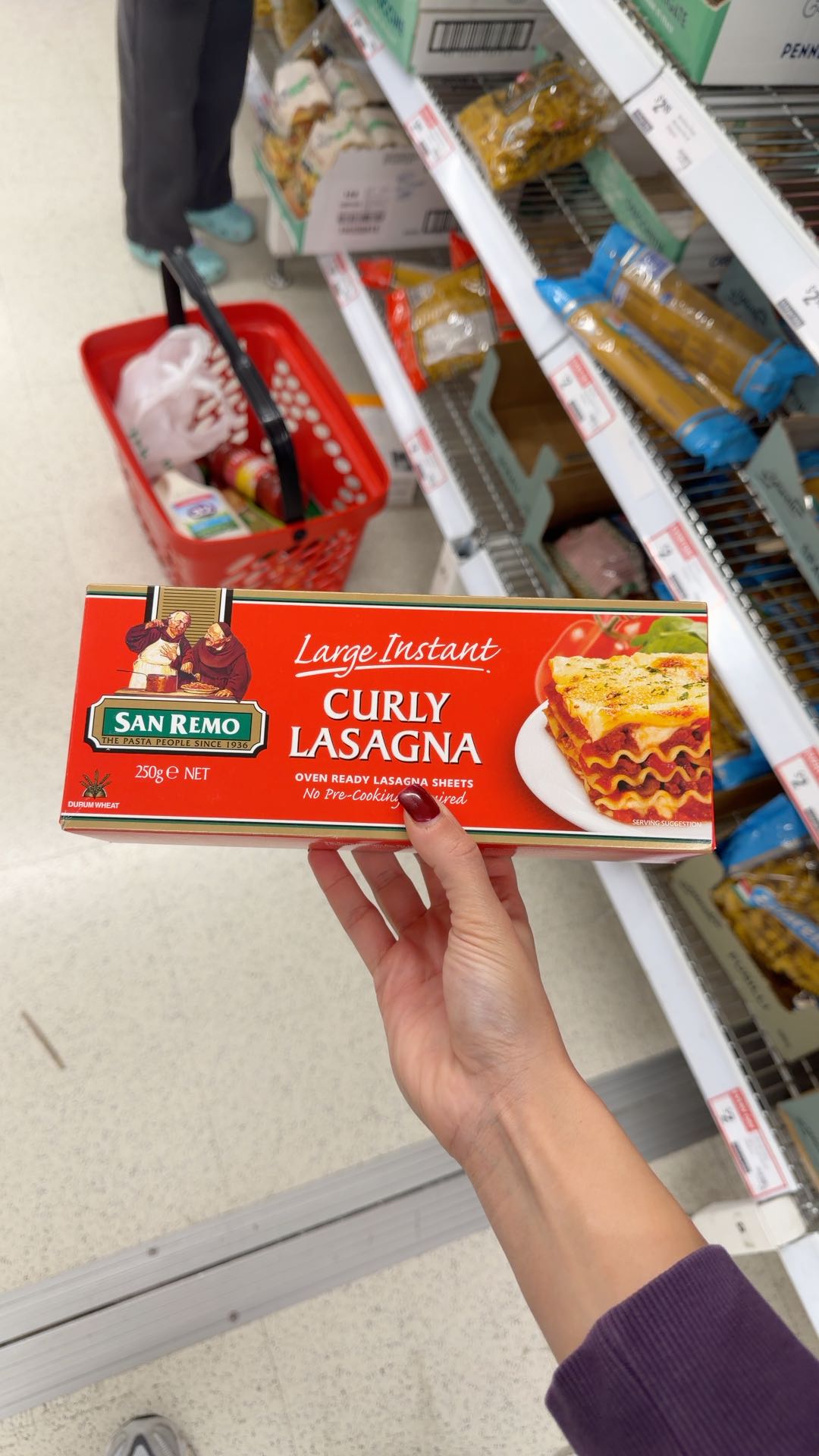


San Remo LARGE INSTANT CURLY LASAGNA
Analysis updated August 2026 · How Scout scores
At a glance
Summary
This product is made primarily from durum semolina flour, which is a high-quality ingredient for pasta. The processing level is minimal, and the ingredient list is short and clean, with only one additive used for iron fortification. While ferrous lactate is generally safe, it is important to be mindful of iron intake to prevent potential overconsumption.
Key ingredients 7
NiacinGood
Beneficial ingredient — whole-food or functional value in this product class.
Benefits
Supports energy metabolism and helps maintain healthy skin and nerves.
RiboflavinGood
Essential B vitamin — beneficial micronutrient.
Benefits
Supports energy production and cellular function, preventing riboflavin deficiency.
Durum semolina flourNeutral
Durum semolina flour is a high-protein wheat flour commonly used in pasta. It is minimally processed and retains some nutritional value. However, it is a refined grain and lacks the fiber and nutrients found in whole grains.
Risks
May cause allergic reactions in individuals with gluten intolerance or celiac disease.
Benefits
Provides a good source of protein and energy, making it suitable for pasta production.
Ferrous lactateNeutral
Ferrous lactate is an iron supplement used to fortify foods and prevent iron deficiency anemia. It is a bioavailable form of iron that is easily absorbed by the body. It is generally safe when used in appropriate amounts.
Risks
Excessive iron intake can lead to toxicity, especially in individuals with hemochromatosis.
Benefits
Helps prevent iron deficiency anemia by providing a bioavailable source of iron.
Thiamine mononitrateNeutral
Thiamine mononitrate is a synthetic form of vitamin B1 used to fortify foods. It is essential for carbohydrate metabolism and nerve function. It is added to prevent thiamine deficiency, especially in processed foods.
Benefits
Supports carbohydrate metabolism and nerve function, preventing thiamine deficiency.
Folic acidNeutral
Folic acid is a synthetic form of vitamin B9 used to fortify foods and prevent neural tube defects. It is crucial for DNA synthesis and cell division. It is commonly added to grain products to ensure adequate intake.
Risks
Excessive intake may mask vitamin B12 deficiency symptoms.
Benefits
Essential for DNA synthesis and cell division, preventing neural tube defects in developing fetuses.
Ferrous lactate (E585)Bad
Ferrous lactate, also known as E585, is used as an iron fortification agent. While it provides necessary iron, its use as an additive can be concerning due to potential overconsumption. It is important to monitor intake to avoid iron overload.
Risks
Potential for iron overload if consumed in excess, particularly in individuals with iron metabolism disorders.
Benefits
Provides a bioavailable source of iron, helping to prevent iron deficiency anemia.
Processing
Unprocessed or Minimally Processed Foods
Get the full breakdown in the Scout appTake Scout shopping
Scan any product to see lab results, healthy alternatives, and your personalized analysis.
Download on theApp Store GET IT ONGoogle Play