
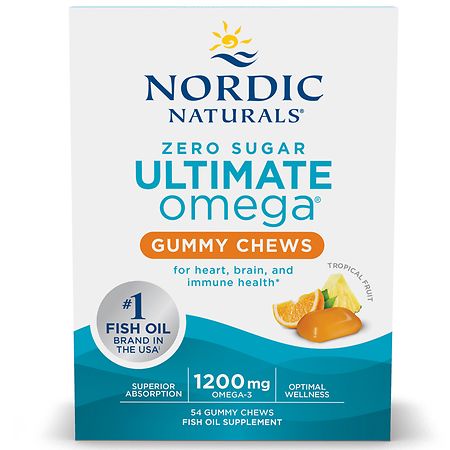

Nordic Naturals Zero Sugar Ultimate Omega Gummy Chews - Tropical Fruit (54 ct)
Analysis updated August 2026 · How Scout scores
At a glance
Summary
This product features high-quality purified deep sea fish oil, which is a beneficial source of omega-3 fatty acids. The use of natural sweeteners like xylitol and erythritol is a positive aspect, as they are preferable to artificial sweeteners. However, the presence of natural flavors, which lack transparency, and a moderate number of additives slightly impact the overall score.
Key ingredients 13
Purified Deep Sea Fish OilVery Good
Purified deep sea fish oil is a high-quality source of omega-3 fatty acids, which are essential for heart and brain health. The purification process removes contaminants, ensuring a safe and potent product. It is derived from sustainable sources like anchovies, sardines, mackerel, and herring.
Benefits
Rich in EPA and DHA, which support cardiovascular health and cognitive function.
Ascorbic AcidGood
Ascorbic acid, also known as Vitamin C, is an essential nutrient that supports immune function and skin health. It is a powerful antioxidant that helps protect cells from damage. It is commonly added to supplements for its health benefits.
Benefits
Supports immune health and acts as an antioxidant.
Purified WaterNeutral
Purified water is used as a solvent and carrier in many food products. It undergoes filtration to remove impurities, ensuring safety and quality. It does not contribute any nutritional value.
See more about Purified Water →XylitolNeutral
Xylitol is a sugar alcohol used as a sweetener, providing sweetness with fewer calories than sugar. It is generally considered safe and does not spike blood sugar levels. However, excessive consumption can cause digestive issues.
Risks
May cause digestive discomfort or laxative effects if consumed in large amounts.
Benefits
Contributes to oral health by reducing the risk of cavities.
Fish GelatinNeutral
Fish gelatin is used as a gelling agent and is derived from fish like striped pangasius and tilapia. It is a natural alternative to bovine or porcine gelatin. It provides no significant nutritional benefits but is suitable for pescatarians.
Benefits
Provides a source of collagen, which may support joint and skin health.
ErythritolNeutral
Erythritol is a sugar alcohol used as a low-calorie sweetener. It is well-tolerated and does not affect blood glucose levels. It is often used in sugar-free products.
Risks
Excessive consumption may lead to digestive discomfort.
Benefits
Provides sweetness without calories, making it suitable for weight management.
GlycerolNeutral
Glycerol is used as a humectant and sweetener, helping to retain moisture in products. It is generally recognized as safe and is metabolized differently than sugars. It does not contribute significant nutritional value.
Benefits
Helps maintain moisture and texture in food products.
Sodium CitrateNeutral
Sodium citrate is used as an acidity regulator and preservative. It is a salt of citric acid and is commonly used in food processing. It is considered safe in moderate amounts.
Risks
Excessive intake may lead to an imbalance in electrolytes.
Benefits
Helps maintain the stability and flavor of food products.
Gum AcaciaNeutral
Gum acacia is a natural gum used as an emulsifier and stabilizer. It is derived from the sap of acacia trees and is considered safe for consumption. It does not provide significant nutritional benefits.
Benefits
Helps improve texture and stability in food products.
Citric AcidNeutral
Citric acid is a natural preservative and flavor enhancer. It is commonly used to add acidity and improve shelf life. It is generally recognized as safe when used in food products.
Risks
Excessive consumption may cause tooth enamel erosion.
Benefits
Enhances flavor and preserves freshness in food products.
Paprika ExtractNeutral
Paprika extract is used for coloring and is derived from paprika peppers. It is a natural alternative to synthetic dyes. It does not provide significant nutritional benefits.
Benefits
Provides natural color without synthetic additives.
Steviol GlycosidesNeutral
Steviol glycosides are natural sweeteners derived from the stevia plant. They provide sweetness without calories and are considered safe for consumption. They are a popular alternative to artificial sweeteners.
Benefits
Offers a zero-calorie sweetening option suitable for diabetics.
Natural FlavorsBad
Natural flavors are used to enhance taste but lack transparency about their specific composition. They can contain a variety of compounds, some of which may not be beneficial. The lack of disclosure can be concerning for consumers seeking clean labels.
Risks
Potential for undisclosed allergens or additives that may cause adverse reactions.
Benefits
Enhances the flavor profile of the product without adding calories.
Processing
Ultra-Processed Foods
Get the full breakdown in the Scout appTake Scout shopping
Scan any product to see lab results, healthy alternatives, and your personalized analysis.
Download on theApp Store GET IT ONGoogle Play