
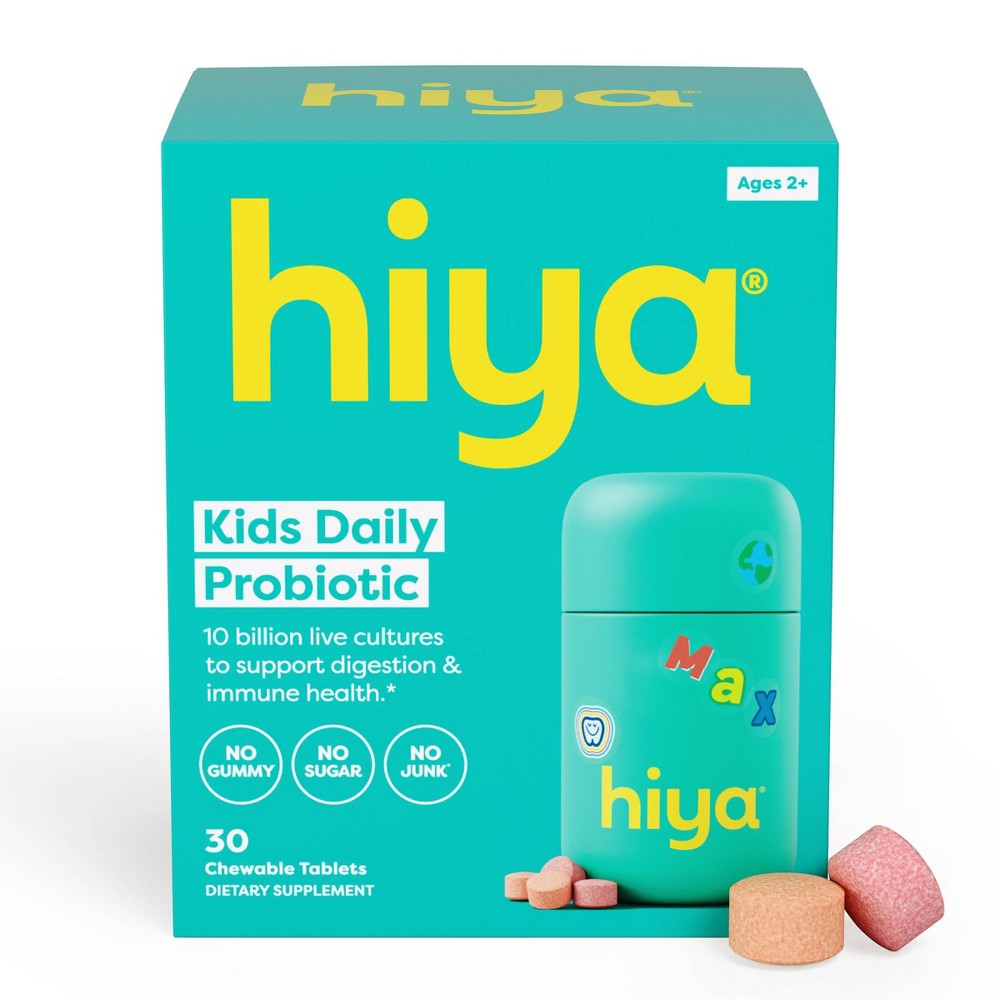

Hiya Kids' Daily Probiotic Chewable Tablets Probiotic Blend - 30ct
Analysis updated August 2026 · How Scout scores
At a glance
Summary
This probiotic supplement contains beneficial strains like Lactobacillus rhamnosus GG and Bifidobacterium lactis, which are well-regarded for supporting gut health. However, the presence of natural flavors and multiple additives slightly detracts from its overall formulation quality. Despite being ultra-processed, the product maintains a focus on beneficial ingredients, making it a reasonable choice for digestive support.
Key ingredients 14
Lactobacillus Rhamnosus GGVery Good
Lactobacillus rhamnosus GG is a well-researched probiotic strain known for supporting gut health. It helps maintain a healthy balance of gut bacteria and boosts immune function. It is considered one of the most effective probiotics for digestive health.
Benefits
Promotes digestive health and enhances immune response.
Lactobacillus ParacaseiVery Good
Lactobacillus paracasei is a probiotic strain that supports gut health and immune function. It helps in maintaining a balanced gut microbiota and may reduce the risk of infections. It is beneficial for overall digestive wellness.
Benefits
Supports a healthy gut microbiome and strengthens the immune system.
Bifidobacterium LactisVery Good
Bifidobacterium lactis is a probiotic known for its role in promoting digestive health. It aids in the digestion of lactose and enhances gut barrier function. It is beneficial for maintaining a healthy digestive system.
Benefits
Improves lactose digestion and supports gut health.
TurmericGood
Beneficial ingredient — whole-food or functional value in this product class.
Benefits
Provides natural color and may offer anti-inflammatory benefits.
Larch ArabinogalactanGood
Larch arabinogalactan is a prebiotic fiber that supports the growth of beneficial gut bacteria. It enhances immune function and may improve gut health. It is derived from the larch tree and is considered a natural ingredient.
Benefits
Promotes the growth of beneficial gut bacteria and supports immune health.
SorbitolNeutral
Sorbitol is a sugar alcohol used as a sweetener and humectant. It is generally considered safe but can cause digestive issues in large amounts. It is less caloric than sugar and does not cause a significant spike in blood sugar levels.
Risks
Excessive consumption may lead to gastrointestinal discomfort, including bloating and diarrhea.
Benefits
Provides sweetness with fewer calories than sugar and is less likely to cause tooth decay.
Microcrystalline CelluloseNeutral
Microcrystalline cellulose is a common filler and binder in supplements. It is derived from plant fibers and is considered safe for consumption. It does not provide nutritional benefits but aids in the manufacturing process.
Benefits
Helps in the uniform distribution of active ingredients in tablets.
MannitolNeutral
Mannitol is a sugar alcohol used as a sweetener and stabilizer. It is less caloric than sugar and does not significantly affect blood glucose levels. It is often used in sugar-free products.
Risks
May cause digestive discomfort if consumed in large quantities.
Benefits
Provides sweetness with fewer calories and is suitable for diabetic-friendly formulations.
Silicon DioxideNeutral
Silicon dioxide is used as an anti-caking agent to prevent clumping. It is naturally occurring and considered safe in small amounts. It does not contribute to nutritional value but aids in product stability.
Benefits
Improves the flow properties of powdered ingredients.
Beet JuiceNeutral
Beet juice is used as a natural coloring agent. It is derived from beets and is considered safe and natural. It provides color without the use of synthetic dyes.
Benefits
Offers a natural alternative to artificial colorants.
Magnesium StearateNeutral
Magnesium stearate is a common flow agent used in supplement manufacturing. It is derived from stearic acid and magnesium and is generally recognized as safe. It helps prevent ingredients from sticking to equipment.
Benefits
Ensures consistent tablet quality and manufacturing efficiency.
Citric AcidNeutral
Citric acid is used as a preservative and flavor enhancer. It is naturally found in citrus fruits and is widely used in food products. It helps maintain product freshness and stability.
Benefits
Acts as a natural preservative and enhances flavor.
Stevia Leaf ExtractNeutral
Stevia leaf extract is a natural sweetener derived from the stevia plant. It is calorie-free and does not affect blood sugar levels. It is a popular alternative to artificial sweeteners.
Benefits
Provides sweetness without calories, suitable for diabetic-friendly products.
Natural FlavorsBad
Natural flavors are a catch-all term for flavoring agents derived from natural sources. The lack of transparency in their composition can be concerning. They are often used to enhance taste but may contain additives or allergens.
Risks
Potential allergenicity and lack of transparency in ingredient sourcing.
Benefits
Enhances the palatability of the product.
Processing
Ultra-Processed Foods
Get the full breakdown in the Scout appTake Scout shopping
Scan any product to see lab results, healthy alternatives, and your personalized analysis.
Download on theApp Store GET IT ONGoogle Play