
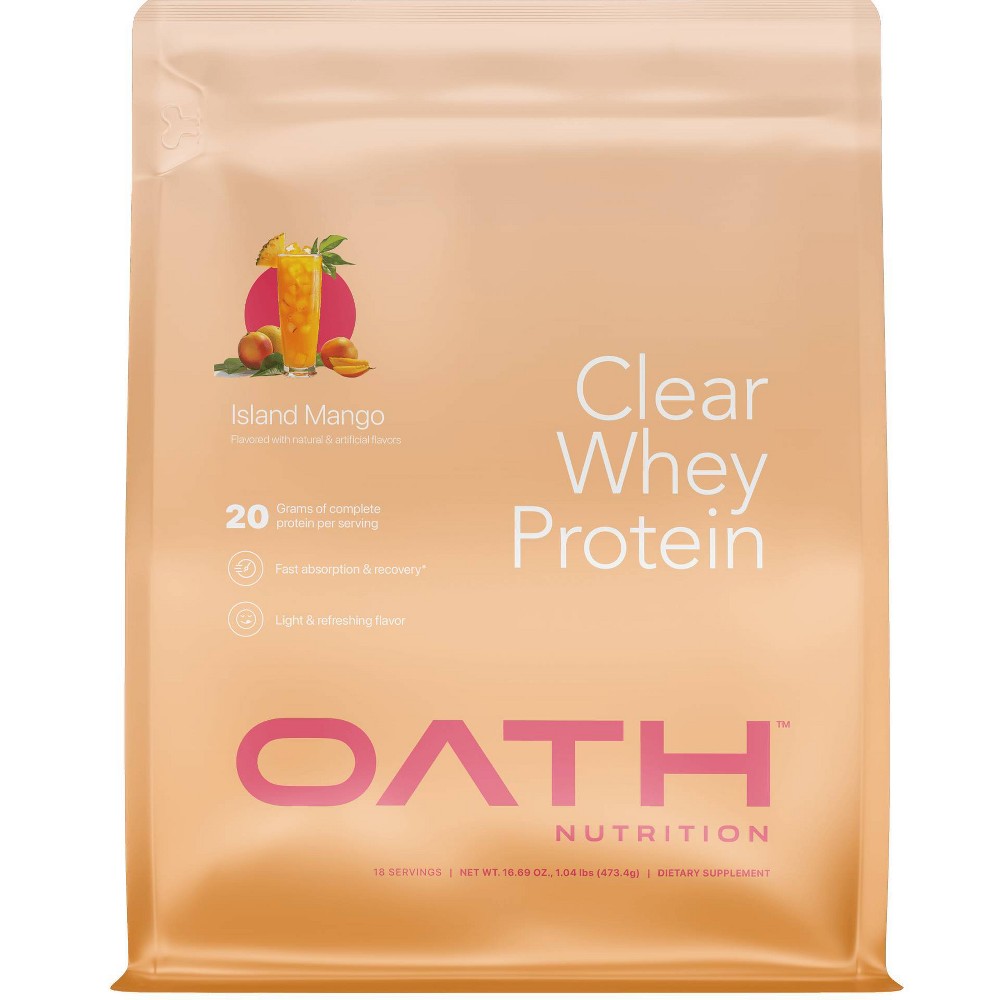

Oath Nutrition Clear Whey Protein Powder - Island Mango - 18 Servings
Analysis updated July 2026 · How Scout scores
At a glance
Summary
This protein powder contains high-quality whey protein isolate, which is beneficial for muscle repair and growth. However, the presence of artificial sweeteners like sucralose and the use of natural and artificial flavors, which can be highly processed, detract from its overall healthiness. Additionally, the inclusion of tapioca maltodextrin as a filler adds to the processing level, impacting the score negatively.
Key ingredients 14
Whey Protein IsolateVery Good
Whey protein isolate is a high-quality protein source with a complete amino acid profile, beneficial for muscle repair and growth. It is derived from milk and is highly bioavailable, making it an excellent choice for protein supplementation. Compared to other protein sources, it is low in fat and carbohydrates.
Benefits
Rich in essential amino acids, supporting muscle growth and recovery.
Coconut MilkGood
Coconut milk is a plant-based milk alternative that provides a creamy texture and contains medium-chain triglycerides (MCTs). It is less processed than many other milk alternatives and can offer some health benefits. It is a source of healthy fats and can support energy metabolism.
Risks
May cause allergic reactions in individuals sensitive to tree nuts.
Benefits
Contains MCTs that can support energy metabolism and provide a creamy texture.
Coconut OilGood
Coconut oil is a source of medium-chain triglycerides (MCTs), which are easily metabolized for energy. It is less processed than many seed oils and can support metabolic health. Coconut oil is also known for its antimicrobial properties.
Risks
May cause allergic reactions in individuals sensitive to tree nuts.
Benefits
Rich in MCTs, supporting energy metabolism and offering antimicrobial properties.
Himalayan Pink SaltGood
Beneficial ingredient — whole-food or functional value in this product class.
Risks
Excessive consumption can contribute to high blood pressure.
Benefits
Contains trace minerals that can contribute to overall mineral intake.
TurmericGood
Beneficial ingredient — whole-food or functional value in this product class.
Benefits
Known for anti-inflammatory properties, though likely present in small amounts.
Malic AcidNeutral
Malic acid is a naturally occurring acid found in fruits, used to enhance flavor and acidity. It is generally recognized as safe and is commonly used in food products. It does not provide significant nutritional benefits but contributes to the product's taste profile.
See more about Malic Acid →Citric AcidNeutral
Citric acid is a natural preservative and flavor enhancer found in citrus fruits. It is widely used in food products for its ability to enhance flavor and preserve freshness. While it is generally recognized as safe, it does not provide significant nutritional benefits.
See more about Citric Acid →Sodium CitrateNeutral
Sodium citrate is used as an acidity regulator and emulsifier in food products. It is generally recognized as safe and helps maintain product stability. It does not provide significant nutritional benefits but is functional in food processing.
See more about Sodium Citrate →Acacia FiberNeutral
Acacia fiber is a soluble fiber derived from the sap of the acacia tree. It is used to improve texture and provide dietary fiber. While it can support digestive health, its presence in small amounts may not offer significant benefits.
Benefits
Can support digestive health by providing soluble fiber.
AnnattoNeutral
Annatto is a natural colorant derived from the seeds of the achiote tree. It is used to impart color to food products and is generally recognized as safe. While it provides a natural alternative to synthetic dyes, it does not offer significant nutritional benefits.
Benefits
Provides a natural alternative to synthetic dyes.
Reb M (Stevia)Neutral
Reb M is a steviol glycoside derived from the stevia plant, used as a natural sweetener. It provides sweetness without calories and is considered safe for consumption. While it reduces sugar content, it does not offer additional nutritional benefits.
Benefits
Provides sweetness without adding calories, reducing sugar content.
Natural And Artificial FlavorsBad
Natural and artificial flavors are used to enhance taste but can be highly processed and lack transparency. The term 'natural flavors' can encompass a wide range of substances, some of which may not be health-promoting. Artificial flavors are synthetic and may have potential health concerns.
Risks
Potential for allergic reactions and lack of transparency in ingredient sourcing.
Tapioca MaltodextrinBad
Tapioca maltodextrin is a carbohydrate derived from tapioca starch, used as a filler and thickener. It is highly processed and can contribute to rapid spikes in blood sugar levels. While it serves functional purposes in food products, it lacks nutritional value.
Risks
May cause rapid spikes in blood sugar levels due to its high glycemic index.
SucraloseBad
Sucralose is an artificial sweetener used to provide sweetness without calories. It is highly processed and may have potential health concerns, including effects on gut health. While it reduces sugar content, its long-term health impacts are still debated.
Risks
Potential effects on gut health and long-term health impacts are still debated.
Benefits
Provides sweetness without adding calories, reducing sugar content.
Processing
Ultra-Processed Foods
Get the full breakdown in the Scout appTake Scout shopping
Scan any product to see lab results, healthy alternatives, and your personalized analysis.
Download on theApp Store GET IT ONGoogle PlayAmazon pricing & content
Amazon price as of . Product prices and availability are accurate as of the date/time indicated and are subject to change. Any price and availability information displayed on Amazon.com at the time of purchase will apply to the purchase of this product.
CERTAIN CONTENT THAT APPEARS ON THIS SITE COMES FROM AMAZON. THIS CONTENT IS PROVIDED “AS IS” AND IS SUBJECT TO CHANGE OR REMOVAL AT ANY TIME.