
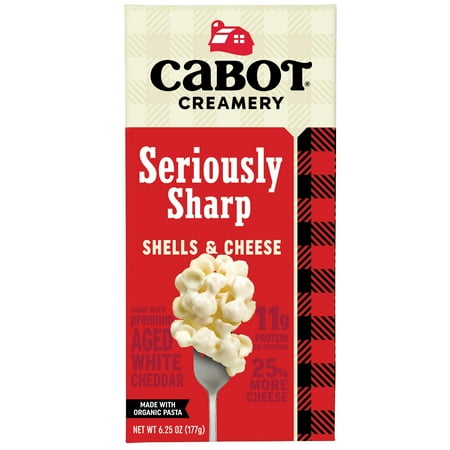


Cabot Seriously Sharp White Cheddar Macaroni & Cheese Shells with Organic Pasta 6.25 oz Box Shelf-Stable
Analysis updated August 2026 · How Scout scores
At a glance
Summary
This macaroni and cheese product contains organic pasta and dried cheddar cheese, which are positive aspects due to their nutrient content and minimal processing. However, the presence of additives like natural flavor and disodium phosphate, along with its classification as an ultra-processed food, limits its healthfulness. The processing level and use of synthetic additives contribute to a lower score, despite the inclusion of some beneficial ingredients.
Key ingredients 11
Dried cheddar cheeseGood
Dried cheddar cheese is a source of protein and calcium, essential for bone health. It is made from cultured pasteurized milk, which retains beneficial nutrients. The drying process concentrates these nutrients, making it a flavorful addition.
Risks
High in saturated fats, which should be consumed in moderation to maintain heart health.
Benefits
Rich in protein and calcium, supporting muscle and bone health. Provides a strong flavor that enhances the dish.
Organic wheat flourNeutral
Standard formulation ingredient — neither beneficial nor harmful at typical use.
Risks
Contains gluten, which may cause issues for individuals with celiac disease or gluten sensitivity.
Benefits
Provides a source of carbohydrates for energy and some dietary fiber. Organic certification ensures reduced exposure to harmful chemicals.
WheyNeutral
Whey is a byproduct of cheese production and a source of protein. It is often used to enhance the protein content of foods. While beneficial for muscle repair, it is not a primary ingredient in this product.
Risks
May cause digestive issues for those with lactose intolerance.
Benefits
Provides additional protein, which can aid in muscle repair and growth.
SaltNeutral
Salt is used to enhance flavor and preserve food. It is a common culinary ingredient with no significant processing. While necessary for bodily functions, excessive intake can lead to health issues.
Risks
Excessive consumption can lead to high blood pressure and other cardiovascular issues.
Benefits
Essential for maintaining fluid balance and nerve function in the body.
ButterNeutral
Butter is a natural fat made from cream and salt, providing flavor and richness. It contains saturated fats, which should be consumed in moderation. It enhances the texture and taste of the dish.
Risks
High in saturated fats, which can contribute to heart disease if consumed in excess.
Benefits
Adds flavor and richness to dishes, and provides fat-soluble vitamins like A and D.
Dry buttermilkNeutral
Dry buttermilk is used to add a tangy flavor and creamy texture. It is a dehydrated form of buttermilk, retaining some nutrients. It is a minor ingredient in this product.
Risks
Contains lactose, which may cause issues for lactose-intolerant individuals.
Benefits
Adds a tangy flavor and creamy texture, enhancing the overall taste of the dish.
Citric acidNeutral
Citric acid is a natural preservative and flavor enhancer. It is commonly used to add acidity and preserve freshness. It is generally recognized as safe when used in moderation.
Risks
Excessive consumption may cause tooth enamel erosion.
Benefits
Helps preserve freshness and enhances flavor by adding acidity.
Silicon dioxideNeutral
Silicon dioxide is used as an anti-caking agent to prevent clumping. It is a naturally occurring mineral and is generally recognized as safe. It does not contribute nutritional value.
Benefits
Prevents clumping, ensuring a smooth texture in powdered products.
Modified food starchBad
Chemically modified starch additive.
Risks
Highly processed and may cause digestive issues in sensitive individuals.
Benefits
Improves texture and stability of the product, enhancing the eating experience.
Natural flavorBad
Natural flavor is a catch-all term for flavoring agents derived from natural sources. It lacks transparency, making it difficult to assess its health impact. It is often used to enhance taste without adding nutritional value.
Risks
Lack of transparency can be concerning for individuals with allergies or sensitivities.
Benefits
Enhances flavor without adding calories or sugar.
Disodium phosphateBad
Disodium phosphate is used as an emulsifier and stabilizer in processed foods. It is a synthetic additive that can contribute to high phosphate levels. Overconsumption of phosphates can lead to health issues.
Risks
High phosphate intake can affect kidney function and bone health.
Benefits
Improves texture and stability of processed foods, enhancing shelf life.
Processing
Ultra-Processed Foods
Get the full breakdown in the Scout appTake Scout shopping
Scan any product to see lab results, healthy alternatives, and your personalized analysis.
Download on theApp Store GET IT ONGoogle Play