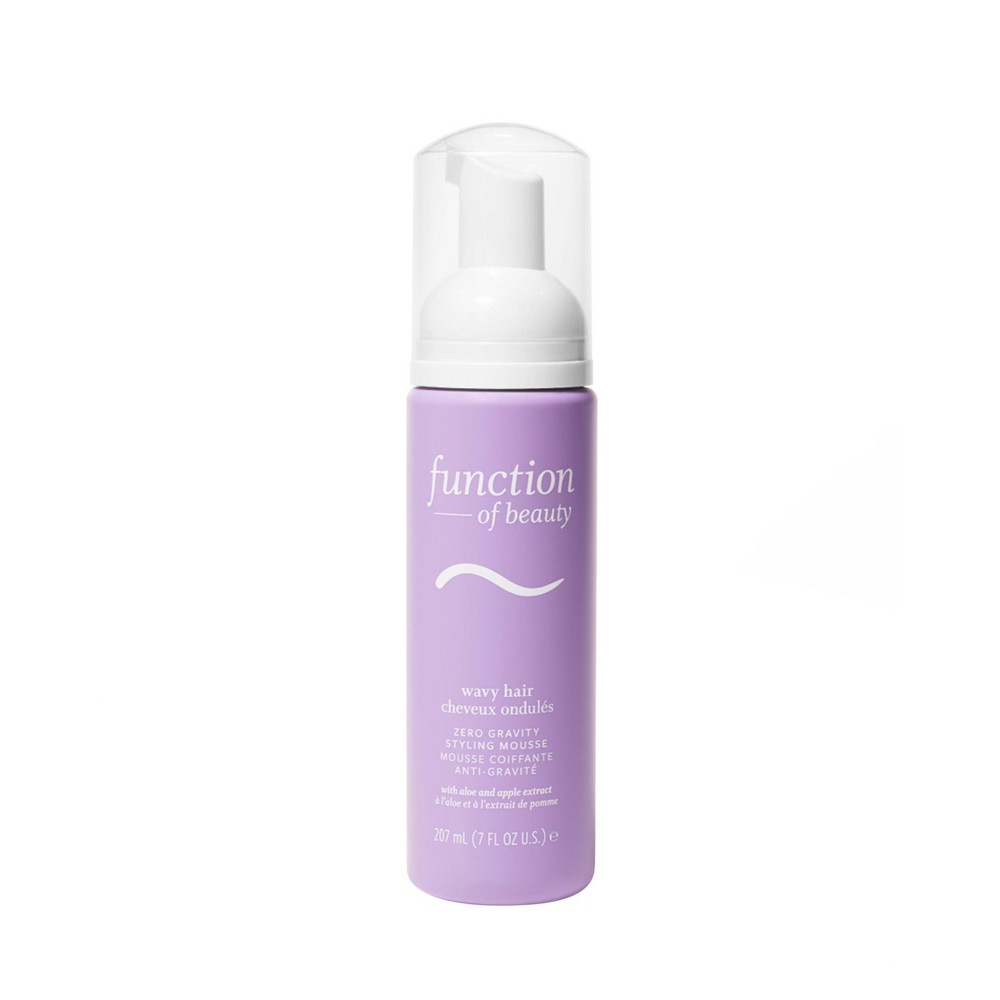
Function of Beauty Zero Gravity Styling Mousse for Wavy Hair - 7 fl oz: Curl Enhancing, Paraben & Silicone-Free
At a glance
Summary
This styling mousse contains beneficial natural ingredients like aloe vera, apple fruit extract, and sunflower sprout extract, which provide hydration and antioxidant benefits. However, the presence of fragrance and phenoxyethanol, which can cause skin irritation and allergic reactions, slightly lowers its safety profile. The product is mostly safe with some minor concerns due to these synthetic additives. Its plastic packaging can shed microplastics into the product and lowers its score.
Key ingredients 28
Aloe Barbadensis Leaf JuiceVery Good
Aloe Barbadensis Leaf Juice is known for its soothing and moisturizing properties. It is a natural ingredient that helps to hydrate and calm the skin and scalp. It is widely used in cosmetics for its beneficial effects.
Risks
There are minimal risks associated with aloe vera, though some individuals may experience allergic reactions.
Benefits
Aloe vera provides hydration and soothing effects, making it beneficial for sensitive skin and scalp.
Pyrus Malus (Apple) Fruit ExtractGood
Apple fruit extract is rich in antioxidants and vitamins, which can help to nourish and protect the skin and hair. It is a natural ingredient that is generally considered safe and beneficial in cosmetics.
Risks
There are minimal risks associated with apple extract, though some individuals may experience allergic reactions.
Benefits
It provides antioxidant protection and nourishment to the skin and hair.
Helianthus Annuus (Sunflower) Sprout ExtractGood
Sunflower sprout extract is known for its antioxidant properties and ability to protect against environmental stressors. It is a natural ingredient that supports skin and hair health.
Risks
There are minimal risks associated with sunflower extract, though some individuals may experience allergic reactions.
Benefits
It offers antioxidant protection and helps to maintain healthy skin and hair.
GlycerinGood
Glycerin is a humectant that attracts moisture to the skin and hair, helping to keep them hydrated. It is a common ingredient in cosmetics and is generally considered safe and effective.
Risks
There are minimal risks associated with glycerin, though it may cause irritation in very sensitive individuals.
Benefits
It provides hydration and helps to maintain moisture balance in the skin and hair.
TocopherolGood
Tocopherol, also known as Vitamin E, is an antioxidant that helps to protect the skin and hair from damage caused by free radicals. It is a beneficial ingredient in cosmetics for its protective properties.
Risks
There are minimal risks associated with tocopherol, though it may cause irritation in very sensitive individuals.
Benefits
It provides antioxidant protection and supports skin and hair health.
PanthenolGood
Panthenol is a form of Vitamin B5 that is used for its moisturizing and conditioning properties. It is beneficial for both skin and hair, helping to improve texture and hydration.
Risks
There are minimal risks associated with panthenol, though it may cause irritation in very sensitive individuals.
Benefits
It provides moisture and improves the texture and appearance of skin and hair.
Decyl GlucosideGood
Beneficial ingredient — whole-food or functional value in this product class.
Risks
There are minimal risks associated with decyl glucoside, though it may cause irritation in very sensitive individuals.
Benefits
It provides gentle cleansing without stripping natural oils from the skin and hair.
Water (Aqua/Eau)Neutral
Water is a common solvent used in cosmetic formulations. It helps to dissolve other ingredients and provides a base for the product. It is generally considered safe and non-irritating.
Risks
There are no significant risks associated with water in cosmetic products.
Benefits
Water helps to hydrate and distribute other ingredients evenly in the formulation.
Polyimide-1Neutral
Polyimide-1 is a film-forming agent that helps to provide hold and structure in hair styling products. It is synthetic and generally considered safe for use in cosmetics. It does not have significant health concerns.
Risks
There are no significant risks associated with Polyimide-1 in cosmetic products.
Benefits
It provides hold and structure to hair, enhancing styling effects.
Caesalpinia Spinosa Fruit ExtractNeutral
Caesalpinia Spinosa Fruit Extract is used for its conditioning properties in hair care products. It is derived from a natural source and is generally considered safe for use.
Risks
There are no significant risks associated with this extract in cosmetic products.
Benefits
It helps to condition and improve the texture of hair.
Polysorbate 20Neutral
Polysorbate 20 is an emulsifier that helps to blend ingredients together in cosmetic formulations. It is synthetic and generally considered safe for use in cosmetics.
Risks
There are no significant risks associated with Polysorbate 20 in cosmetic products.
Benefits
It helps to stabilize formulations and improve product texture.
Polyquaternium-73Neutral
Polyquaternium-73 is a conditioning agent used in hair care products to improve texture and manageability. It is synthetic and generally considered safe for use.
Risks
There are no significant risks associated with Polyquaternium-73 in cosmetic products.
Benefits
It helps to condition hair and improve its texture and manageability.
Vp/Dmapa Acrylates CopolymerNeutral
This copolymer is used as a film-forming agent in hair styling products to provide hold and structure. It is synthetic and generally considered safe for use.
Risks
There are no significant risks associated with this copolymer in cosmetic products.
Benefits
It provides hold and structure to hair, enhancing styling effects.
EthylhexylglycerinNeutral
Ethylhexylglycerin is used as a skin conditioning agent and preservative enhancer in cosmetics. It is synthetic and generally considered safe for use.
Risks
There are minimal risks associated with ethylhexylglycerin, though it may cause irritation in very sensitive individuals.
Benefits
It helps to enhance the effectiveness of preservatives and condition the skin.
Citric AcidNeutral
Citric acid is used to adjust the pH of cosmetic formulations. It is naturally derived and generally considered safe for use.
Risks
There are minimal risks associated with citric acid, though it may cause irritation in very sensitive individuals.
Benefits
It helps to maintain the stability and effectiveness of the product by adjusting pH levels.
Caprylyl GlycolNeutral
Caprylyl glycol is used as a skin conditioning agent and preservative enhancer in cosmetics. It is synthetic and generally considered safe for use.
Risks
There are minimal risks associated with caprylyl glycol, though it may cause irritation in very sensitive individuals.
Benefits
It helps to enhance the effectiveness of preservatives and condition the skin.
Benzyl SalicylateNeutral
Benzyl salicylate is used as a fragrance ingredient and UV light absorber in cosmetics. It is synthetic and generally considered safe for use.
Risks
There are minimal risks associated with benzyl salicylate, though it may cause irritation in very sensitive individuals.
Benefits
It provides fragrance and UV protection in cosmetic formulations.
Amyl CinnamalNeutral
Amyl cinnamal is a fragrance ingredient used to impart scent to cosmetic products. It is synthetic and generally considered safe for use.
Risks
There are minimal risks associated with amyl cinnamal, though it may cause irritation in very sensitive individuals.
Benefits
It provides a pleasant scent to the product.
Hexyl CinnamalNeutral
Hexyl cinnamal is a fragrance ingredient used to impart a floral scent to cosmetic products. It is synthetic and generally considered safe for use.
Risks
There are minimal risks associated with hexyl cinnamal, though it may cause irritation in very sensitive individuals.
Benefits
It provides a pleasant floral scent to the product.
Propylene GlycolBad
Processed additive flagged under Scout's ingredient doctrine.
Risks
There are minimal risks associated with propylene glycol, though it may cause irritation in very sensitive individuals.
Benefits
It helps to maintain moisture balance in the skin and hair.
Cetrimonium ChlorideBad
Processed additive flagged under Scout's ingredient doctrine.
Risks
There are no significant risks associated with cetrimonium chloride in cosmetic products.
Benefits
It helps to condition hair and improve its texture and manageability.
Disodium EdtaBad
Processed additive flagged under Scout's ingredient doctrine.
Risks
There are minimal risks associated with disodium EDTA, though it may cause irritation in very sensitive individuals.
Benefits
It helps to stabilize formulations and improve product shelf life.
PhenoxyethanolBad
Phenoxyethanol is a preservative used to prevent microbial growth in cosmetics. It is associated with skin irritation and allergic reactions in some individuals.
Risks
Phenoxyethanol can cause skin irritation and allergic reactions, especially in sensitive individuals.
Benefits
It helps to preserve the product and extend its shelf life.
Sodium BenzoateBad
Synthetic preservative that can form benzene in the presence of vitamin C.
Risks
There are minimal risks associated with sodium benzoate, though it may cause irritation in very sensitive individuals.
Benefits
It helps to preserve the product and extend its shelf life.
CitralBad
Processed additive flagged under Scout's ingredient doctrine.
Risks
There are minimal risks associated with citral, though it may cause irritation in very sensitive individuals.
Benefits
It provides a fresh, lemon scent to the product.
LinaloolBad
Processed additive flagged under Scout's ingredient doctrine.
Risks
There are minimal risks associated with linalool, though it may cause irritation in very sensitive individuals.
Benefits
It provides a pleasant floral scent to the product.
LimoneneBad
Processed additive flagged under Scout's ingredient doctrine.
Risks
There are minimal risks associated with limonene, though it may cause irritation in very sensitive individuals.
Benefits
It provides a fresh, citrus scent to the product.
Fragrance (Parfum)Very Bad
Fragrance is used to impart scent to cosmetic products but can contain a mixture of undisclosed chemicals. It is often associated with allergic reactions and skin irritation.
Risks
Fragrance can cause allergic reactions and skin irritation, especially in sensitive individuals.
Benefits
It provides a pleasant scent to the product.
Get the full breakdown in the Scout appTake Scout shopping
Scan any product to see lab results, healthy alternatives, and your personalized analysis.
Are you Function Of Beauty? Fix an error Get the badge Get tested
Amazon pricing & content
Amazon price as of . Product prices and availability are accurate as of the date/time indicated and are subject to change. Any price and availability information displayed on Amazon.com at the time of purchase will apply to the purchase of this product.
CERTAIN CONTENT THAT APPEARS ON THIS SITE COMES FROM AMAZON. THIS CONTENT IS PROVIDED “AS IS” AND IS SUBJECT TO CHANGE OR REMOVAL AT ANY TIME.